
Fifth Wheel and Hitch Repair · Cedar City, Utah
Fifth Wheel Hitch Repair in Cedar City, Utah: Warning Signs You Shouldn't Ignore
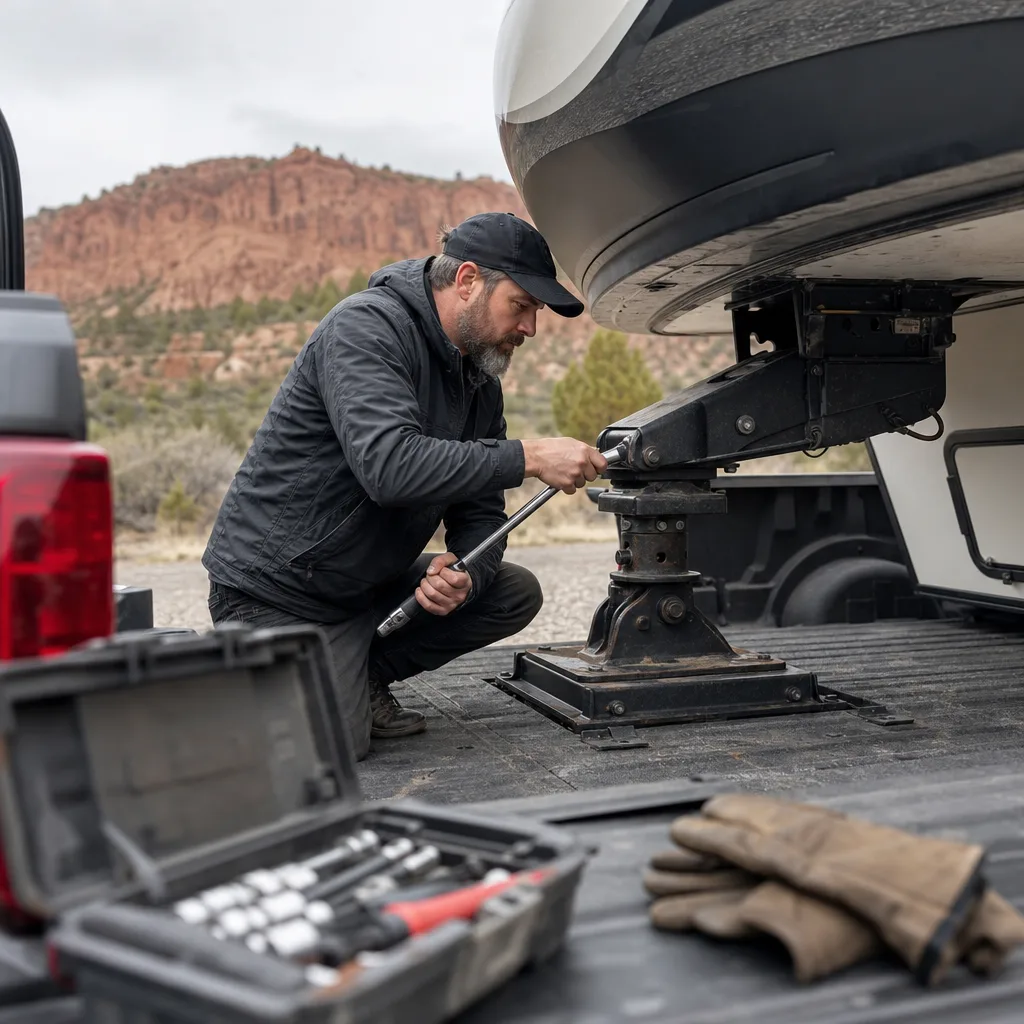
Signs Your Fifth Wheel Hitch Needs Repair
Your hitch talks to you. Most folks just don't know the language yet. Here's a common story: you pull out of a gas station, and there's a solid clunk from the truck bed. Then another one when you brake at the next light. You tell yourself it's always done that. It hasn't. That noise is metal meeting metal with room to spare, and room to spare is exactly what a hitch isn't supposed to have.
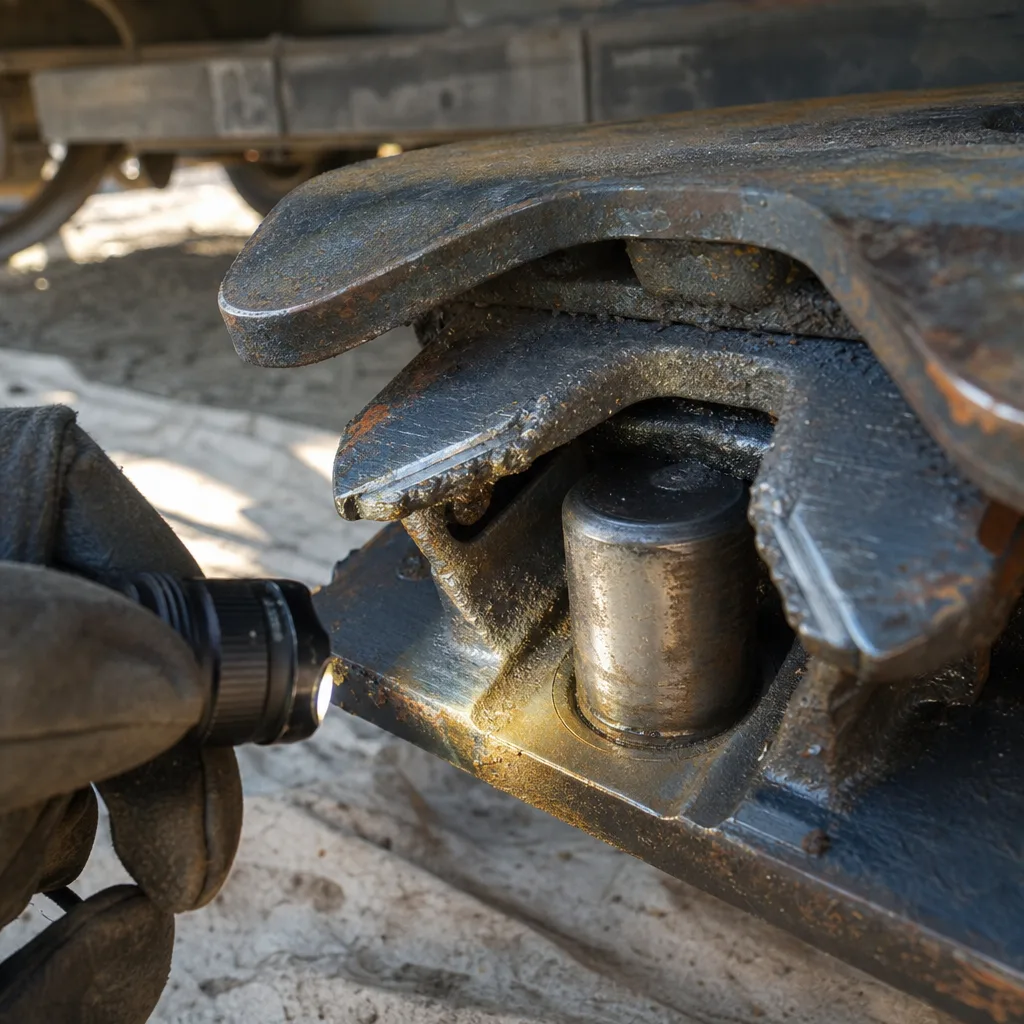
These are the signs worth paying attention to:
- Clunking or banging when you start, stop, or turn. This usually means there's slack between the jaws and the kingpin. Sometimes it's an adjustment. Sometimes the jaws or locking bar are worn past the point where adjusting helps.
- The jaws won't latch or the handle won't release. If you're wrestling the release handle or rocking the truck back and forth to unhook, something's binding, bent, or worn. Hooking up shouldn't feel like a workout.
- A worn or out-of-round kingpin. The pin on your trailer wears too. Look for flat spots, grooves, or a shape that's gone slightly oval. A worn pin lets the jaws close on a smaller target, which brings back that clunk.
- Loose bolts or shifting rails. Check where the hitch mounts to the bed rails and frame brackets. Shiny rub marks, rust streaks around bolt heads, or a hitch that moves when you shove it are all bad news.
- Cracks, bends, or heavy rust. Look closely at welds, the head, the pivot points, and the pin box on the trailer side. A hairline crack today is a bigger crack after a few hundred miles.
- Grinding, groaning, or a dry plate. If your hitch uses grease or a lube plate and it's bone dry, you'll hear it in tight turns. Dry metal wears fast, and it takes the kingpin with it.
- Missing or bent safety pins and clips. They're small, cheap, and easy to lose. They're also there for a reason.
A lot of these problems build slowly, so they're easy to miss. The hitch that felt a little loose last spring feels about the same today, because you got used to it. That's why a quick visual check every time you hook up is worth the two minutes. Look at the jaws, look at the pin, tug on the mount, and listen on your first few stops.
One more thing people lump in with hitch trouble is the electrical side. If your trailer lights flicker or your brakes act up when you go over bumps, that's usually the plug or the wiring, not the hitch itself. We handle that separately with RV Trailer Wiring and Plug Repair.
If you've spotted any of the signs above, don't just turn the radio up and hope. Fifth Wheel and Hitch Repair is a lot cheaper and less stressful in your driveway than on the shoulder of the road. As an RVTI Certified Technician with more than 15 years in the RV industry, I've learned that the noise you're ignoring is usually the one that matters most.
Why Kingpin and Hitch Problems Can't Wait
Here's the thing about a loose hitch. It doesn't stay a little loose. Slack is like a pothole on a busy road, and every mile you drive makes it bigger.
When there's a gap between the jaws and the kingpin, those parts stop riding together and start hitting each other. Every time you accelerate, brake, or roll over a bump, the trailer shoves forward or tugs back and slams into the hitch. That pounding wears the jaws and the pin faster, which makes the gap bigger, which makes the pounding harder. It's a loop, and it only runs one direction.
That's why timing matters so much with this repair. Catch it early and you're often looking at an adjustment or a little lube. Wait a season, and the same problem can turn into new jaws, a new kingpin, or both. Wait longer, and you start finding damage in places that never had anything wrong with them.
Think of it like a loose tooth. Leave it alone long enough and it stops being about the tooth.
Hitch damage spreads in a few common directions:
- Into the pin box. All that hammering travels up the kingpin into the pin box and the trailer frame around it. Cracks there are a bigger job than anything on the hitch itself.
- Into the truck. Rails, mounting brackets, and the bed take the same beating. A loose mount can wallow out bolt holes and stress the metal it's bolted to.
- Into the rest of the ride. A trailer that's banging around back there is harder on everything it's carrying, including your cabinets, your dishes, and your patience.
Then there's the part nobody likes to think about. A hitch's whole job is to hold several tons of trailer to your truck. If the jaws don't fully lock, or worn parts let go, a fifth wheel can come off the hitch. Best case, it drops onto your bed rails or tailgate in the driveway and you have a very bad afternoon. Worst case, it happens at highway speed. That's not a scare tactic. It's just what happens when the one connection holding everything together gets ignored.
We get why people put it off. The trip's already planned, the trailer's packed, and the clunk has been there for a while without anything terrible happening. But a hitch doesn't give you a countdown. It works fine right up until it doesn't.
On cost, this is how it usually breaks down in the trade. The price depends on how far the wear has gone. Adjustments and cleanup are on the light end. Replacing jaws, locking parts, or a kingpin adds parts and labor. Welding, cracked pin boxes, or damaged mounting points add the most, because now you're fixing structure instead of hardware. Before you hire anyone, ask whether they're adjusting, replacing, or repairing structure, and why.
The cheapest hitch repair is almost always the one you do now.
On-Site Inspection and Repair Where the Trailer Sits
There's a funny catch-22 with hitch trouble. You don't trust the hitch, but the usual fix is to hook up and tow the trailer across town to a shop. That's like driving to the mechanic on the tire that's going flat. That's why Benny's RV started as a mobile RV technician service right here in Cedar City. Your driveway, your storage lot, or your campsite becomes the shop for the day.
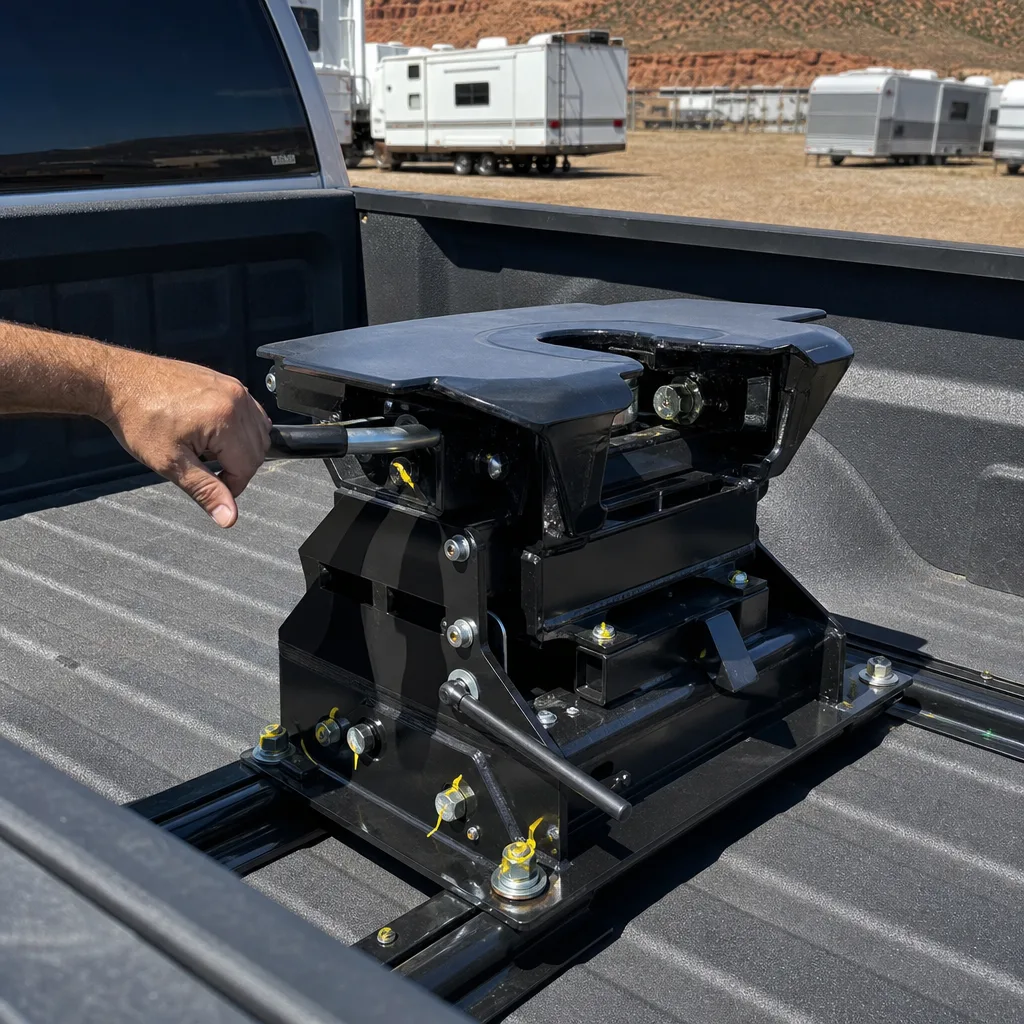
Working where the trailer sits also helps with the inspection itself. Hitch problems live between the truck and the trailer, so it helps to see both together, parked the way you hook up. A good inspection looks at the whole connection, not just the part that's making noise. Whoever you hire, ask whether they're checking all of this:
- Jaws and locking bar: slack, wear, and whether they latch and release cleanly.
- Kingpin: flat spots, grooves, or a shape that's gone out of round.
- Pin box and the trailer frame around it: cracks or bends near the welds.
- Rails and mounting brackets: loose bolts, stretched bolt holes, and rub marks.
- Lube, safety pins, and clips: dry plates, missing pins, and bent clips.
If a tech only tightens the noisy spot and leaves, you'll probably hear from that hitch again. The clunk is a symptom. The goal is to find where the slack is coming from.
You can make the visit go a lot smoother with a little prep:
- Park the truck and trailer with room to walk all the way around and get under the pin box.
- Find the make and model of your hitch. There's usually a label or tag on the head or the base.
- Write down when the noise happens: starting, braking, turning, or over bumps. "It clunks sometimes" is a start, but "it clunks every time I brake downhill" is gold.
- Take photos of anything that looks off, like a crack, a rust streak, or a shiny rub mark.
- Check your paperwork. If the hitch, truck, or trailer is still under a factory warranty, go to the dealer first. We don't currently offer manufacturer warranty work.
Here's who you'll deal with. I'm the lead technician and your main point of contact, so the person looking at your hitch is the same person answering your questions. There's no game of telephone between the front desk and the guy under the truck. My wife runs the office. She sets appointments, keeps the calendar straight, and sends invoices, so you'll hear from her when it's time to book or settle up.
Sometimes a hitch problem has company. Years of banging around can also wear on other parts of your setup. If we spot something, we'll tell you what it is so you can decide what to do. RV Wheel Bearing Repack, RV Tire Inspection and Replacement, and a Pre-Trip RV Inspection are all separate services, and you can book them while we're already there.
Call Benny's RVWhat Drives the Cost of Hitch Repair
We've already covered the biggest cost factor: how long the slack has been pounding away. A few other things move the number too, and most of them come down to what's under your truck and trailer.
Which side of the connection is hurt. A hitch problem can live on the truck side, the trailer side, or both. Worn jaws and a loose mount are truck-side work. A worn kingpin or a tired pin box is trailer-side work. When both sides are worn, you're paying for both, and fixing only one usually brings the clunk right back. New jaws closing on an old, oval kingpin is like buying new shoes and keeping the rock in them.
Whether parts still exist for your hitch. Plenty of hitches have rebuild parts available, so worn jaws or a locking bar can be swapped without replacing the whole thing. Older or discontinued models are a different story. If the parts aren't made anymore, replacing the hitch head or the whole hitch can end up being the more practical repair. That's why finding the make and model before anyone shows up saves time and guesswork.
Rust and stuck hardware. A bolt that comes out in thirty seconds and a bolt that's been rusting in place for years are two very different jobs. Seized bolts, rusted rails, and corroded brackets add labor, and sometimes the bolts snap and have to be drilled out. Nobody can promise exactly how stubborn a bolt will be until they put a wrench on it.
How the work is priced. In this trade, you'll usually run into some mix of these:
- A service call or trip charge, which is common with mobile techs since they're driving to you.
- Hourly labor, billed for the time the repair takes.
- Flat-rate pricing for a known job, like a straightforward jaw swap.
- Parts billed separately, on top of labor.
None of these is better or worse on its own. What matters is that you know which one you're getting before work starts. A mobile repair may carry a trip charge, but it can also save you from towing a trailer you don't trust, or paying to have it hauled to a shop.
Questions worth asking whoever you hire:
- Is there a trip or diagnostic fee, and does it apply toward the repair?
- Are parts and labor listed separately?
- Is it cheaper to rebuild this hitch or replace it, and why?
- What happens to the price if a bolt is seized or a part turns out worse than expected?
- Will you show me the worn parts that came off?
A good tech won't mind any of those questions. If someone gets cagey about the last one, that tells you something too.
Call nowWhen You Don't Need a Repair Visit
Not every hitch noise means you need a tech in your driveway. Some fixes take you ten minutes and a rag. Some problems aren't really problems at all, just a hook-up habit that needs a tweak. We'd rather tell you that now than charge you for a trip to wipe off a lube plate.
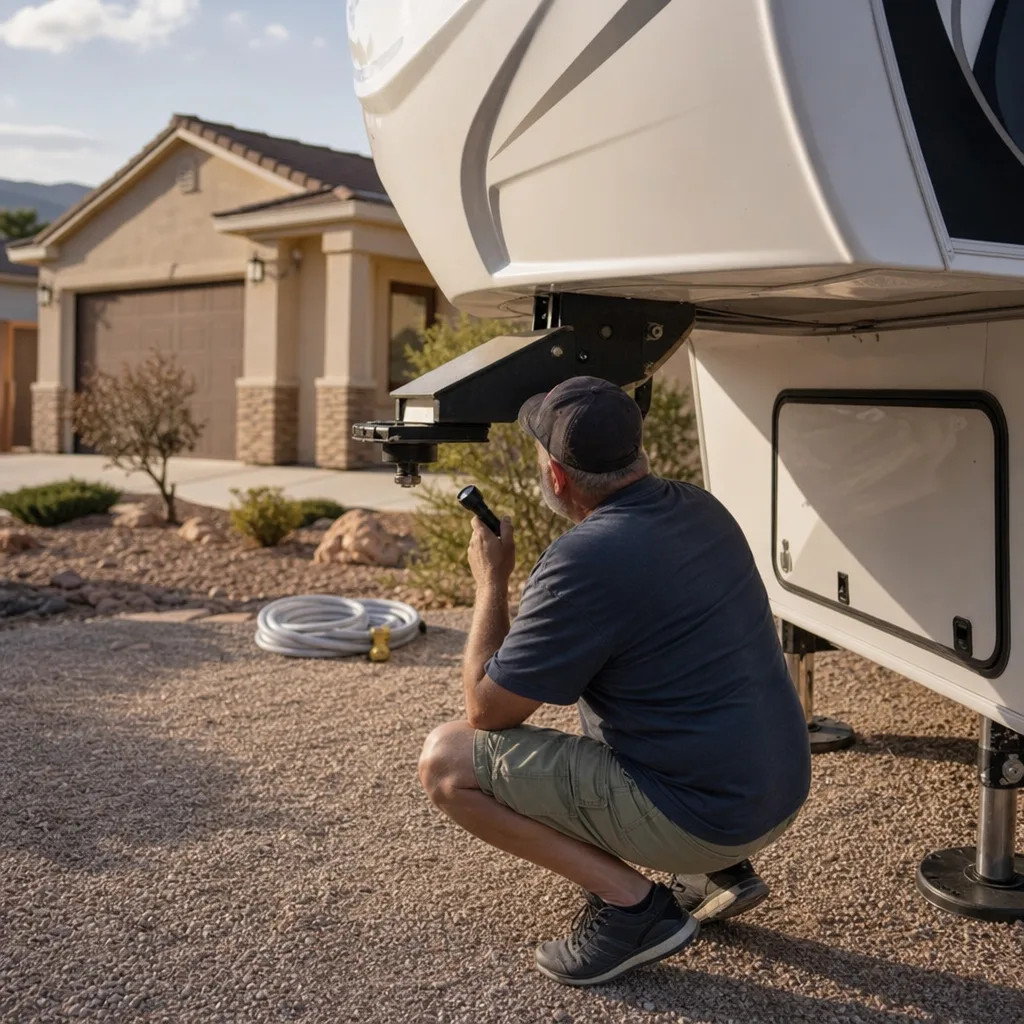
Here's when you can probably skip the repair visit:
- Your lube plate or grease is just dry. If the hitch groans in tight turns and it's been a while since anyone greased it, start there. Your hitch manual will tell you what lube it takes and where it goes. If the noise goes away and stays away, you're done.
- A safety pin or clip went missing. These walk off all the time. Replace it with the right part for your hitch, not a random pin from the junk drawer, and you're back in business.
- Your manual covers the jaw adjustment. Plenty of hitches are built so the owner can take up a little normal slack. If yours is one of them and the manual walks you through it, go for it. If the slack comes right back after you adjust it, that's a sign of wear, and adjusting won't fix wear.
- The handle only sticks when you unhook. A lot of the time, that's not a broken hitch. It's the truck and trailer leaning on the jaws, so the handle has to fight that pressure. Check your manual for the unhooking steps your hitch wants. If it releases easily once the pressure's off, the hitch is fine. Your technique just needed a nudge.
- The trouble is lights or brakes, not the hitch. That's the plug or the wiring, which we covered above, and it's a different fix.
There's also a case where we're flat-out not the right call. If your hitch, truck, or trailer is still under a factory warranty, take it to the dealer first. We don't currently offer manufacturer warranty work. Paying out of pocket for a repair the manufacturer would've covered is the kind of thing that ruins a perfectly good camping trip before it starts.
So where's the line between a home fix and a real repair? It comes down to this. If what you did made the problem go away for good, you didn't need us. If the clunk comes back after a few stops, the slack returns after you adjust it, or you're looking at a crack, a bend, or bolts that won't stay tight, that's past what grease and a new pin can fix.
And here's one piece of advice we'd give our own family. If you're not sure the hitch locked all the way, don't tow on a guess. Feeling a little silly for asking is a lot better than watching your fifth wheel land on your tailgate.
Frequently Asked Questions
Is it safe to tow my fifth wheel to you if the hitch is making noise?
It depends on how bad the noise is, so towing with a loose hitch is a risk you shouldn't take lightly. If the jaws won't latch fully, the kingpin looks worn, or you see cracks near the pin box, don't hook up and drive. That's exactly why we come to your driveway, storage lot, or campsite instead of asking you to tow a trailer you don't trust across Cedar City.
How long does a mobile hitch inspection take?
It depends on what we find, since a full inspection checks the jaws, kingpin, pin box, rails, and mounting bolts together. A straightforward check with no major wear moves faster than a visit where we uncover rust, stretched bolt holes, or a cracked weld. Writing down exactly when your hitch makes noise, like during braking or turns, before we arrive helps speed up the diagnosis.
Can winter driving make a hitch problem worse faster?
Yes, slow and careful towing helps, but cold weather and rough roads still speed up wear on a hitch that already has slack. RV owners who've towed through Cedar City after a snowfall know I-15 gets cleared quickly, but ice and bumps still pound a loose kingpin harder than dry summer roads. If your hitch already clunks, don't wait for a winter trip to get it checked.