
On-Site Campground RV Repair · Cedar City, Utah
On-Site Campground RV Repair in Cedar City, Utah
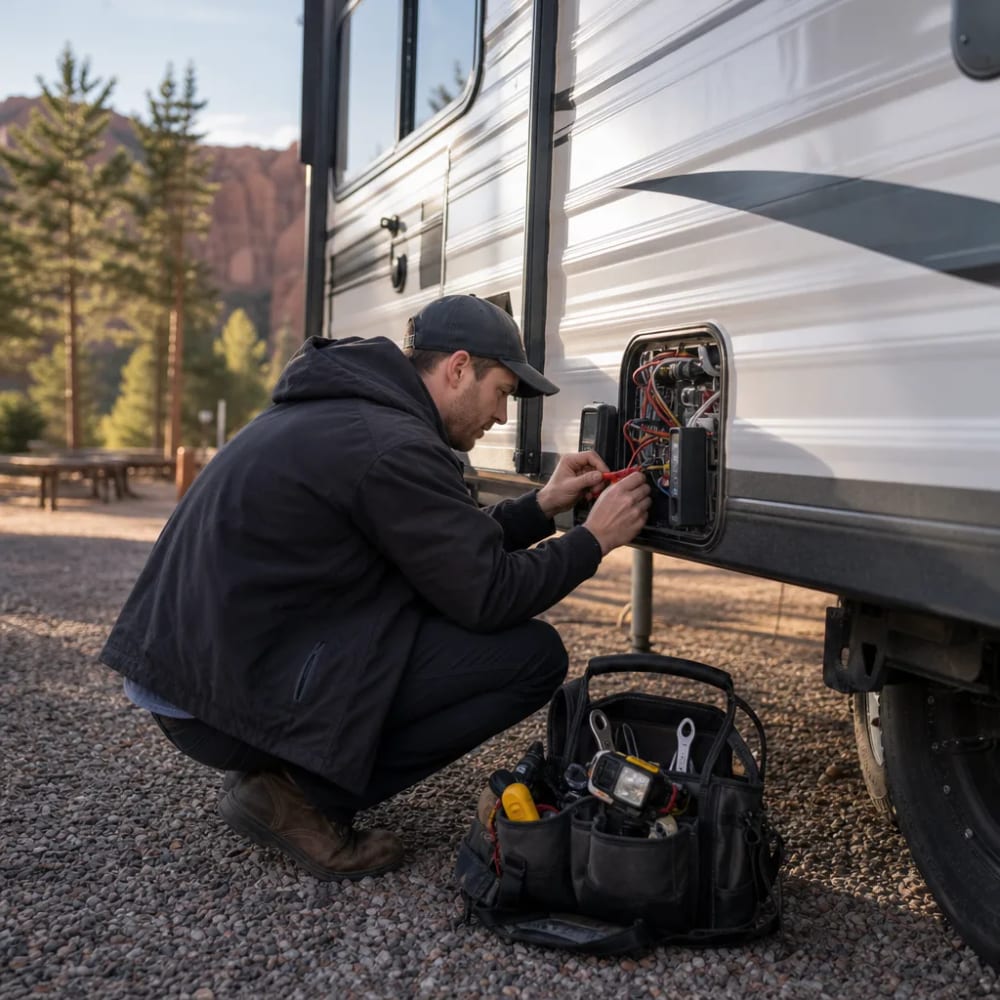
What On-Site Campground RV Repair Covers
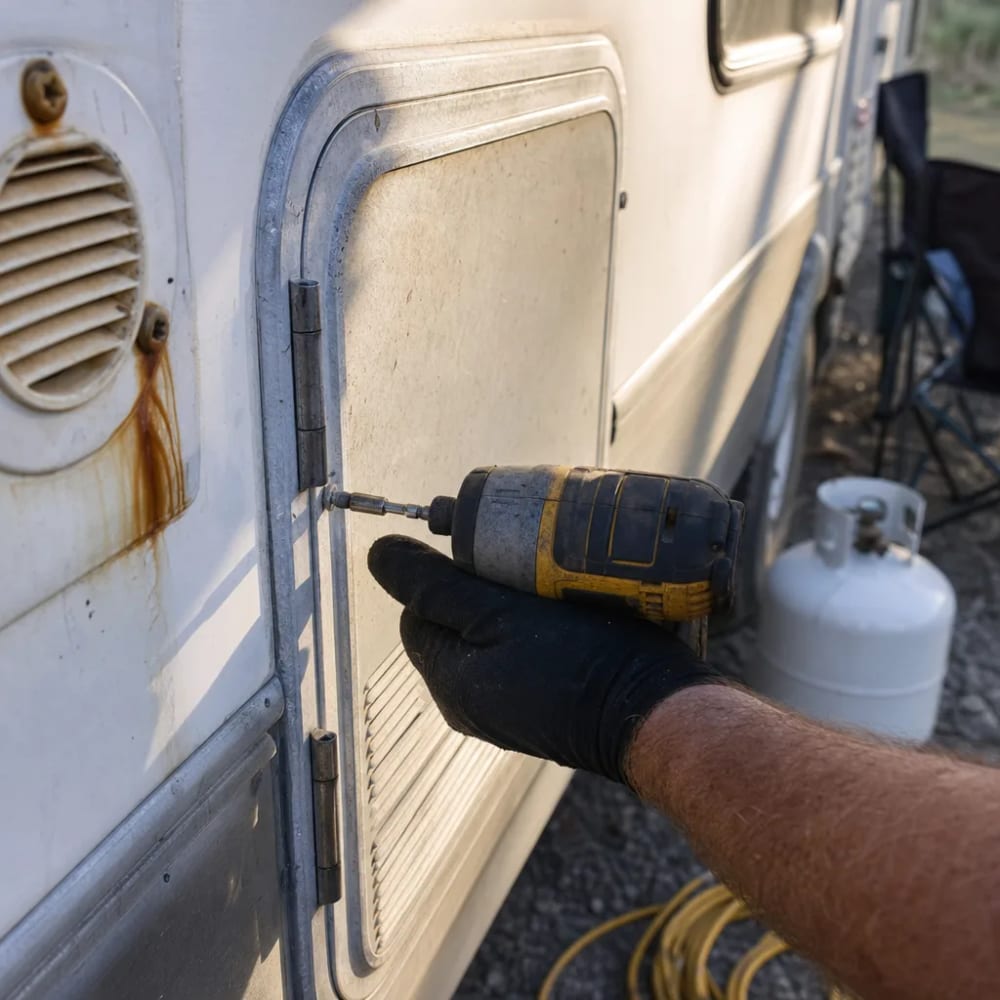
On-Site Campground RV Repair in Cedar City means we come to your rig at the campground and fix it where it's parked. You don't have to break camp, hitch up, or spend a vacation day in a shop waiting room. Most RV breakdowns aren't the rig falling apart. A single system quits, and that system can usually be worked on right where you're parked.
Here's what we cover at your site:
- Cooling and heating: RV air conditioner repair and replacement, and RV furnace repair for chilly nights.
- Fridge and kitchen: RV refrigerator repair, plus RV stove, oven, and microwave repair.
- Water and plumbing: RV water heater repair, RV water pump repair and replacement, RV plumbing repair, and sewer hose and valve repair.
- Power: RV electrical troubleshooting, shore power and 30/50 amp repair, RV converter and inverter repair, and RV battery testing and replacement.
- Propane: RV propane system inspection and leak testing.
- Getting set up: RV leveling system repair, RV door and entry step repair, and RV ventilation fan repair.
- Hitching back up: fifth wheel and hitch repair, and RV trailer wiring and plug repair.
A lot of campground calls start the same way. Something worked fine at home, then quit after a long drive and a fresh hookup. Maybe the fridge won't get cold, or the water pump runs but nothing comes out of the faucet. Maybe the pedestal power looks fine and half your outlets are still dead. Those problems are frustrating, but they're very fixable on-site. Power problems aren't always the RV's fault. Sometimes the campground pedestal is the problem, and figuring out which side is to blame is half the job.
If it's a real emergency, like no heat on a cold night or a propane smell, treat it that way. Turn off the propane at the tank, get everyone out, and call. That's what our emergency mobile RV repair is for.
Some jobs don't belong at a campsite, and you deserve to know that before you call. Major frame damage, big collision repairs, and anything that needs the rig up on a lift for days are shop jobs. A campsite is a great place to swap a water pump. It's a lousy place to rebuild the back wall of a fifth wheel. If your problem falls in that group, we'll tell you so you don't waste a morning waiting on the wrong fix.
One more limit: we don't currently offer manufacturer warranty work. If your rig is new and the repair should be covered by the manufacturer, go through an authorized dealer first so you don't pay for something you shouldn't. If you're past warranty, or you'd rather get back to camping than wait weeks on a dealer's schedule, that's where we come in.
As an RVTI Certified Technician with more than 15 years in the RV industry, I've worked on a lot of rigs. The goal is simple. Find what failed, fix it right, and get you back to enjoying the trip you drove all this way for.
What a Technician Needs From You Before Arrival
The best repair visits start before anyone pulls into your site. A few minutes of prep on your end can save a lot of guesswork on ours, and that means a better shot at getting it fixed the first time. You don't need to know what's wrong. You just need to tell us what you're seeing.
Here's what helps most when you call:
- Your rig's year, make, and model. If you can find the data plate or sticker by the entry door, a photo of it is even better.
- Which appliance or system is acting up, plus the brand and model if it's printed on it. The fridge, water heater, and AC usually have a label somewhere.
- What it's doing, or not doing. 'The fridge runs on propane but not on electric' tells us a lot more than 'the fridge is broken.'
- When it started. Right after hookup? After a bumpy drive? After a storm? Timing is a clue.
- What you've already tried, like flipping breakers, resetting the GFCI, or checking the propane level.
- The campground name, your site number, and the hookups at your site, like 30 amp, 50 amp, water, and sewer.
If you can, take a short video. A clicking sound, an error code, or a blinking light is way easier to judge on video than when someone tries to describe it over the phone. We've all heard the classic 'it makes kind of a whirr-thunk noise.' A ten-second clip beats a great impression every time.
Check with the campground office, too. Some parks have rules about outside service vendors, check-in at the gate, or work hours. It's a quick question, and it keeps your technician from getting stuck at the front booth while your AC stays warm.
Then clear a path to the problem. RV builders love hiding important parts in hard-to-reach spots. The water pump is often under a bed or behind a panel full of stuff. The converter might sit under a cabinet you've packed with snacks. Pull out what's in the way before we get there, and work time goes to fixing instead of unpacking.
- Make sure we can reach the outside access panels and that nothing is parked tight against them.
- Leave the slides in whatever position they're stuck in, and tell us where that is.
- Keep pets secured and give kids a heads-up that someone will be working in and around the rig.
- Stay hooked up to shore power unless the problem makes that unsafe.
One more tip. Once you've noticed something's wrong, stop resetting it over and over. Cycling a breaker or restarting an appliance a dozen times can turn a small problem into a bigger one, and it can wipe out clues we'd want to see. Leave it as it is and let us look. If you smell propane, skip the checklist and follow the emergency steps above first.
My wife handles our scheduling, so when you reach out, having this info ready makes setting the appointment quick. And when I show up at your site, I'll already have a good idea of what I'm walking into.
Repairs That Can Be Finished at the Campsite
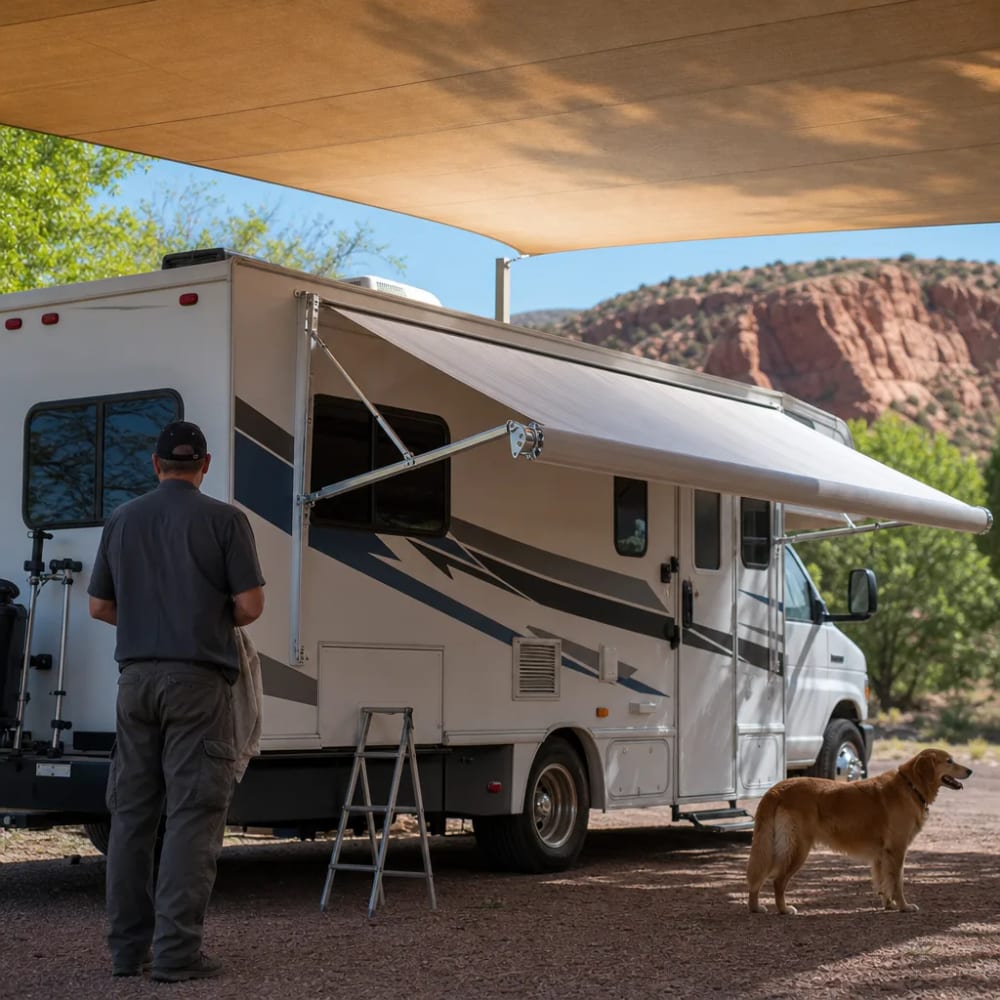
Whether a repair gets finished at your campsite comes down to two things. Can we find the real cause right there, and is the fix a part that's easy to get? When both answers are yes, you're usually back to camping the same day. When the part is rare or built for one specific model, the job may take two trips. The first finds the problem and the second puts the part in.
Here are the kinds of fixes that tend to wrap up in a single visit:
- Power problems caused by a blown fuse, a tripped or worn-out breaker, a GFCI outlet that won't reset, or a loose connection behind a panel. These are some of the most satisfying fixes because the rig looks dead and the cure is small.
- A worn-out or burned shore power cord end, or a trailer plug with corroded pins.
- Batteries that won't hold a charge. Once they test bad, swapping them is quick.
- Water pumps that run but don't push water, plus leaky fittings, drippy faucets, and sticky sewer valves.
- Water heaters and furnaces that won't light because of a common worn part, like an igniter, a sensor, or a switch that's quit.
- AC units that hum but won't start, which often points to a small electrical part instead of the whole unit.
- Roof vent fans, entry steps, and door latches that have simply worn out.
What these have in common is that the part is common and the fix is direct. A water pump is a water pump. Most RVs use a handful of standard sizes, so getting one isn't a scavenger hunt.
Some repairs take more than one trip, and it's better to know that going in. A fridge control board, a full cooling unit, a slide motor built for one brand of rig, or a whole new rooftop AC can be hard to find on short notice. The diagnosis can still happen at your site, so you'll know exactly what failed and what it takes to fix it. The install happens once the right part shows up. That beats guessing, buying the wrong part, and paying to do it twice.
Here's a real-life example of how that plays out. Say your fridge is cooling on propane but not on electric. That points to the electric side, like a heating element, a fuse, or a control board. If it's a fuse, you're done in no time. If it's a board for an older model, we'll tell you what it is and order it. Meanwhile, the propane side keeps your food cold. Your burgers won't know the difference.
A few things help a repair finish in one trip. First, give us the make and model info we asked about earlier, since that lets us figure out the likely part before we arrive. Second, let us know how long you're staying. If you're pulling out in two days, that changes the plan. A short-term fix that gets you home safely, followed by a proper repair later, can be the smarter move. We'll talk it through with you.
The honest version is this. Most campsite breakdowns are one system with one failed part, and those are exactly the jobs that belong at your site. The goal is always to fix it where it sits. If that can't happen in one visit, you'll know why, and you'll know what comes next.
When a Repair Needs a Shop Visit Instead
Here's the short version. If the fix means taking the rig apart, lifting it for days, or working on the engine that moves it, it belongs in a shop. A campsite has gravel, neighbors, and a checkout time. A shop has a lift, a roof over the work, and room to leave a half-finished job overnight without the campground host giving you the look.
These are the jobs that usually fall into that bucket:
- Frame and collision damage. A bent frame rail, a crushed corner from a tight gas station turn, or a pin box area that's cracked or bent. That's different from a worn hitch part, which can often be swapped on-site.
- Wall delamination and hidden water rot. If the outside wall has bubbles or ripples, or the floor feels soft by a door or window, water has likely been sneaking in for a while. Fixing it means pulling panels and replacing wood, and that can take weeks.
- Full roof replacement. Resealing seams and vents is regular upkeep. Tearing off the whole membrane or replacing rotted roof decking is a different animal.
- Axle and suspension replacement. New axles, springs, or hangers mean the rig has to be lifted and supported longer than any campsite allows.
- Slide room rebuilds. A bad slide motor or switch is often a campsite fix. A slide box with a rotted floor or a twisted frame isn't.
- Engine and transmission work on motorhomes. That's automotive shop territory, not RV systems work.
The campground gets a vote, too. Even when a big job is technically possible on-site, most parks don't love a rig torn apart for days, with parts spread across the site and power tools going while your neighbors try to enjoy their coffee. That's fair. They're running a campground, not a repair yard.
A shop job doesn't always mean a shop today. Sometimes the smarter call is to make sure the rig is safe and livable, finish your trip, and handle the real repair later. A slow leak with a soft spot under the window is a real problem, but it's usually not a pack-up-and-leave-now problem. Whether a rig is safe to drive or tow depends on what failed and where it failed, so get that checked before you pull out if anything structural looks off.
There's also a middle ground. Some jobs are too big for a weekend campsite but don't need a lift, like swapping a rooftop AC or resealing a whole roof. Those fit better once you're home, and that's what our RV repair at home or storage lot service is for.
And if your rig is new and the damage looks like a build problem, that's a conversation for the dealer under your manufacturer warranty, since we don't do warranty work.
None of this is meant to scare you. Most campsite breakdowns aren't shop jobs. But when one is, you're better off hearing it on day one than on day three, after waiting on a fix that was never going to happen in a gravel lot. Knowing which kind of problem you've got is half the battle, and the other half is getting it to the right place.
Signs You Should Call Right Away
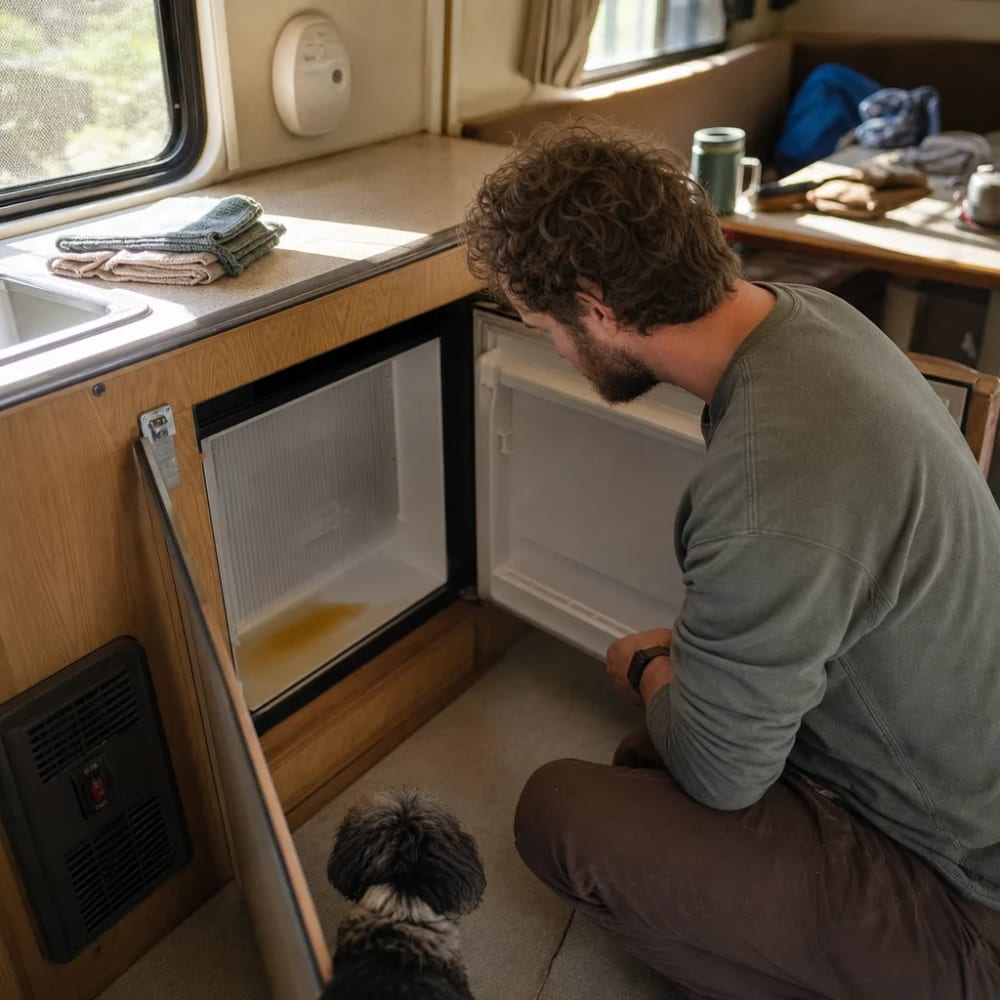
Some problems can wait until Monday. Some can't wait until lunch. The difference usually comes down to three questions. Is it a safety risk? Is it costing you something by the hour, like food, water damage, or a warm night? Will it stop you from leaving on time? If any answer is yes, call now instead of hoping it sorts itself out. RV problems rarely fix themselves, though plenty of us have tried the stare-at-it-harder method.
These are call-right-away problems:
- You smell propane or your propane detector goes off. Follow the emergency steps at the top of this page first, then call.
- Your carbon monoxide alarm goes off. Treat it as seriously as a propane smell. Don't wave it off as a low battery until you know for sure.
- Something smells hot or burnt, an outlet or cord feels warm, or the shore power plug looks scorched or melted. Heat in a place where electricity runs means something is failing, and it won't get better by itself.
- Water is actively leaking inside the rig. A drip under the sink can turn into a soaked floor and swollen cabinets faster than you'd think.
- Your batteries are swelling, hissing, or giving off a rotten egg smell. That isn't just a weak battery anymore.
- You've got no heat and a cold night is coming. A furnace that blows cold air or won't light at all isn't something to tough out with the kids along.
- Your fridge is warming up with a full load of food. You've got hours, not days, before that turns into an expensive cooler of regret.
- A slide is stuck out and checkout is tomorrow, or a storm is on the way.
- Your trailer lights, brakes, or plug aren't working and you're about to tow. Don't head out on the highway hoping the lights come back on.
Here's a common one. You plug in after a long day of driving, and within a few minutes the cord end at the pedestal feels hot to the touch. Everything inside still works, so it's tempting to ignore it. Don't. A hot connection points to a loose or worn contact, and that's the kind of small problem that turns into a melted plug. Unplugging and calling is the right move.
Now the other side. A burned-out light, a sticky drawer, a vent fan that's a little noisy, or a step that squeaks can wait. So can a slow drain or a toilet seal that's starting to weep, as long as you keep an eye on it. Jot it down, enjoy your trip, and get it handled when it's convenient. Not every problem needs a phone call tonight.
If you're unsure which group your problem falls in, describe what you're seeing when you call, using the details we covered above. That's usually enough to tell whether you need help now or whether it can wait until we're already scheduled nearby. Calling to ask is always better than guessing wrong on something that matters.
Something on that list happening at your site right now? Give us a call. Tell us what you're seeing, and we'll help you figure out the next step and get your trip back on track.
Call nowFrequently Asked Questions
Do I need to check with the campground before you come fix my RV?
Yes, it's a good idea to check with the campground office first. Some parks have rules about outside service vendors, gate check-in, or set work hours. A quick call to the office saves your technician from getting held up at the booth while your AC or fridge sits broken.
Can you still work on my RV if it's hooked up to shore power?
Yes, stay hooked up to shore power unless the problem makes that unsafe. Staying connected helps during diagnosis, since many electrical issues only show up when the rig is powered and running normally.
What if I don't know what's wrong, just that something's off?
That's completely fine, you don't need to diagnose it yourself. Just tell us what you're seeing, like 'the fridge runs on propane but not electric' or 'the water pump runs but nothing comes out.' A short video of a strange noise or blinking light also helps a lot.
Will leaving my slide out or stuff packed around the RV cause delays?
It can, so clearing space ahead of time speeds things up. Water pumps and converters are often hidden under beds or behind packed cabinets, so moving gear out of the way before we arrive means more time spent fixing and less time unpacking.