
Pre-Purchase RV Inspection · Cedar City, Utah
Pre-Purchase RV Inspection in Cedar City, Utah: Know What You're Buying Before You Sign
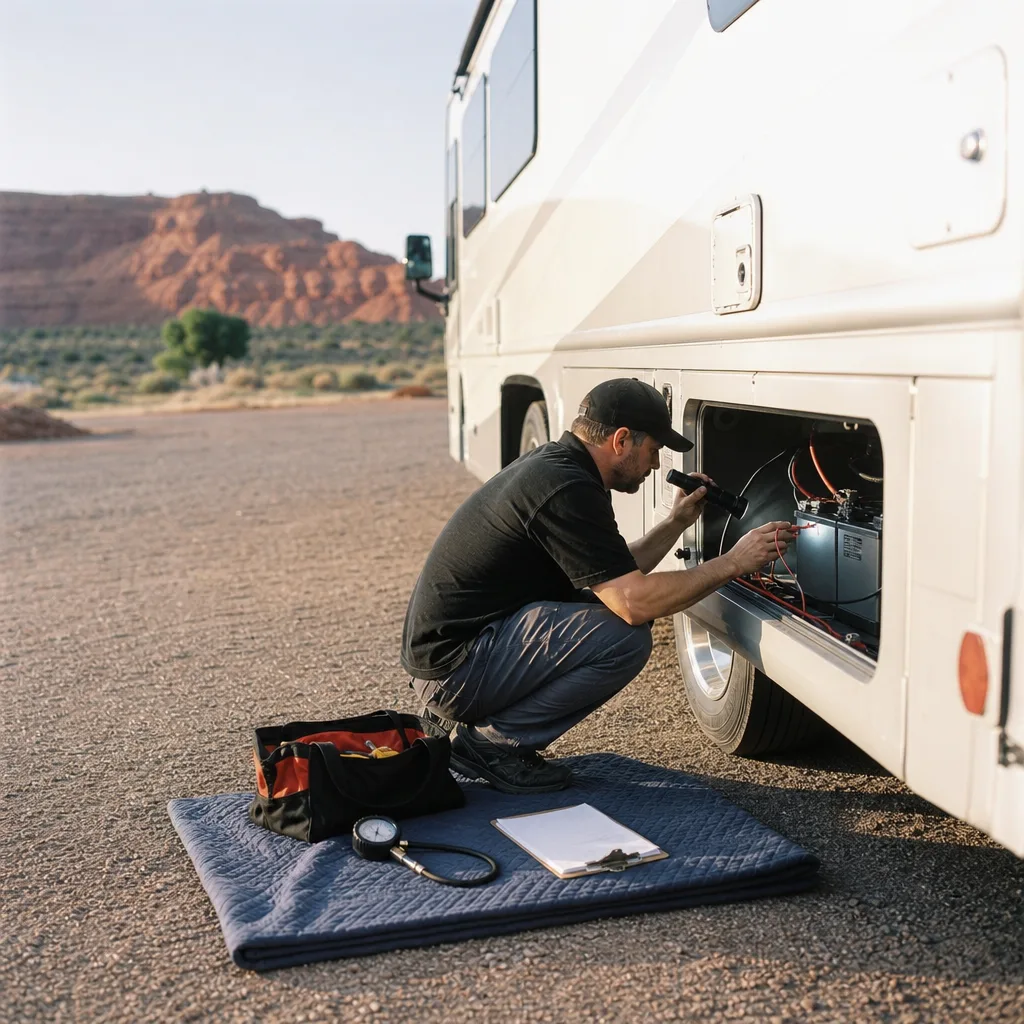
Decide If an Independent Inspection Is Worth It Before You Sign
I spent over 15 years on the sales side of this business, from the sales floor all the way up to running three dealership locations. So I'm not going to tell you every seller is hiding something. Most aren't. But I also know a clean, shiny unit with a fresh coat of wax tells you exactly nothing about the roof seams, the propane lines, or what's going on under the floor.
Here's the simple test. If you'd be sick to your stomach finding a soft floor or a dead fridge two weeks after you sign, get it inspected first. Once the money changes hands, that problem is yours.
It's usually worth it when:
- It's a private sale. There's no dealer to call later, and "as is" really means as is.
- The rig is a few years old or more and nobody can show you service records.
- It sat in storage for a long stretch. Seals dry out, rodents move in, and batteries die quietly.
- The "inspection" so far was done by the seller's own shop. That's not the same as someone working for you.
- It's a motorhome. You're buying a house and a vehicle at once, so there's twice as much to go wrong.
- You're stretching your budget to buy it. A surprise repair hurts more when there's no cushion.
And here's the honest flip side. You probably don't need us when:
- You're buying a cheap trailer as a project and plan to tear out the inside anyway.
- You know RV systems well yourself, including water, propane, electrical, and roof, and have the time to test every one.
- The price is so low that a full repair bill would still leave you ahead.
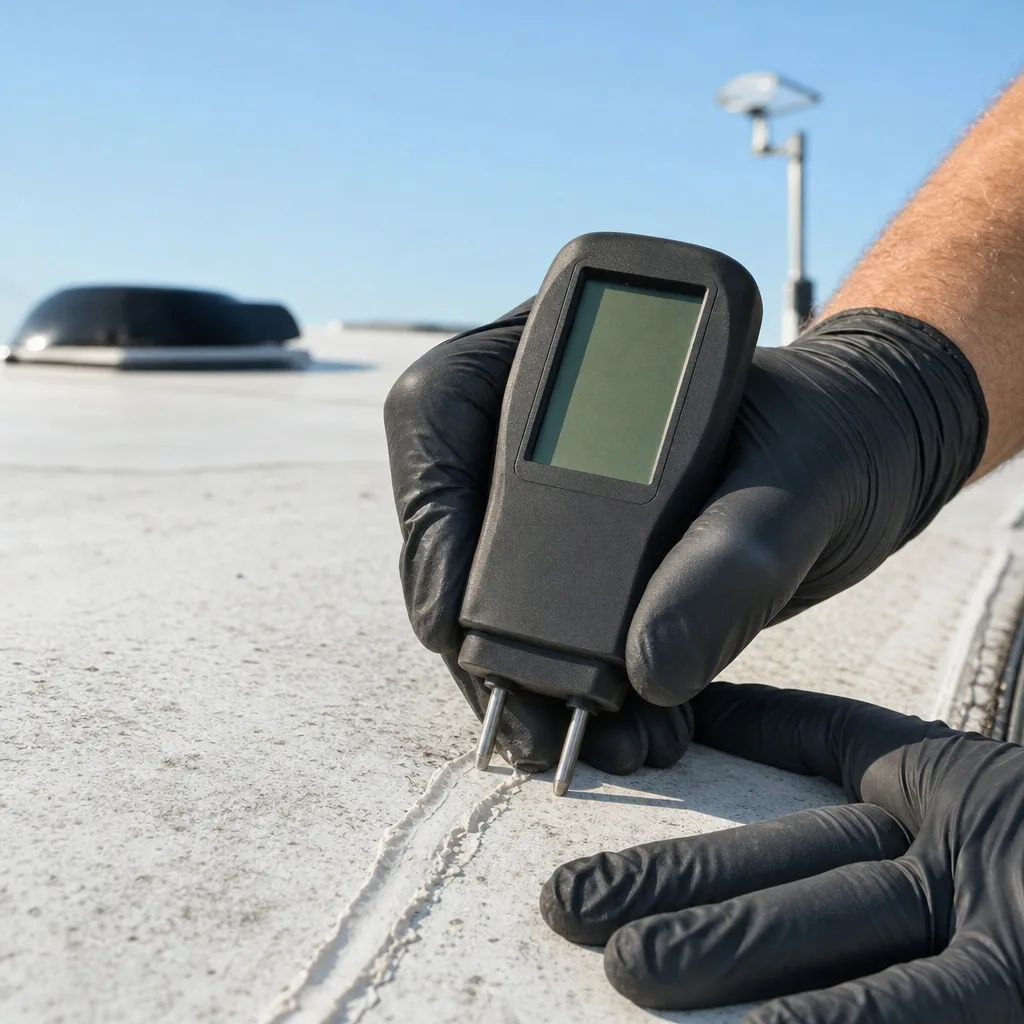
If that's you, save your money. Bring a flashlight, a moisture meter if you've got one, and press on every inch of floor near the doors and the bathroom. Water damage loves those spots like a dog loves a couch.
On cost, there's no one flat number across the trade. Be wary of anyone who quotes you before asking about the rig. A few things usually drive the price up or down:
- Type and size. A small travel trailer takes less time than a 40-foot diesel pusher.
- Motorhome vs. towable. Motorhomes add a chassis, an engine, and a generator to check.
- How many slides, appliances, and systems the unit has.
- Travel time to wherever the rig is parked.
- Add-ons, like lab testing of engine or generator fluids, if you ask for them.
Before you hire anyone, ask three things. Who do you work for in this deal? What exactly do you check, and what don't you? What will I get in writing when you're done? A good inspector answers all three without squirming.
As an RVTI Certified Technician who's been on both sides of the desk, my take is simple. The inspection doesn't make the decision for you. It makes sure you're deciding with your eyes open, whether that means you sign, walk, or knock a few grand off the price.
What Gets Checked During a Pre-Purchase Inspection
A real pre-purchase inspection checks every system the RV runs on, not just the parts you can see on a walk-through. Think of it as a checkup for a house that also has wheels, propane, and a habit of hiding water damage. Here's what a thorough one should cover.
Roof and seals. This is where most expensive problems start. The roof should be walked or checked up close, looking at the sealant around vents, skylights, the AC unit, and every seam. Cracked or pulling sealant is how water gets in. Soft spots underfoot mean it already did.
Water damage inside. Water is sneaky. It can rot a wall for a year before you notice a thing. A good inspector presses on floors near doors, slides, and the bathroom, checks walls for bubbling or waves in the siding, and uses a moisture meter on the usual trouble spots. A stain under the sink might be nothing. A soft floor under the sink is a whole different afternoon.
Propane system. Every line and fitting should be leak tested, and the regulator checked. Then each gas appliance gets fired up to prove it lights and stays lit. This one's about safety as much as money.
Electrical. That means the shore power cord and plug, whether 30 or 50 amp, plus the converter, the batteries, any inverter, and the outlets. A tired converter can look fine and quietly cook your batteries.
Plumbing and tanks. The fresh water pump, the water heater, faucets, the toilet, and the dump valves should all be run. Leaks under the sink or behind access panels tell you a lot about how the rig was cared for.
Appliances and comfort systems. The fridge should be tested on both gas and electric, since some only fail on one. The furnace, AC, stove, oven, microwave, and roof vent fans all get turned on. "It worked last time we used it" isn't a test. That last time might've been years ago.
Slides and leveling. Run the slides all the way out and back in. Listen for grinding, watch for jerky movement, and check the seals along the edges. Leveling jacks should go down and come back up cleanly.
Tires, brakes, and running gear. Tread depth doesn't tell the whole story on RV tires. They often age out before they wear out, so the date code on the sidewall matters. Cracks in the sidewall matter too. Wheel bearings, brakes, the hitch or pin box, and the trailer plug and wiring round this part out.
Motorhome extras. If it drives itself, you're also buying an engine, a transmission, and usually a generator. Fluids, belts, hoses, generator hours, and how it starts and runs under load all belong on the list. Lab testing of engine or generator fluids is an add-on some buyers choose.
Not every finding is a deal breaker. A dead battery or a sticky vent fan is cheap stuff. Soft floors, a leaking roof, or a propane leak are the kind of finds that should change your offer or send you home. Our goal is to help you know which is which before you sign.
Why a Dealership Background Changes What Gets Found
My first job in this business was washing trailers as a lot porter for Johnny Walker RV, to help pay for college. That job taught me something no textbook did. A good wash makes almost any RV look ready to roll. It also covers up a lot. I've held the hose and the wax rag, so I know exactly what that shine can hide.
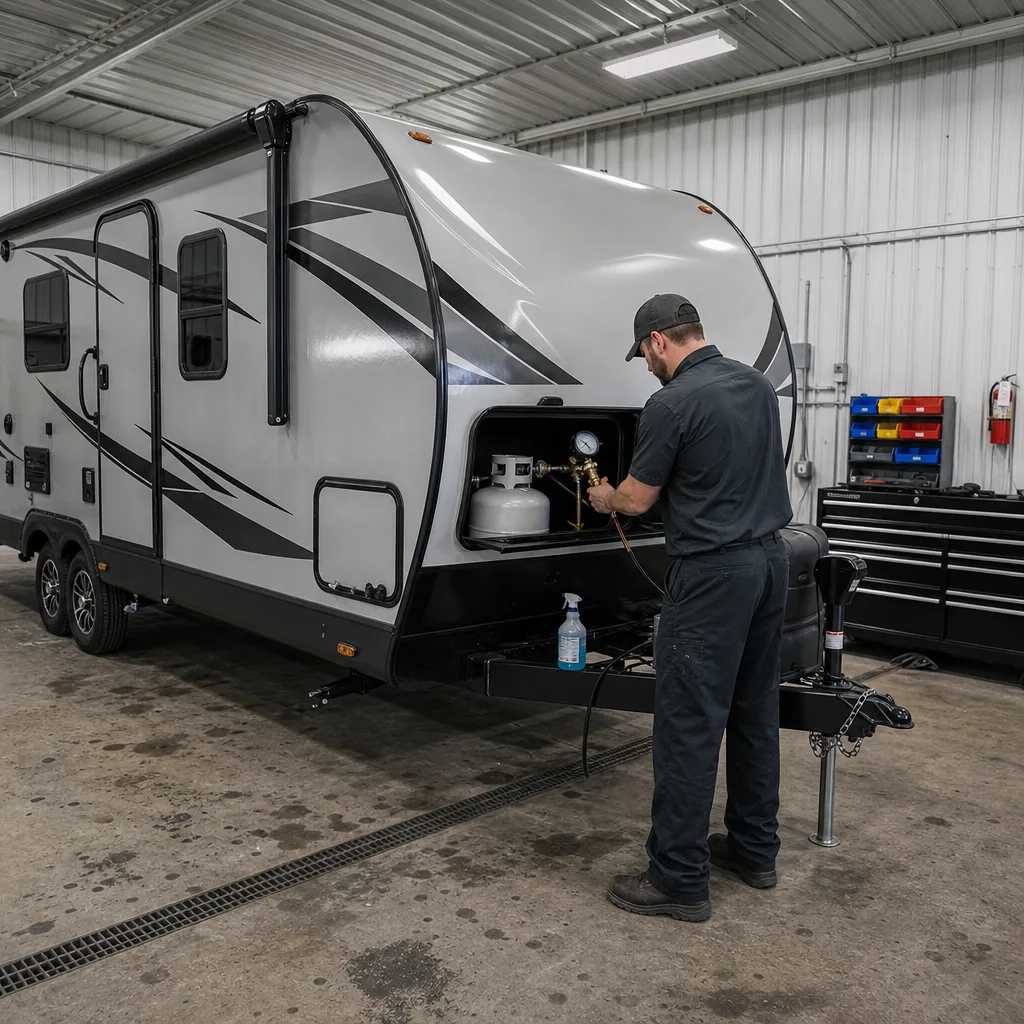
Getting a used RV ready to sell is normal, and most of it is honest. Nobody wants to show a dirty rig. But some fixes make a unit look good for a weekend without solving anything. When we inspect, we look past the cleanup. Here's what that means in practice:
- Fresh sealant on the roof. New caulk looks great, but sometimes it's laid right over old cracks or over wood that's already soft. We check what's under it and around it, not just how it looks.
- New rugs or mats near doors and slides. They're nice to have. They're also a handy way to hide a soft spot or a stain. We step on the floor, not the rug.
- A strong air freshener smell. It might just be a clean RV. It might also be covering mildew from a slow leak. We trust a moisture meter over our nose.
- A battery that was charged right before the showing. It'll run the lights for an hour and then quit. A real test shows if it can hold a charge.
- Shiny slide seals. Conditioner makes old rubber look new. Running the slides and looking closely at the seal edges tells the truth.
From there I moved into sales, then sales management, and then I ran three dealership locations. That side of the desk taught me how trade-ins come in, how units get priced, and what questions a seller tends to dodge. So when we're done, you won't just get a list of problems. You'll know which ones are real deal breakers and which ones are good reasons to ask for a better price.
The other half is the hands-on part. I'm an RVTI Certified Technician, so I don't just know what a problem looks like. I know how it gets fixed and about what kind of work it takes. That matters when you're deciding if a finding is a fifty-dollar fix or a soft floor that means pulling up the subfloor.
Here's the bottom line. A good cleanup sells RVs. A good inspection makes sure you know what you're really buying. I've worked both jobs, and that's why we catch things a quick walk-through can miss. And since we're a mobile service based here in Cedar City, we come to where the rig is parked, whether it's on a dealer lot, at a storage yard, or in someone's driveway.
When you call, you'll be talking to me. I'm the lead tech and the main contact, so the person you talk to is the person who does the inspection.
Call to book your inspectionGetting the RV Inspected Wherever It Currently Sits
You don't have to tow, drive, or beg anybody to move the RV. We come to it. The part that's on you is making sure the rig is ready to be tested when we show up. An inspection can only prove what it can turn on. If the propane's empty or there's no power, a big chunk of that checklist turns into guesswork.
Start with the seller. Tell them you want an independent inspection before you buy and ask them to agree to it. Most honest sellers say yes right away. If a seller gets cagey about an inspection, that tells you something too. If the rig is on a dealer lot, ask up front whether they allow outside inspectors and when. If it's at a storage yard, find out the gate hours and who has the code, so nobody's stuck outside the fence.
Here's what the RV needs so every system can be tested for real:
- Power. A shore power hookup that matches the rig, 30 or 50 amp, or a working generator with fuel in it.
- Propane in the tanks. Without gas, nobody can prove the fridge, furnace, water heater, or stove work on propane.
- Water. Either water in the fresh tank or a hose connection, so the pump, faucets, toilet, and water heater can run.
- Batteries hooked up and the disconnect switch on.
- Keys to everything. That means the doors, the outside compartments, and the ignition if it's a motorhome.
- Room to work. There should be enough space around the rig to run every slide all the way out and safe access to get up on the roof.
- A cold engine. For motorhomes, ask the seller not to start the engine or generator before we get there. How it starts cold tells you more than how it runs warmed up.
One more catch is winterizing. If the rig has been winterized, the water lines are full of antifreeze and the plumbing can't be fully tested until it's flushed out. Ask the seller before you book. If it needs to be de-winterized first, that's something we do too, as its own service.
Here's how it plays out when nobody preps. The seller says, "Tanks are empty, but trust me, it all works." Maybe it does. But "trust me" is exactly what you're paying an inspection to replace. A ten-minute stop to fill a propane tank can save you from buying a fridge that only cools on electric.
Pick a dry day with good daylight if you can. A wet roof is slick and hard to walk safely, and water sitting on the surface can hide the cracks you're trying to find.
If you can be there for the inspection, come. Seeing a soft spot under your own foot sticks with you a lot better than reading about it later, and you can ask questions on the spot. If you're buying from out of town and can't make it, bring that up when you call and we'll sort it out.
Call nowWhy Elevation and Mountain Travel Matter for a Southern Utah Purchase
An RV that runs fine in a flat parking lot can have a rough first trip around here. Cedar City sits high, the nights get cold, the sun is strong, and just about every fun place to go starts with a climb. So when we inspect a rig for someone buying in Southern Utah, we're not only asking whether it works. We're asking whether it'll work where you're going to take it.
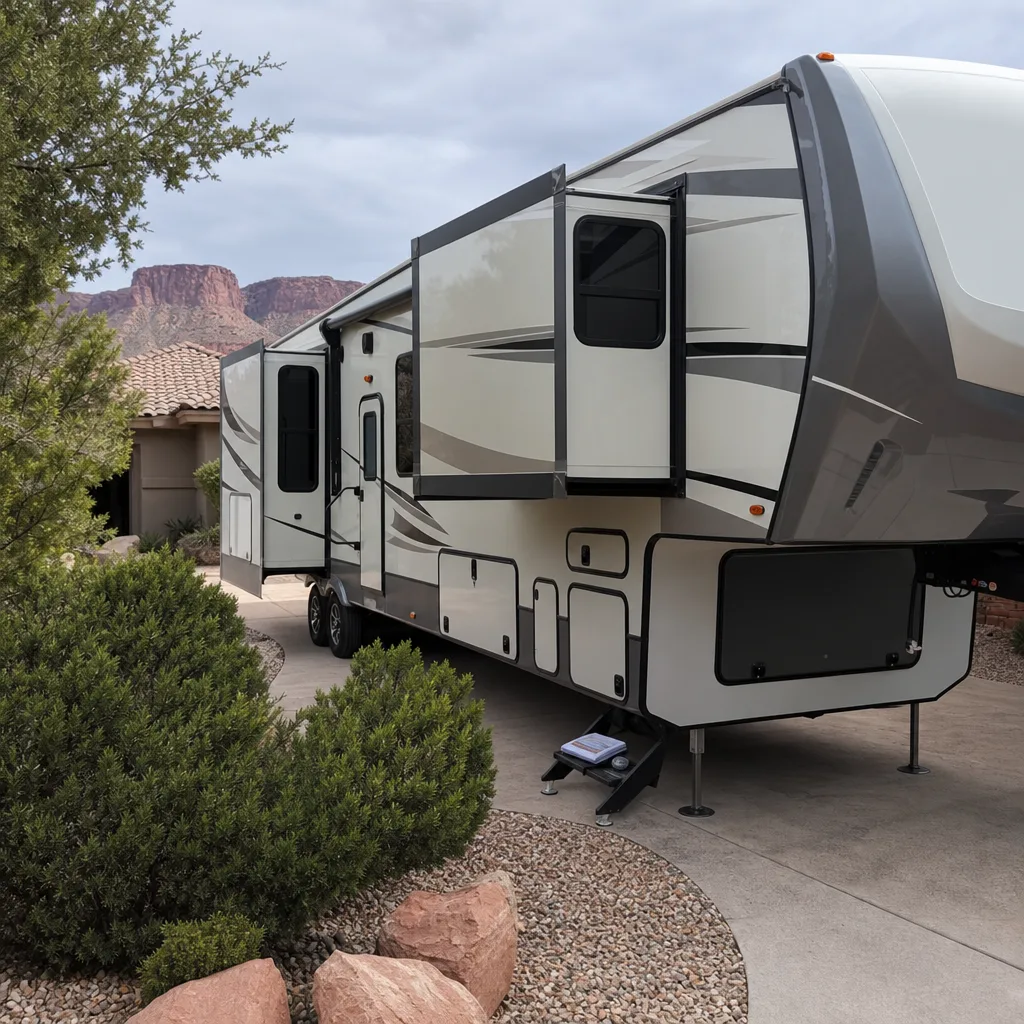
Long grades are hard on brakes, cooling systems, and transmissions. Climbing I-15 or heading up the canyon roads east of town puts a heavy, steady load on a motorhome engine. Coming back down puts that load on the brakes. A rig that spent its life on flat highways may never have been pushed that hard. That's why we pay close attention to the parts that take the beating on a mountain road:
- Brakes on motorhomes and towables, including trailer brakes and the breakaway switch. On a steep downhill, you want those to work every single time.
- Coolant, hoses, belts, and the radiator on motorhomes. A small weak spot that's fine around town can overheat halfway up a long grade.
- Transmission fluid condition. Burnt or dark fluid can point to a rig that's been worked hard or towing more than it should.
- Wheel bearings and tires. Heat builds on long climbs and long descents, and old tires don't handle heat well. That's where the date code we talked about earlier really earns its keep.
Thinner air changes how things burn. Engines and generators make less power up high, and propane burners can act a little different too. A generator that barely keeps up with the AC at sea level may struggle here. When we test the generator under load and fire every propane appliance, it's happening at our elevation. That tells you more than a seller's word that it all worked fine back home.
Cold nights find weak plumbing. If a rig sat in storage around here and wasn't winterized right, freezing can crack fittings, water lines, and even the water heater. Sometimes the damage doesn't show until the water's back on and something starts dripping behind a panel. On the flip side, a rig coming from a warm state may never have run its furnace hard. Ours gets a real workout, so we want to see it light, blow warm, and keep going.
Strong sun ages a rig faster. More sun up high means roof sealant dries and cracks sooner, rubber roofs chalk, and tire sidewalls get brittle. A rig that's been parked uncovered out here can look younger than its roof really is. Think of it like a farmer's tan. The parts facing the sky tell a different story than the rest.
None of this means a rig from somewhere else is a bad buy. It just means the right question isn't "Does it run?" It's "Will it handle Cedar City and the roads out of it?" That's the question we answer.
Call nowFrequently Asked Questions
How long does an RV inspection take?
It depends on the size and type of rig, usually a few hours for a smaller travel trailer and longer for a motorhome. A motorhome takes more time because it adds an engine, transmission, and generator to the checklist on top of the roof, plumbing, electrical, and propane systems. Slide-outs, extra appliances, and travel time to where the rig is parked can add to that too.
What does a pre-purchase RV inspection cost?
There's no single flat number, since cost depends on the rig itself, not a set price list. Type and size matter, since a small travel trailer takes less time to check than a 40-foot diesel pusher. A motorhome costs more to inspect than a towable because of the added chassis, engine, and generator. Be cautious of anyone who quotes a price before asking what you're buying.