
Pre-Trip RV Inspection · Cedar City, Utah
Pre-Trip RV Inspection in Cedar City, Utah: Know Before You Go
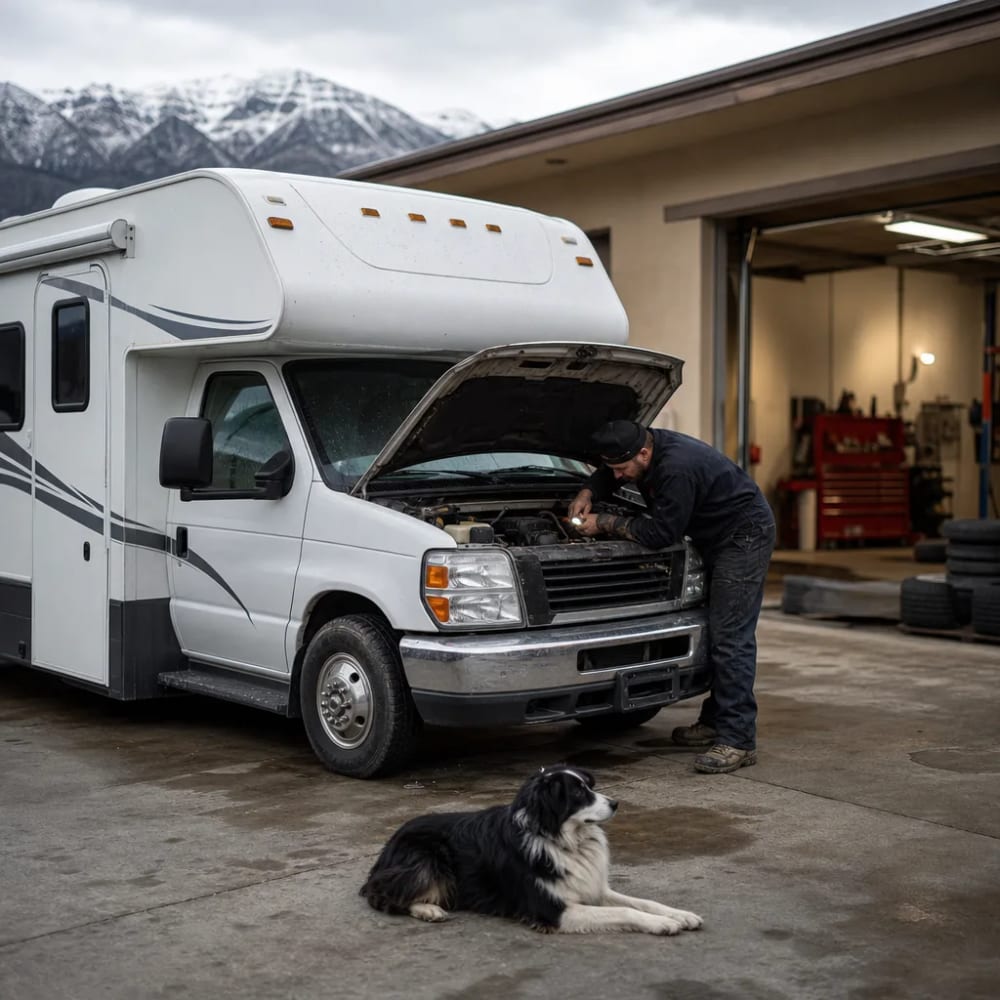
Decide If a Professional Pre-Trip Inspection Is the Right Call
Not every trip needs us. We'd rather tell you that straight than sell you something you don't need. Here's how we'd think it through if it were our rig in the driveway.
You can probably handle it yourself if:
- You took the RV out in the last few weeks and everything worked.
- The trip is short, and you'll be close to home if something goes sideways.
- Your rig's maintenance is up to date, and you know what's been done and when.
- You're comfortable checking tire pressure, lights, the hitch, and the propane, and you do it every time.
If that's you, grab a checklist, take your time, and go have fun. A good owner walk-around catches a lot.
Now for the other side. A walk-around checks what you can see. A lot of the trouble on an RV hides where you can't, like inside wheel hubs, behind roof seams, or in a propane line with a slow leak. These are the times we'd bring in a trained tech:
- The RV has sat in storage for months. Rubber dries out, batteries drain, and critters move in and help themselves to your wiring.
- It's new to you. You don't know what the last owner skipped, and they're not likely to bring it up.
- You're planning a long haul or lots of highway miles with a full load.
- You can't remember the last time the wheel bearings were serviced.
- You smell propane, see a soft spot on the floor or roof, or notice a water stain that wasn't there before.
- Something gave you trouble on the last trip and you never quite got it fixed.
Picture this. You pack the night before, hook up at sunrise, and two hours down the road a tire you didn't check closely lets go. Now you're on the shoulder with a family, a full fridge, and a lot less vacation. A pre-trip inspection is about stopping that morning from ever happening. It's cheaper and a whole lot calmer to find a problem in your driveway than on the side of the highway.
If an inspection turns up something bigger, some fixes have their own service. A propane concern points to an RV Propane System Inspection and Leak Test, and overdue bearings point to an RV Wheel Bearing Repack. One thing to know up front: we don't currently do manufacturer warranty work, so if your rig is still under factory warranty, check with your dealer on covered repairs.
Our lead tech is an RVTI Certified Technician with more than 15 years in the RV industry. He started out washing trailers on a dealer lot and worked his way up from there. That's a lot of rigs, and a lot of owners who wished they'd checked one more thing before they left.
Not sure which list you fall on? Give us a call. We'll talk it through with you and tell you whether you need us before your trip.
Call nowWhat Gets Checked Before a Trip
A real pre-trip inspection isn't a guy kicking your tires and saying "looks good." It works through the systems that strand people, starting with the ones that roll and ending with the ones you live in. The goal is simple. Find what will hurt you on the road while it's still parked in your driveway.
Here's what a thorough one should cover.
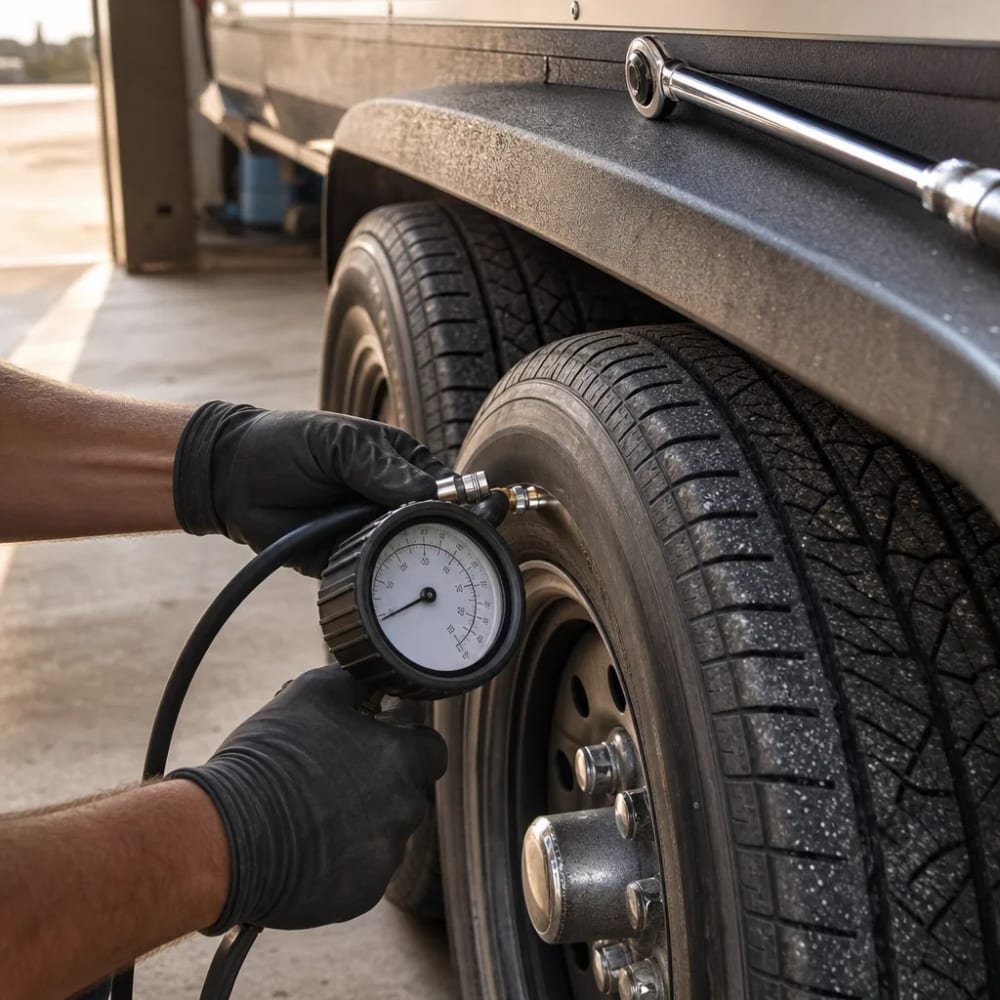
- Tires: Pressure, tread, sidewall cracks, and the date code. A tire can have plenty of tread and still be too old to trust. Sun and long sits age rubber faster than miles do.
- Wheels, bearings, and brakes: Lug nuts, hub heat, play in the wheels, and how the brakes respond. This is the stuff you can't see from a walk-around, and it's the stuff that ends trips fast.
- Hitch and coupler: The ball or fifth wheel pin, safety chains, the breakaway cable, and the breakaway battery. A hitch that's "probably fine" isn't a phrase you want in your head at highway speed.
- Trailer plug and lights: Brake lights, turn signals, running lights, and the plug itself. Corroded pins cause more flickering lights than bad bulbs do.
Cedar City sits right on I-15, so for a lot of folks the first stretch of any trip is interstate speed with a full load. That's exactly when weak running gear shows itself. It's why the rolling parts come first.
- Batteries and electrical: Battery charge and connections, the converter, the shore power cord and plug, and whether 12-volt and 120-volt power both reach where they should.
- Propane and appliances: Visible lines and fittings, tank mounts, the leak detector, and a quick run of the furnace, water heater, fridge, and stove. If anything points to a leak, that's when a full propane leak test comes in.
- Water and plumbing: The water pump, fittings under sinks, the water heater, tank valves, and the sewer hose. A slow drip under the galley sink can quietly rot a floor all season.
- Roof and seals: Seams, vents, and the edges around the AC and skylights. Water gets in through gaps the size of a pencil line.
- Slides, awning, and leveling: Do they move smoothly, seal tight, and lock where they should? A slide that won't come back in is a fun way to meet a whole campground.
None of this is magic. It's patience and knowing where rigs tend to fail. Anybody can check a tire. What matters is checking the hub behind it, the date on the sidewall, and the chain hanging next to it, all in the same pass.
That split is the whole point. Some things can ride along until you're home. A cracked tire or a loose hitch can't. Knowing which is which turns a nervous departure into an easy one, and it means the only surprise on your trip is how good the view is.
Why Winter Storage in Cedar City Makes This Check Worth Doing
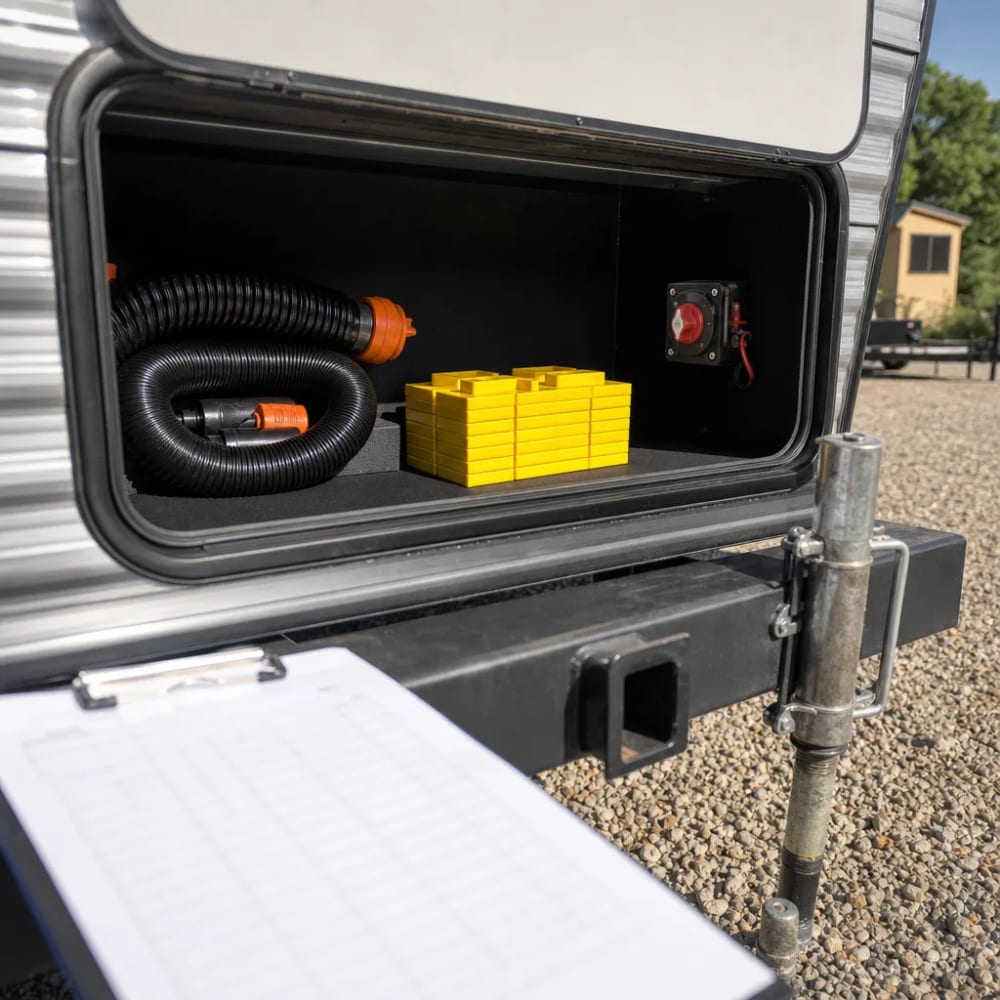
Here's the thing about parking an RV for a Cedar City winter. You put it away in good shape, so you figure it'll come back out in good shape. But the rig didn't spend those months resting. It spent them getting worked over by cold nights, warm afternoons, and dry air.
Picture a spring morning. You pull the cover off, hook up water, and open the kitchen faucet. It sputters, then runs fine. You're feeling good. Then you notice the carpet by the bed is damp. A fitting you can't see cracked sometime around January, and now it's leaking into the floor. Nothing looked wrong until water went through the lines.
That's what winter storage does. The damage is real, but it stays quiet until you put the rig back to work. Here's where it tends to hide after a winter up here:
- Plumbing that froze. One low spot of water left in a line, the pump, or the water heater is all it takes. If winterization got skipped or rushed, fittings and valves can split, and you won't know until there's pressure on them.
- Seals that shrank and pulled loose. Cold nights followed by sunny days make roof sealant and window seals expand and shrink over and over. Small gaps open up at the edges around vents and the AC, and spring storms find them.
- Batteries that froze or sulfated. A battery that sits drained in the cold can be damaged for good, not just low. It may take a charge and still fail you halfway through the first weekend.
- Visitors in the vents. Mice want somewhere warm in winter. Bugs and birds like the furnace and water heater vents come spring. A nest in a burner tube isn't just annoying. It can mess with how the appliance burns.
- Sun-baked rubber and plastic. Our dry air and strong sun are hard on tires, hoses, and vent covers, even on a rig that never moved.
None of this means you did anything wrong. It's just what months of cold do to a house that also has wheels. The trouble is that most owners find it on the first trip, when the rig's loaded and the reservation is already paid for.
That's why the first trip of the season is the one we'd never skip an inspection on. Catch a split fitting or a weak battery in your driveway, and it's a simple fix. Catch it at a campsite, and it's a scramble.
If you haven't de-winterized yet, an RV De-Winterization / Spring Start-Up gets the antifreeze out and the water system running again, and it pairs nicely with a pre-trip check before you head out. And come fall, a good RV Winterization makes next spring a whole lot less exciting, in the best way.
Rig been parked since fall? Give us a call before your first trip of the season, and we'll make sure winter didn't leave you any surprises.
Call to book your pre-trip inspectionWhen You Can Skip a Professional Inspection
We'll say it plainly. Plenty of trips don't need a pro looking at your rig first, and paying for one anyway is just buying peace of mind you already have. Here are the times we'd tell a neighbor to save their money.
- You just got back. If you came home last week, nothing acted up, and the rig's been sitting in the driveway since, your last trip already did the testing. The road is a pretty honest inspector. A fresh look would mostly tell you what you learned on the drive home.
- The work was just done, and you've got the paperwork. If your rig had a full service or a spring start-up a couple of weeks ago and hasn't moved much since, don't pay twice for the same look. Keep the invoice handy so you know what was checked and when.
- You already know what's wrong. If the water heater won't light or one slide drags, you don't need an inspection to find the problem. You need someone to fix it. Skip the checkup and book the repair. That's a better use of your money and your weekend.
- The rig isn't going anywhere. If your RV is parked as a guest room or sits on a long-term site, the road parts like bearings, hitch, and brakes aren't carrying any risk right now. Fix things as they come up and save the full pre-trip check for when it moves again.
What makes skipping work is knowing your own rig. Owners who can make this call with confidence usually keep some kind of record. A notebook in the glovebox works fine, and so does a note on your phone. Write down the tire date codes, when the bearings were last serviced, when the roof was last resealed, and anything odd that came up on the last trip. It takes five minutes, and it turns guessing into knowing.
Here's a simple test. Ask yourself when the wheel bearings were last done. If you can answer with a month and a year, you're probably in good shape to make your own call. If your answer is "the guy who sold it to me said they were fine," that's not an answer. That's a story.
If you've read this far and you're squarely in one of those situations, good. Load up, do your walk-around, and enjoy the trip. You don't need us this time, and we'd rather you spend that money on campfire supplies anyway.
Where the Inspection Happens and How Scheduling Works
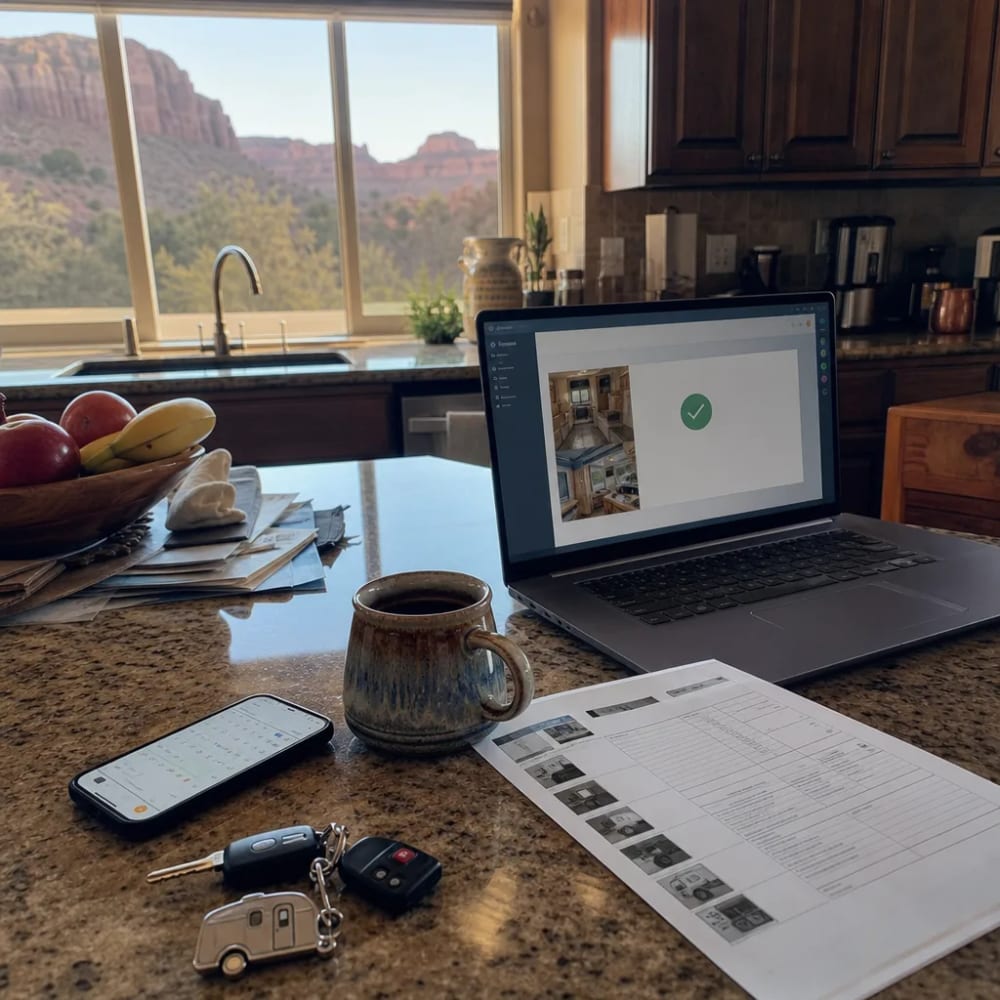
We're a mobile RV service, so we come to the rig instead of the rig coming to us. That matters more than it sounds. You shouldn't have to hitch up and tow a trailer you're unsure about across town just to find out if it's safe to tow. Driving a rig with questionable bearings to a shop to get the bearings checked is a bit like driving yourself to the doctor to ask if you're okay to drive.
Wherever your RV sits is usually a fine place to look it over. We do RV repair at home or at the storage lot, plus on-site campground RV repair, so your driveway, a storage lot, or a campsite can all work. If the inspection turns something up, we're already standing right next to it.
A few things on your end make the inspection more thorough, because we can only test what we can run:
- Room to walk all the way around the rig, with enough space to run the slides out.
- Shore power if you have it, so the 120-volt side gets a real test and not just a guess.
- Some propane in the tanks so the furnace, water heater, fridge, and stove can fire.
- Water hooked up or some water in the fresh tank so the pump and fittings feel pressure. If the rig's still winterized, de-winterize it first.
- Keys, the gate code, and any permission a storage lot needs before someone works on a rig there.
- A short list of anything odd from the last trip, even small stuff. "The fridge clicks funny" is useful information.
When you call, you're talking to the people who run the place. Our lead tech is the main point of contact for customers, and the office side, which covers setting appointments, keeping the calendar, and sending invoices, is handled by his wife. No call center, no ticket number, no explaining your rig three times.
Timing is where a lot of good intentions fall apart. An inspection is only as useful as the time you leave to act on it. Book it the night before you leave, and if it finds a tire with a 2015 date code, you're now shopping for tires at 8 p.m. with the truck already packed. Book it a week or two ahead, and that same tire is a quick errand. The same goes for parts that have to be ordered, like a specific seal or a breakaway switch. Give yourself a cushion, especially for that first trip after winter storage.
It helps to have a few things ready when you call: what kind of rig you have, where it's parked, when you're leaving, and anything that's been bugging you about it. That lets us plan the visit around your trip instead of making you plan your trip around us.
Got a trip on the calendar? Call us with your departure date and where the rig is parked, and we'll get your pre-trip inspection on the schedule with time to spare.
Call nowFrequently Asked Questions
Does Utah require a yearly state inspection for RVs?
Utah does not require a routine state safety inspection for RVs like some states do. That puts the job of catching worn tires, weak brakes, or a loose hitch on you or a mobile tech, since there is no yearly checkup forcing the issue. That is exactly why a pre-trip inspection before a big trip or after winter storage matters so much here.
Do I need an inspection every single time I take the RV out?
No, not every trip needs a full professional inspection. If you drove the rig recently, nothing acted up, and the next trip is short and close to home, your own walk-around usually covers it. Save the full inspection for rigs coming out of storage, new-to-you purchases, or long hauls with a full load.
How long should I set aside for a pre-trip inspection?
Plan to have the rig available for a while, since a thorough pre-trip inspection works through tires, brakes, hitch, electrical, propane, plumbing, roof seals, and slides, not just a quick look. Booking a week or two before your trip gives enough room to fix anything found, like ordering a part or replacing an old tire, without rushing the night before you leave.