
RV Air Conditioner Repair · Cedar City, Utah
RV Air Conditioner Repair in Cedar City, Utah: Know Before You Book
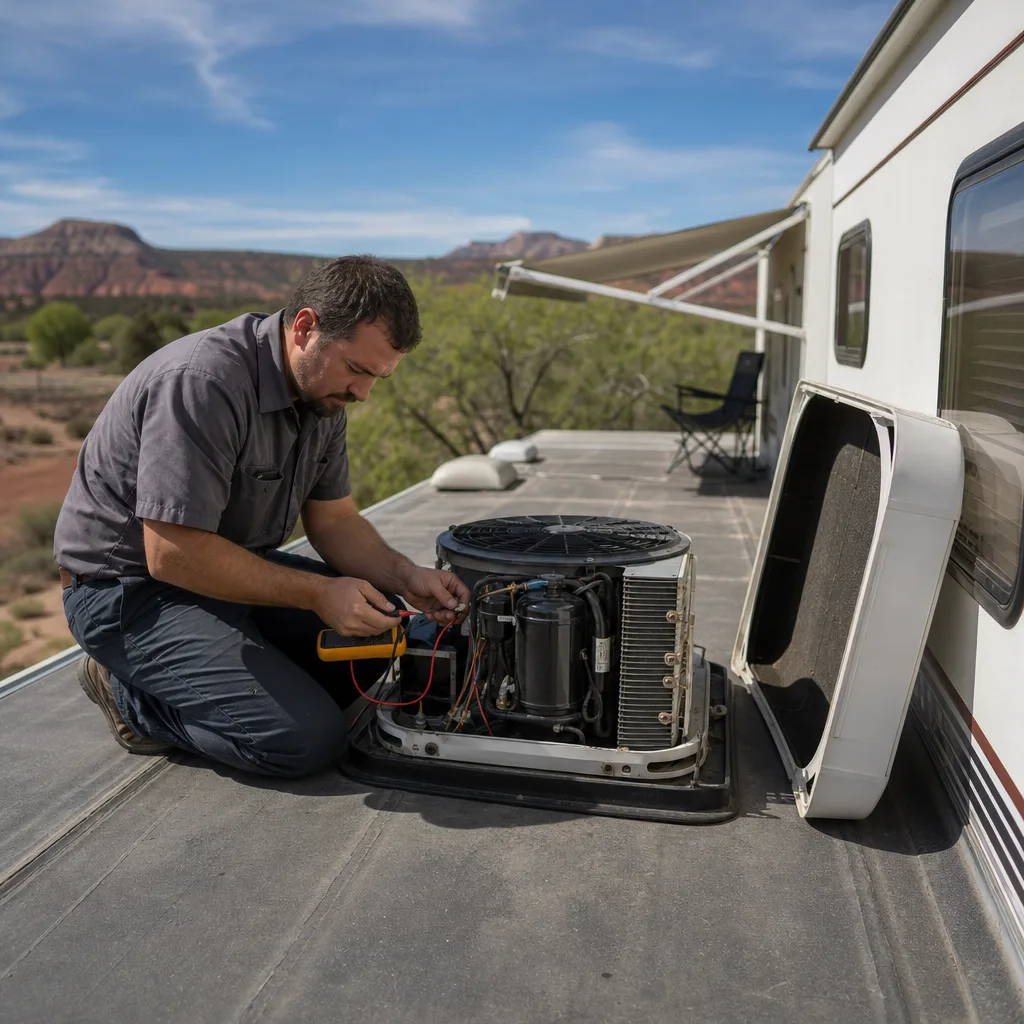
Common Reasons RV Rooftop AC Units Stop Cooling
Here's the good news. An AC that blows warm air, hums and does nothing, or won't turn on at all isn't automatically headed for the scrap pile. Your rooftop unit is a few simple systems working together. When one piece fails, the whole thing acts like it's done. Our job is to find out which piece.
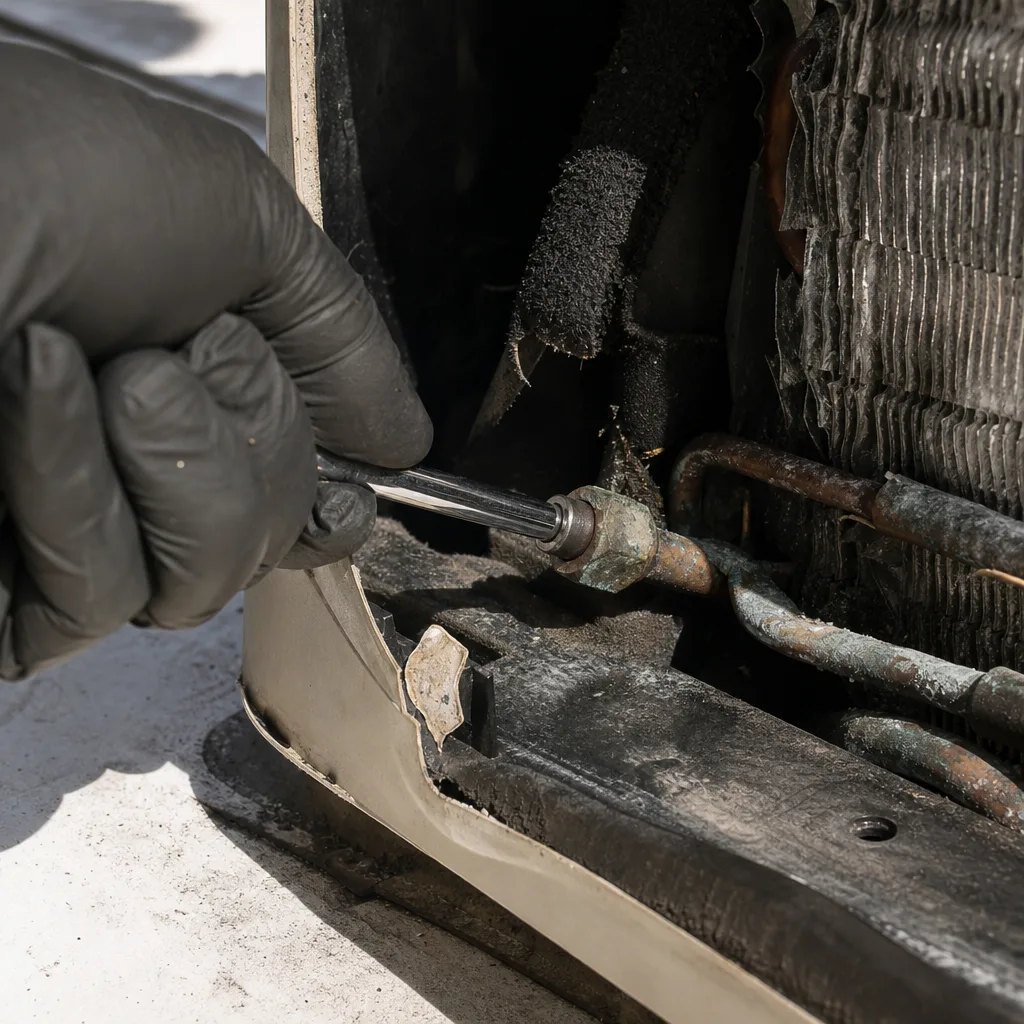
These are the usual suspects, roughly from the cheapest fix to the most expensive:
- Clogged filters and dirty coils. When air can't move across the coils, the unit can't pull heat out of your rig. Weak airflow and an AC that runs all day without catching up are the classic signs. It's the AC version of trying to breathe through a pillow.
- A frozen evaporator coil. Poor airflow or low refrigerant can let ice build up inside the unit. You'll feel the fan running but get little cold air, and sometimes you'll see water dripping once it thaws.
- A weak or failed capacitor. This small part gives the compressor and fan motor the kick they need to start. When it goes bad, you might hear a hum or a click, and then nothing happens. It's a small part with a big job.
- Low voltage from shore power. Rooftop ACs pull a lot of power when they start. A long extension cord, a worn power pedestal, or a loose connection can starve the unit, so it struggles, trips breakers, or shuts down. Sometimes the AC is fine and the campground post is the real culprit.
- A bad fan motor. One motor usually runs both fans in a rooftop unit. If it seizes or slows down, air stops moving over the coils and cooling drops off fast.
- Thermostat or control board trouble. If the unit won't respond, won't switch modes, or cycles at odd times, the brain may be the problem instead of the parts doing the cooling.
- A refrigerant leak or compressor failure. Rooftop units use a sealed system. If it leaks or the compressor quits, the repair can cost close to what a new unit does.
Picture this. It's July, the AC is humming, and the air coming out feels like a warm breath. Most folks figure the compressor is toast. But that same hum can come from a tired capacitor or low voltage at the pedestal, and both of those cost far less to fix than a new unit. That's why guessing gets expensive.
Power problems also hide inside the coach. A failing breaker, a loose wire, or a worn shore power plug can make a healthy AC act sick. When we trace a problem back to the electrical side, our Shore Power and 30/50 Amp Repair or RV Electrical Troubleshooting services take care of it.
If the diagnosis does point to a failed sealed system, we'll give it to you straight and walk you through RV Air Conditioner Replacement. Either way, you'll know what broke before you spend money on it.
Check These Two Things Before You Book a Repair Call
Before you call anybody, including us, spend ten minutes on two checks. They're free, and you don't need special tools. If one of them gets cold air blowing again, you just saved yourself a service call and a hot afternoon of waiting. We'd rather you find that out now than pay us to flip a switch.
Check one: make sure the AC is getting power and is being told to cool.
- Look at the thermostat. It should be set to Cool, not Fan or Heat, and set a few degrees below the temperature inside the rig. If it runs on batteries, swap in fresh ones. A dead thermostat battery has fooled plenty of smart people.
- Find the AC breaker in your RV's power panel. Flip it all the way off, then back on. A tripped breaker can sit halfway and look like it's on.
- On shore power, check the breaker on the campground pedestal too. Make sure you're plugged into the right amp outlet for your rig.
- If you're using a long extension cord or an adapter, try plugging straight into the pedestal or moving to a different post.
- On a 30 amp hookup, turn off the microwave, the electric water heater, and any second AC. Then try the unit by itself. Thirty amps runs out faster than most folks expect.
If a breaker trips again right after you reset it, stop resetting it. That's not bad luck. Something is pulling too much power, and flipping it over and over won't fix the cause.
Check two: clean the filters.
The filters live behind the return air grille on the ceiling, inside the coach. The grille usually comes off with a few screws or clips, and the filters slide right out. Rinse them in warm water with a little dish soap, let them dry all the way, and put them back. A dry, dusty summer can load them up faster than you'd think. If yours look like a gray felt blanket, you may have found your problem.
If you see ice on the coil behind the filters, or the fan runs but the air barely feels cool, turn the AC off and give it a few hours to thaw before you test it again. Running a frozen unit harder just makes a bigger ice cube.
That's where the do-it-yourself part ends. Please don't climb on the roof to pull the shroud, and don't start poking at parts inside the unit. That's how a cheap repair turns into a roof leak, a broken part, or a trip to urgent care.
Here's the honest line. If the power checks out, the filters are clean, the ice has melted, and you're still getting warm air, a hum with no cooling, or no response at all, it's time for a technician. If these checks fixed it, you don't need a repair. Just enjoy the cold air and rinse those filters more often.
What Happens During an On-Site AC Diagnostic
A good AC diagnostic isn't a guy on your roof squinting at the unit and saying, "Yep, she's shot." It's a set of tests that rules out problems one at a time until only the real one is left. That's how you avoid buying a whole new air conditioner to fix a small part.
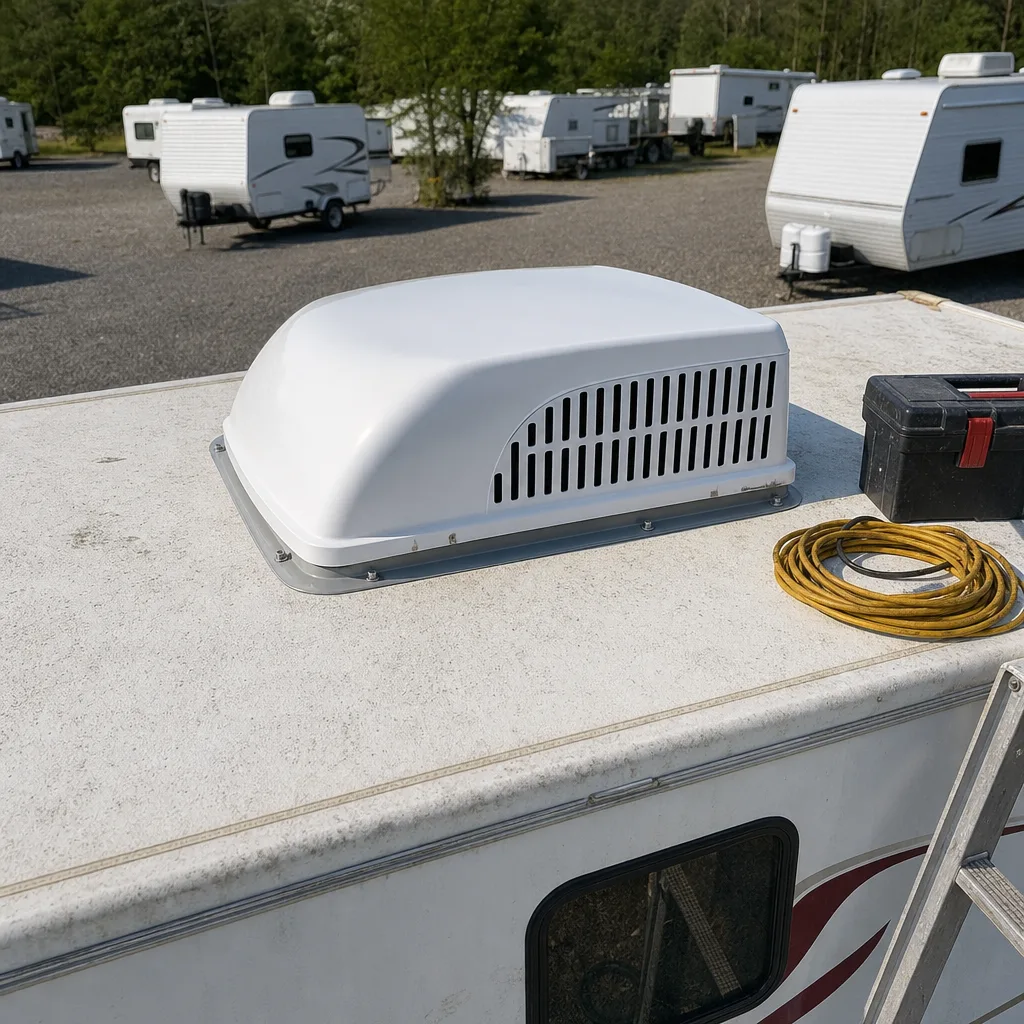
Because the work is mobile, the testing happens where your rig is parked: at home, on a storage lot, or at a campground. Power problems often live at that exact pedestal or plug, so testing the AC on the hookup it runs on tells us more than testing it anywhere else.
Here's what a thorough diagnostic covers:
- Power, measured under load. Voltage can look fine while the AC sits idle, then sag the moment the compressor tries to start. The useful reading is the one taken while the unit is running or trying to run, both at the power source and at the AC.
- Amp draw on the compressor and fan. How much current each part pulls shows whether it's working normally, struggling, or seizing up.
- The capacitor, tested with a meter. A capacitor can look perfectly normal and still be weak. Testing it takes the guessing out.
- Air going in vs. air coming out. Comparing the temperature at the return grille with the air at the vents shows how much heat the unit is pulling out of your rig.
- Coils, fan, and airflow. Once the shroud is off, the coils, the fan blades, and the motor can be checked directly instead of judged from inside the coach.
- Thermostat and control signals. This confirms the controls are telling the AC to cool and that the signal is reaching the unit.
The order matters. The sealed refrigerant system gets blamed last, after power, starting parts, airflow, and controls have all checked out. Lots of rooftop units are built sealed with no easy way to hook up gauges, so calling a refrigerant problem too early is how folks end up paying for a unit they didn't need.
Our lead technician is RVTI certified and has spent more than 15 years in the RV business. He's also the person you'll talk to about what the test turned up, so you won't get a vague answer passed along through two other people. You'll hear what failed, why it failed, and whether repair or replacement makes more sense for your unit.
A few things on your end help the diagnostic go faster:
- Write down what the AC does. Does it hum, click, blow warm air, trip a breaker, or do nothing at all? Note whether it started all at once or got weaker over time.
- Leave the rig hooked to the power it normally uses. If the problem only shows up at one campground post, that post is part of the evidence.
- Make sure we can get to the rig, the roof, and the inside of the coach.
- Look for the sticker on the unit, or check your paperwork for the AC's make and model. It helps with matching parts.
One heads-up: we don't currently do manufacturer warranty work. If your rig is new enough that the AC might still be covered, check with your dealer or the manufacturer first. You don't want to pay out of pocket for something they'd fix for free.
On-Site Repair at Campgrounds, Storage Lots, and Home
Your rig doesn't have to ride a tow truck or sit in a shop lot for a week to get its AC fixed. We're a mobile RV service, so we come to where it's parked. That might be a campground, a storage lot, or your driveway here in Cedar City. You skip the hitching, the hauling, and the waiting room with the stale coffee.
Each spot comes with its own quirks. Here's what helps at each one.
At a campground. A dead AC halfway through a summer trip is the worst kind of surprise. Our On-Site Campground RV Repair service means you don't have to pack up camp and give up your site to get help. Stop by the front office and ask whether they have any rules about repair work on site. Most places are fine with it, but it's better to know before a truck rolls up next to your picnic table. If the AC quit in a way that can't wait, like a full family in the July heat, ask about our Emergency Mobile RV Repair.
At a storage lot. Lots of folks find out the AC is dead on the first warm weekend, right when they planned to leave. Testing at the storage lot catches it before your trip is on the line. A few things make it work:
- Tell us when you book whether your space has power. An air conditioner has to run to be tested, so a rig sitting cold with no hookup changes the plan.
- Check the lot's gate hours and access rules, and let us know about any gate code or check-in step.
- If you're in covered storage, mention it. A low roof over the rig can make it hard to work on a rooftop unit, and moving the rig ahead of time may save a second trip.
At home. A driveway or side yard is often the easiest place of all. Leave the rig plugged into the outlet you normally use for it, and keep a clear path to the door and around the coach. If your HOA has rules about service vehicles, give it a quick look so nobody gets a sternly worded letter.
Wherever the rig sits, Cedar City summers are hot and dusty. That's hard on rooftop units and even harder on the people inside when one quits. If you want to know the AC will hold up before a long haul, a Pre-Trip RV Inspection is a good way to find a tired part while it's still a small problem.
Booking is simple. Our office sets the appointment and keeps the calendar straight. You'll talk with our lead technician about what your AC is doing, and he's the same person who'll tell you what he finds. So when he says it's a capacitor and not the whole unit, you're hearing it from the guy who tested it.
Call Benny's RVWhat Drives the Cost of RV AC Repair
The honest answer to "what's this going to cost?" is that it depends on what broke. That's not a dodge. A rooftop AC repair bill is built from a few pieces, and once you know what they are, the final number stops feeling like a mystery.
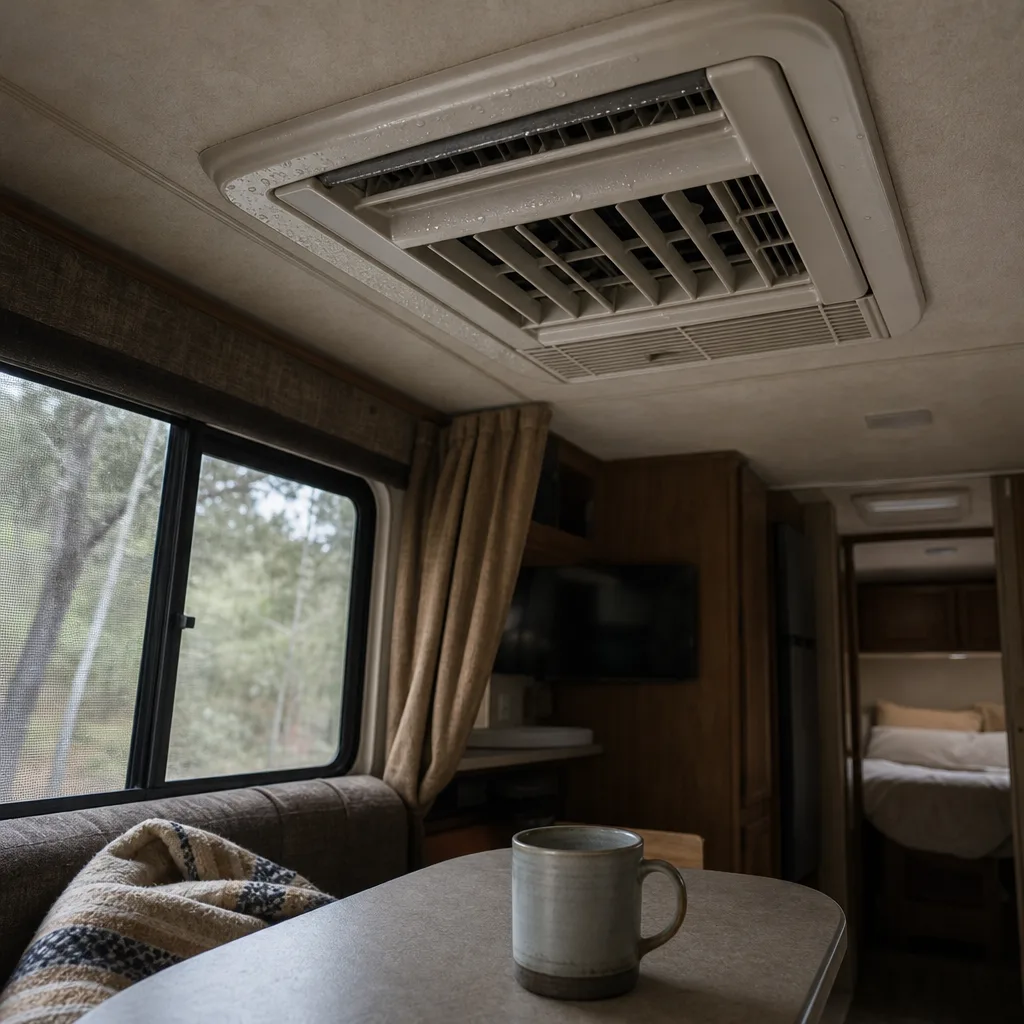
Most mobile RV repair bills in this trade are made up of some mix of these:
- A trip or service call charge. This covers getting a technician and a truck full of tools to your rig. Distance can play into it, so a campground far out of town may cost more to reach than a driveway nearby.
- Diagnostic time. This is the testing that finds the actual problem. Some shops charge it on its own, and some fold it into the repair if you go ahead with the work.
- Labor. Some shops bill by the hour and some charge a flat rate per job. Either way, a part that takes ten minutes to swap costs less than one that means pulling the whole unit apart.
- Parts. This is usually the swing factor. A small starting part and a new control board aren't in the same league.
Beyond that, a handful of things push the bill up or down:
- Which part failed. The list earlier on this page runs roughly from cheapest to priciest, and your bill tends to follow the same order.
- Age and make of the unit. Parts for common, newer units are easy to find. An older or less common model can mean hunting for parts or waiting on shipping.
- Access. A rig parked in the open is simple. A tight spot, a low cover, or a tall coach can add time.
- How many units. A rig with two rooftop ACs can have two problems, or one problem that's an electrical issue feeding both.
- Timing. An emergency call in the middle of a heat wave can cost more than a planned visit. Fixing a tired AC in April is cheaper than fixing a dead one on the Fourth of July.
Then there's the big question: repair it or replace it? If the sealed system has failed on an older unit, the repair can land close to the price of a new one. At that point you're putting new money into an old box. On the other hand, a ten-year-old unit with a bad fan motor and solid cooling otherwise is usually worth fixing. The math changes with every unit, which is why a real diagnosis beats a guess.
Before you hire anyone for RV AC work, us included, ask these questions so nothing on the invoice surprises you:
- How is the trip charge figured, and does distance change it?
- Is the diagnostic billed on its own, or does it count toward the repair?
- Will I get a price before any parts are ordered or installed?
- If the repair gets close to the cost of a new unit, will you tell me before doing the work?
- Is the work billed hourly or as a flat rate?
A good tech won't mind answering any of these. If someone gets cagey about how they charge, that tells you something too.
Frequently Asked Questions
Can I run my RV AC on a 30 amp hookup along with other appliances?
Usually not all at once. A 30 amp hookup runs out of power fast, so running the microwave, electric water heater, and a second AC at the same time can starve the unit or trip a breaker. Try the AC by itself first before assuming it's broken.
Is it safe to keep resetting a breaker that keeps tripping on my RV AC?
No, don't keep flipping it. A breaker that trips again right after you reset it means something is pulling too much power, not just bad luck. Repeated resetting won't fix the real cause and can lead to bigger electrical problems.
Why does my RV AC run but barely blow cool air?
This often means a frozen evaporator coil or a dirty filter is blocking airflow. If you see ice on the coil, turn the unit off and let it thaw for a few hours before testing again, since running it frozen just makes a bigger ice buildup. If the fan runs but air still feels weak after that, it's time to have it checked.
Will a repair tech work on my RV wherever it's parked in Cedar City?
Yes, service happens at campgrounds, storage lots, or your own driveway. Each location has its own quirks, so at a campground it helps to check with the front office about on-site repair rules, and at a storage lot it helps to confirm your space has power so the AC can be tested running.