
RV Battery Replacement and Testing · Cedar City, Utah
RV Battery Replacement and Testing in Cedar City, Utah
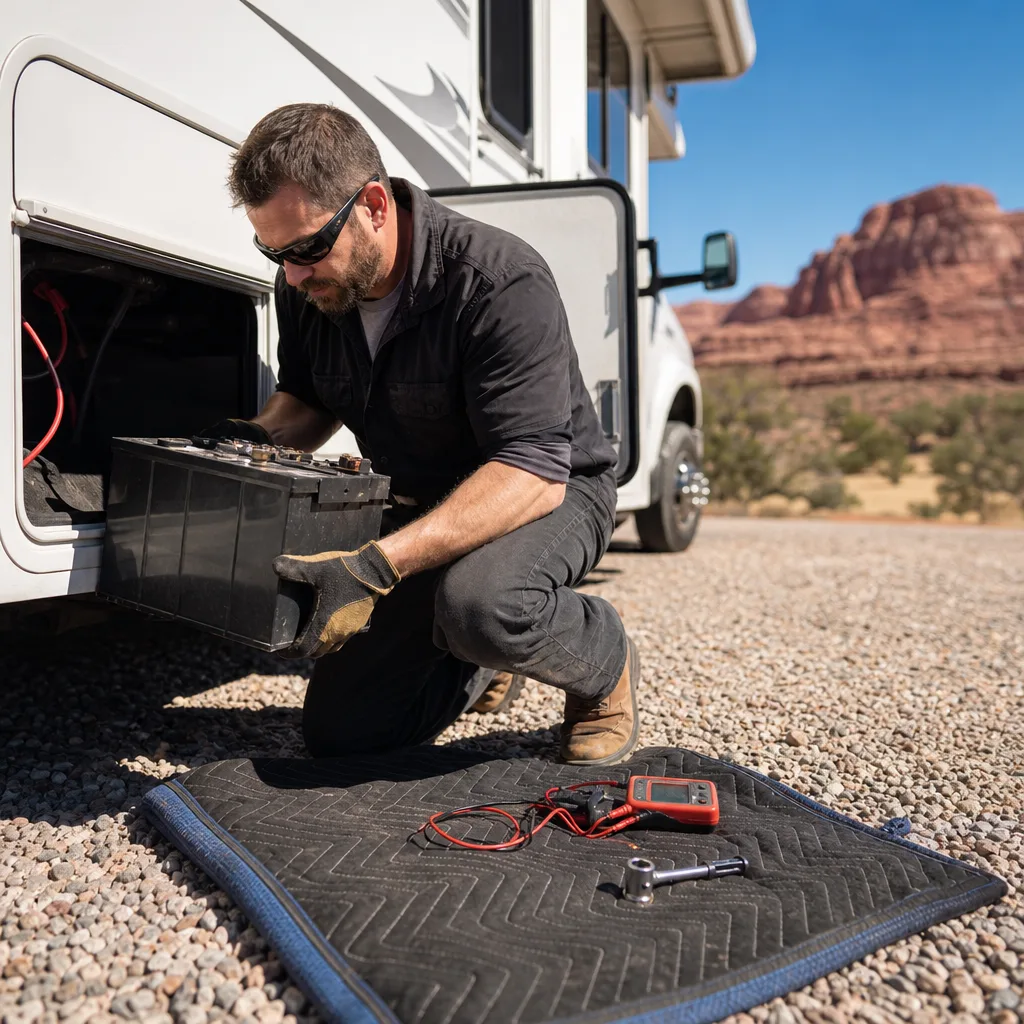
Test First, Replace Only If Needed
The battery is the most blamed part on any RV. Sometimes it's guilty. A lot of the time it's just the one standing closest to the crime scene. Here's a common story: you pull the rig out of storage, flip on the lights, and get a weak glow or nothing at all. The easy move is to buy a new battery and drop it in. A week later, it's flat again, and now you're out the money and still stuck with the problem.
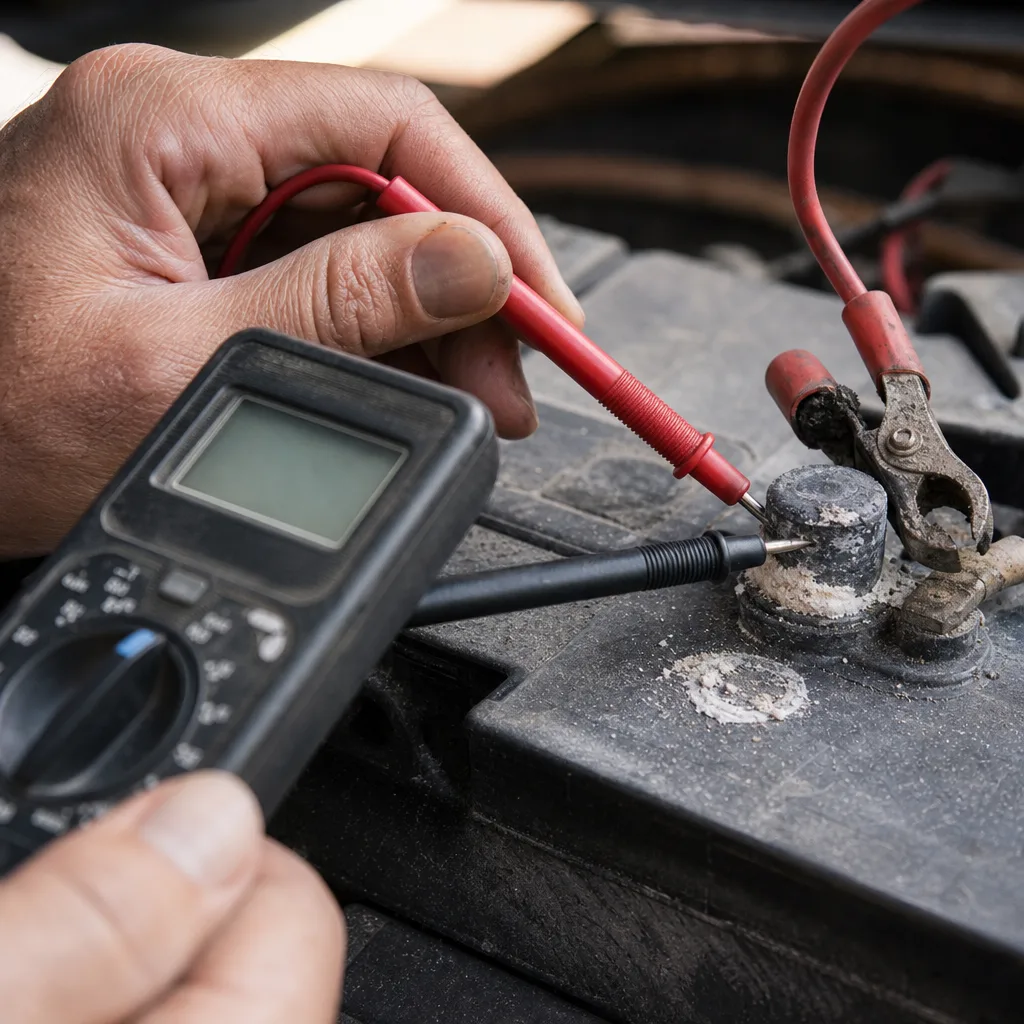
That's why RV Battery Replacement and Testing should happen in that order backward: test first, replace only if the test says so. A dead battery is a symptom. The job is finding out why it's dead.
Things that make a good battery look bad:
- Small, constant drains. LP and carbon monoxide detectors, stereo memory, and control boards all sip power around the clock. Leave the rig sitting for a few weeks with the disconnect on, and they'll empty a healthy battery.
- A converter that isn't charging. If the converter or its fuse has failed, you can sit on shore power all weekend and the battery never gets a drop.
- Loose or corroded terminals. A crusty connection can block charging and starve your 12-volt system, even when the battery itself is fine.
- A battery disconnect switch in the wrong position. It happens to the best of us. No shame, just check it.
A real test goes past a quick voltage reading. A fully charged 12-volt lead-acid battery at rest sits around 12.6 to 12.7 volts, but voltage alone can fool you. A worn-out battery can show decent voltage and then collapse the second you ask it to run the water pump and furnace fan. A proper check charges the battery fully, lets the surface charge settle, then puts it under load to see if it holds up. On flooded batteries, checking each cell can spot one bad cell dragging the whole thing down. A good test also looks at what the converter is putting out and whether something is drawing power with everything switched off.
When the results point to replacement, they're usually clear:
- It won't hold a charge, even after a full, slow recharge.
- Voltage drops hard under load.
- One cell reads well below the others.
- The case is swollen, cracked, or leaking.
- It's been run flat over and over, or left discharged long enough to sulfate.
Lithium batteries play by slightly different rules. They have a built-in battery management system that can shut the battery off to protect it, so a lithium battery that reads zero may just be in protection mode, not dead. That's worth knowing before you spend lithium money on a replacement.
If the battery is bad, replace it and move on. If it isn't, you just saved the cost of a battery and found the actual problem. Either way, you're not guessing anymore.
Signs Your RV Battery Needs Attention
Batteries rarely die all at once. They give you hints first, and most of us ignore them because the lights still come on. If you know what the hints look like, you get to deal with the problem in your driveway instead of at a dark campsite with a cold furnace.
Here's what to watch for:
- Lights that dim when something else kicks on. If the ceiling lights sag every time the water pump runs, your 12-volt system is struggling to keep up.
- A water pump that sounds tired. It runs slower, pulses, or takes longer to build pressure than it used to.
- Slides, jacks, or the awning moving slow. These motors pull a lot of power, so they're often the first to complain.
- A furnace that won't make it through the night. The burner needs the blower fan, and the fan needs a battery with some muscle left. Waking up at 3 a.m. to a cold rig is a classic sign.
- Detectors chirping for no clear reason. LP and CO detectors often beep when voltage runs low, not just when there's a real problem.
- Needing to charge more often than you used to. If a battery that once lasted a weekend now quits by Saturday night, its capacity is shrinking.
- Flooded batteries that drink a lot of water. Topping them off way more than usual can mean they're overcharging or wearing out.
- A rotten egg smell near the battery compartment. That's not your lunch. It's worth getting checked right away.
Age matters too. A battery that's been through a few seasons and a couple of deep drains has less left in it than the label suggests, even if it seems fine on a sunny afternoon. Cold weather makes it worse, because batteries give up less power when they're cold. That's why a weak battery often gets found out on the first chilly night of a trip.
Here's a scenario a lot of owners will recognize. Everything works fine on shore power at home. You head out, unplug at camp, and by the second evening the TV shuts off, the pump stutters, and the furnace fan sounds like it's running through mud. On shore power, the converter was covering for a battery that couldn't carry the load by itself. Off the cord, there's nowhere to hide.
None of these signs alone proves the battery is bad. As we covered above, a drain, a charging problem, or a crusty terminal can cause every one of them. Each sign does mean it's time to test, because guessing gets expensive fast.
One more tip that saves a lot of trips: pay attention to when the symptom shows up. If trouble starts after the rig has been parked for a while, think drains. If it starts only when you're off shore power, think capacity. If it shows up even while you're plugged in, the charging side deserves a hard look. Telling us that when you call helps us find the real problem faster.
When the Problem Isn't the Battery
Sometimes the test comes back and the battery is fine. Good news for your wallet. It also means a new battery would've been a very expensive way to keep the real problem around. These are the usual suspects once the battery is cleared.
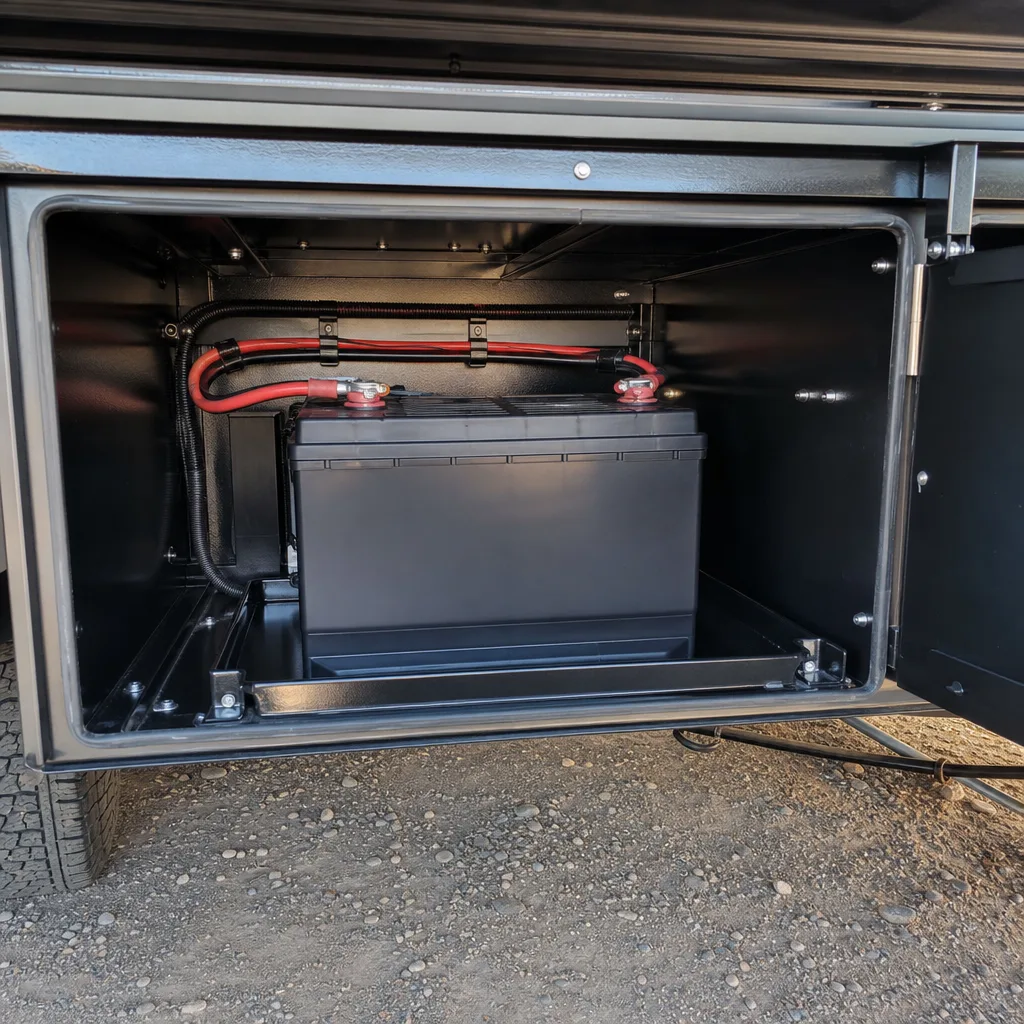
- A charger that cooks the battery. The usual worry is a converter that won't charge. The opposite happens too. An older converter, or one set for the wrong battery type, can overcharge and boil a flooded battery dry. Put a new battery on that converter and it will cook too, just more slowly.
- An inverter left on. An inverter draws power just sitting there, even with nothing plugged in. Leave it on during a few days off the cord and it will quietly drain the bank. That isn't a broken part. It's a switch.
- A weak charge line from the tow vehicle. Travel trailers and fifth wheels can pick up a trickle charge through the 7-way plug while you drive. A corroded pin, a blown fuse in the truck, or a thin wire means you arrive at camp with less than you think.
- A bad ground. A loose or rusty ground where the system bolts to the frame can make lights dim and motors drag, just like a tired battery. The battery gets blamed for a connection a few feet away.
- Shore power that isn't really there. A worn plug, a damaged cord, or a weak pedestal can leave the converter starving. The battery then gets blamed for a charge it never got.
- The wrong battery. In a motorhome, the engine battery and the house batteries are separate. If the engine won't crank but the lights work fine, the house batteries probably aren't your problem.
Then there's the one nobody likes to hear: the battery is healthy, it's just too small for how you camp. One battery that's plenty for a weekend on hookups won't run a furnace, a CPAP, and a coffee maker through two nights of dry camping. Swapping in the same size battery won't change a thing. The real fix is a bigger bank, better charging, or a few changes to how you use power. Sometimes it's just turning the furnace down a couple of degrees overnight.
Here's the honest part. If your trouble turns out to be the disconnect switch or an inverter you forgot to shut off, you don't need a new battery, and you don't need to call us either. Flip the switch, charge the battery up, and go camping. We'd rather you save the money.
When the cause is deeper than a switch, it usually lands in one of our other services. A converter that won't charge or overcharges points to RV Converter and Inverter Repair. A drain or ground you can't find calls for RV Electrical Troubleshooting. A dead charge line from the truck is a job for RV Trailer Wiring and Plug Repair. Cord or plug trouble falls under Shore Power and 30/50 Amp Repair.
None of this is meant to talk you out of a new battery. Lots of batteries really are done. The point is to replace the battery because it failed, not because it was the easiest thing to blame. Fix the actual cause and the new battery lasts the way it should.
What Happens During Testing and Replacement
We're a mobile RV service, so the work comes to your rig. Your rig doesn't have to come to us. That's a nice perk when your battery is too weak to run the jacks and you'd rather not tow a problem across town.
The testing part works the way we laid out above: charge, settle, load, and check the charging side and any drains. You get a straight answer on the battery and on whatever else turned up. If the battery passes, you don't buy one. That's the whole point.
If it fails, the replacement is where a lot of people get burned. They grab whatever fits the tray. A good replacement starts by matching the battery to your rig and to how you camp:
- Type. Flooded, AGM, and lithium each need their own charging. Your converter has to suit the battery you pick, or you're back to the cooking problem we mentioned earlier.
- Size and capacity. The new battery has to fit the compartment and the hold-down. It also needs enough capacity for your furnace nights, your CPAP, or your weekend on hookups.
- Bank setup. Two batteries wired together should be the same type and about the same age. Pairing a new battery with a tired one is like hitching a racehorse to a mule. The new one ends up doing all the work and wears out early.
The install itself is where the small stuff counts. That means clean terminals, tight connections, a battery that's strapped down so it doesn't walk around on washboard roads, and vent tubes routed right on batteries that have them. Then the rig gets checked again with the new battery in place, so you know the system is charging it, not just that it's sitting there looking new.
On cost, we don't quote a number on this page, because the battery decides most of it. Here's what moves the price up or down:
- The battery type you choose. Lithium costs a lot more up front than flooded or AGM.
- How many batteries are in your bank.
- Whether testing finds a second problem, like a failing converter or a bad ground, that needs fixing too.
- How easy the battery is to reach. Some compartments are friendly. Some were clearly designed by someone who never had to change a battery.
Before you hire anyone, ask whether they'll test the charging system or just swap the battery. Ask whether the new battery will match your converter. The answers tell you a lot.
A few things make the visit go faster. Know where your battery compartment is. Tell us what type of battery you have now if you know it. Mention whether you mostly camp on hookups or off the grid. Tell us when the symptoms show up. One heads up: we don't do manufacturer warranty work, so if your rig's battery is still covered under that kind of warranty, start with your dealer.
Our lead tech is an RVTI Certified Technician with more than 15 years in the RV industry. He'll tell you straight if the battery is done, and just as straight if it isn't.
Call nowBattery Types and What Drives Cost
Once a test says the battery is done, the next question is what to put in its place. The cheapest battery on the shelf isn't always the cheapest to own, and the priciest one isn't always worth it. The right pick depends on how you camp, not on what the guy at the parts counter runs in his rig.
Here's how the three common types stack up when you live with them:
- Flooded lead-acid. This is the old standby and the lowest price up front. It needs water checks, it can't be mounted on its side, and it doesn't like being drained deep. Treat it well and it does the job. Forget about it and it'll let you know, usually at a bad time.
- AGM. This is sealed, so there's no water to top off and no acid sloshing around. It handles bumpy roads and sitting in storage a little better than flooded. It costs more than flooded, and it still doesn't like being run flat over and over.
- Lithium. It's light, it gives you far more usable power from the same size battery, and it can take many more charge cycles before it wears out. It costs the most up front, and some setups need charging changes to run it right. Most lithium batteries also shouldn't be charged below freezing unless they have built-in heating, which matters if you camp in the shoulder seasons.
A simple way to think about it is to match the battery to your trips. If you mostly camp on hookups and the battery just carries you between pedestals, a good flooded or AGM battery is usually plenty. If you dry camp, run a CPAP, or want the furnace going all night without babysitting the battery, lithium starts to earn its price.
That brings up the part a lot of people miss: up-front price and lifetime cost aren't the same thing. A lead-acid battery that gets drained hard every trip may need replacing again in a few seasons. A lithium battery used the same way can keep going much longer. If you camp off-grid a lot, the expensive battery can end up being the cheaper one by the time you count every replacement. If your rig sits on hookups most of the year, that math often doesn't work out, and you'd be paying for power you never use.
A few more things change the real cost of any battery:
- How deep you drain it. Lead-acid batteries last a lot longer when you stop around halfway than when you run them to empty.
- How you store it. A battery left sitting half-dead all winter can be ruined by spring, whatever kind it is.
- Upkeep. Flooded batteries need water checks and clean terminals. Skip that and you shorten their life.
- Matching the charger. A battery that's charged the wrong way wears out early, so the cheap battery turns into the expensive one.
Upgrading from lead-acid to lithium is a bigger job than a straight swap. It can mean charging changes, so it's worth planning before you buy. If you're on the fence, tell us how you camp and we'll walk you through which type makes sense. Sometimes the honest answer is that the battery you already had was the right one, and it just needs a fresh one of the same kind.
Frequently Asked Questions
Do you come to my RV or do I have to bring it in?
We come to you, so your RV never has to travel anywhere. This matters most when a battery is too weak to run the jacks or slides, because towing a rig in that state is a hassle you can skip entirely.
Can I test my RV battery myself before calling someone?
You can check voltage with a simple meter, but that alone won't tell you the whole story. A battery can show a decent resting voltage, around 12.6 to 12.7 volts, and still collapse the moment you run the water pump or furnace fan. A real test charges the battery fully, lets it settle, then loads it to see if it holds up.
How do I know if it's my RV battery or my tow vehicle's charging line causing the problem?
Pay attention to when the trouble shows up. If your battery seems weak only after driving, a corroded pin or blown fuse on the 7-way plug between your tow vehicle and trailer could be stopping the trickle charge from reaching your battery. Telling us when the symptom appears helps us pinpoint whether it's the battery, the charging line, or something else.
What should I tell the technician before the visit to speed things up?
Knowing where your battery compartment is, what type of battery you currently have, and how you usually camp all help speed up the visit. Also mention when symptoms show up, like after storage, off shore power, or even while plugged in, since that points us toward drains, capacity, or charging issues faster.