
RV Fresh Water Tank Sanitizing · Cedar City, Utah
RV Fresh Water Tank Sanitizing in Cedar City, Utah: Do You Need a Pro or Can You DIY?
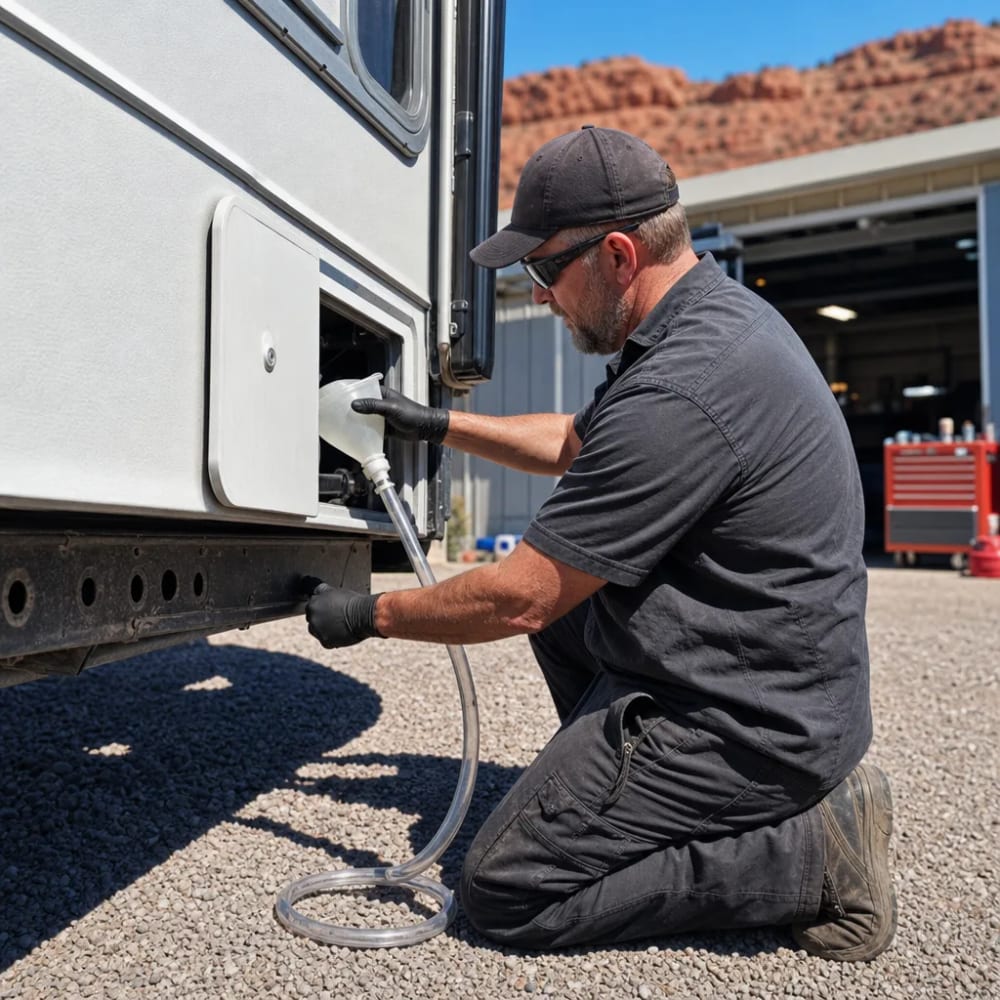
Decide If Your RV Needs Sanitizing Now
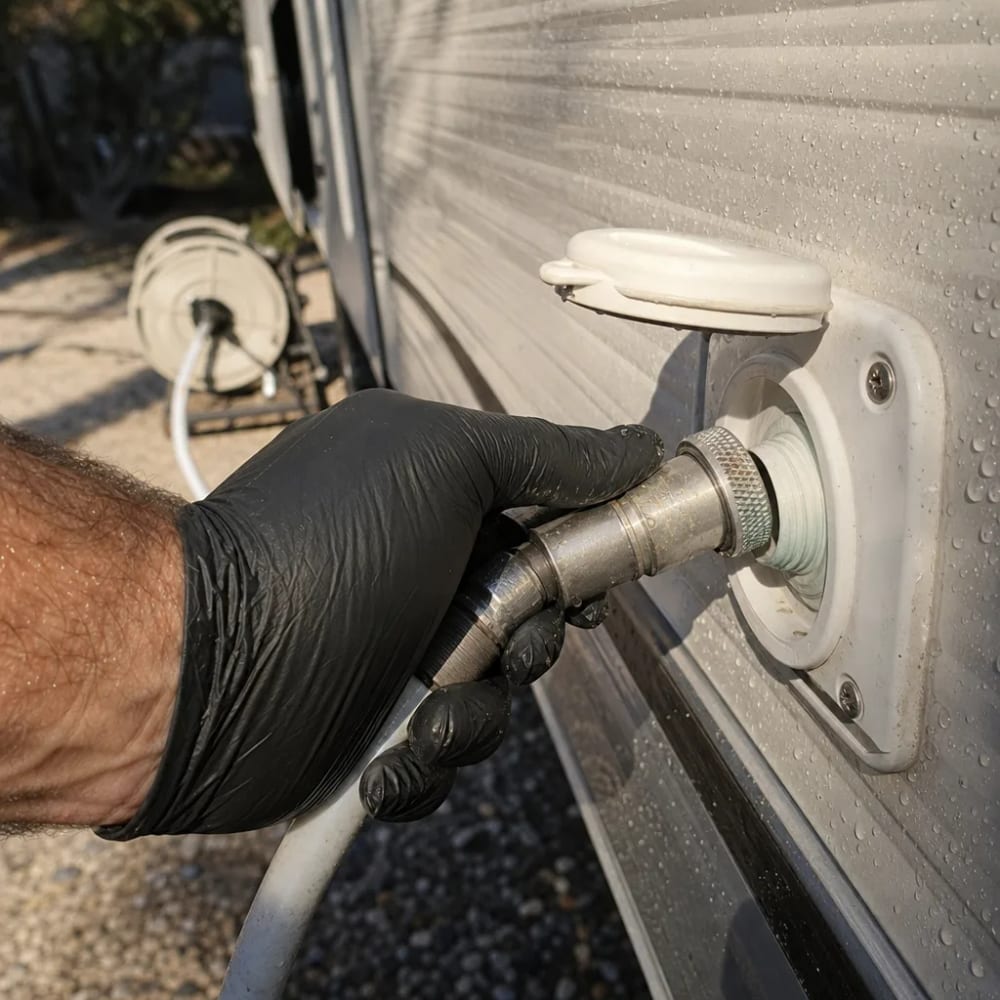
Most folks ask us, "How often should I sanitize?" Fair question, but the better one is, "What's happened to my tank since the last time?" A tank doesn't care what month it is. It cares about how long water sat in it, where that water came from, and whether it spent the winter full of antifreeze. That's how we'd sort out your timing.
Sanitize now if any of these sound like your rig:
- It sat for weeks or months with water still in the tank or lines.
- You just bought it used and have no idea what the last owner put in there, or when.
- It's coming out of winter storage and getting de-winterized.
- The water smells musty, swampy, or like a pond that's lost hope.
- You see cloudiness, specks, or slime at the faucet or in the tank fill.
- You filled up from a hose or spigot you didn't trust, like an old campground hydrant.
- Someone in the family got a stomach bug on the last trip and you want a clean start.
Here's a common story. You park the trailer behind the house after the last fall trip, figuring you'll drain it "this weekend." Then it's March. You open a faucet and the first smell out of the line tells you everything. That water sat warm in the fall, then cold all winter, and it's been doing its own science project the whole time. That tank needs sanitizing before anybody brushes their teeth with it.
Cedar City winters get cold enough that most owners winterize, so spring start-up is the natural time to sanitize. The lines are already open and you're flushing antifreeze out anyway. If you're booking RV De-Winterization / Spring Start-Up, that's a good moment to handle the tank too, instead of making two separate jobs out of it.
Now the straight answer on when you don't need it yet. If you camped all summer, drained the tank between trips, filled from treated city water, and nothing smells or looks off, you're fine for now. Sanitizing a tank that's being used and turned over regularly won't buy you much. And if you're handy, a basic sanitize is something plenty of owners do themselves with patience and a careful flush. Where we come in is when you'd rather not, when the problem keeps coming back, or when something else in the system might be the real culprit.
That last part matters. A bad smell isn't always the tank. If it only shows up on the hot side, the water heater may be the one stinking up the place, and that's a job for RV Water Heater Repair, not more bleach. Sanitizing a tank that isn't the problem is like shampooing your hair to fix a sore foot. Clean, sure. Helpful, no.
Know When a Simple DIY Flush Is Enough
A flush and a sanitize aren't the same job, even though people use the words like they are. A flush means you drain the old water, refill with clean water, and run it through every faucet until it comes out fresh. A sanitize adds a disinfectant that has to sit in the tank and lines long enough to kill what's living there. Then it all gets rinsed back out.
Think of it like your coffee maker. Running plain water through it gets rid of yesterday's coffee. It doesn't get rid of the stuff growing in the corners. Most of the time, plain water is all you need. Sometimes it isn't.
A simple flush is usually enough when:
- You're between back-to-back trips and the water only sat a few days.
- You filled from a source you trust and nothing looks, smells, or tastes off.
- You just want to swap out water that's gone flat and boring, not water that's gone bad.
- You already sanitized this season and you're just keeping it fresh.
Here's a real-life picture. You come home Sunday night from a weekend trip, and you're heading out again Friday. The tank's half full of water you filled at home. It's clear and it smells like nothing. Drain it, refill it Thursday night, run the taps, and go have fun. You don't need to break out the chemistry set for that. Water that's been moving and getting replaced doesn't get the chance to grow much.
Where a flush falls short is anything that's stuck to a surface. Slime on the inside of a tank or a water line, the stuff folks call biofilm, doesn't rinse off with plain water. You can flush a slimy tank ten times and it'll smell fine for a day, then come right back. That's your sign the problem lives on the walls, not in the water.
A few spots tend to get missed in a home flush, and they can make a good effort look like it failed:
- The water heater. It holds its own supply of old water, and a quick tank drain doesn't empty it.
- Low-point drains. Water parks in the lowest lines, and if you skip those, the stale stuff hangs on.
- Water filters. An old cartridge can hold onto the gunk you just flushed out and hand it right back to you.
- The outside shower and any ice maker line. Easy to forget, and they hold water just like the kitchen faucet.
So if you flushed and the funk came back, don't assume you did it wrong. You might have missed one of those spots, or you might be past what plain water can fix. Either way, be honest with yourself about which one it is.
If you're doing it yourself, take your time. The most common DIY mistake isn't using the wrong product. It's getting bored halfway through and calling it done. Run every tap, hot and cold, until the water is clear and smells like nothing at all. Your tank isn't in a hurry, and neither is the stuff growing in it.
What Professional Sanitizing Covers Beyond the Tank
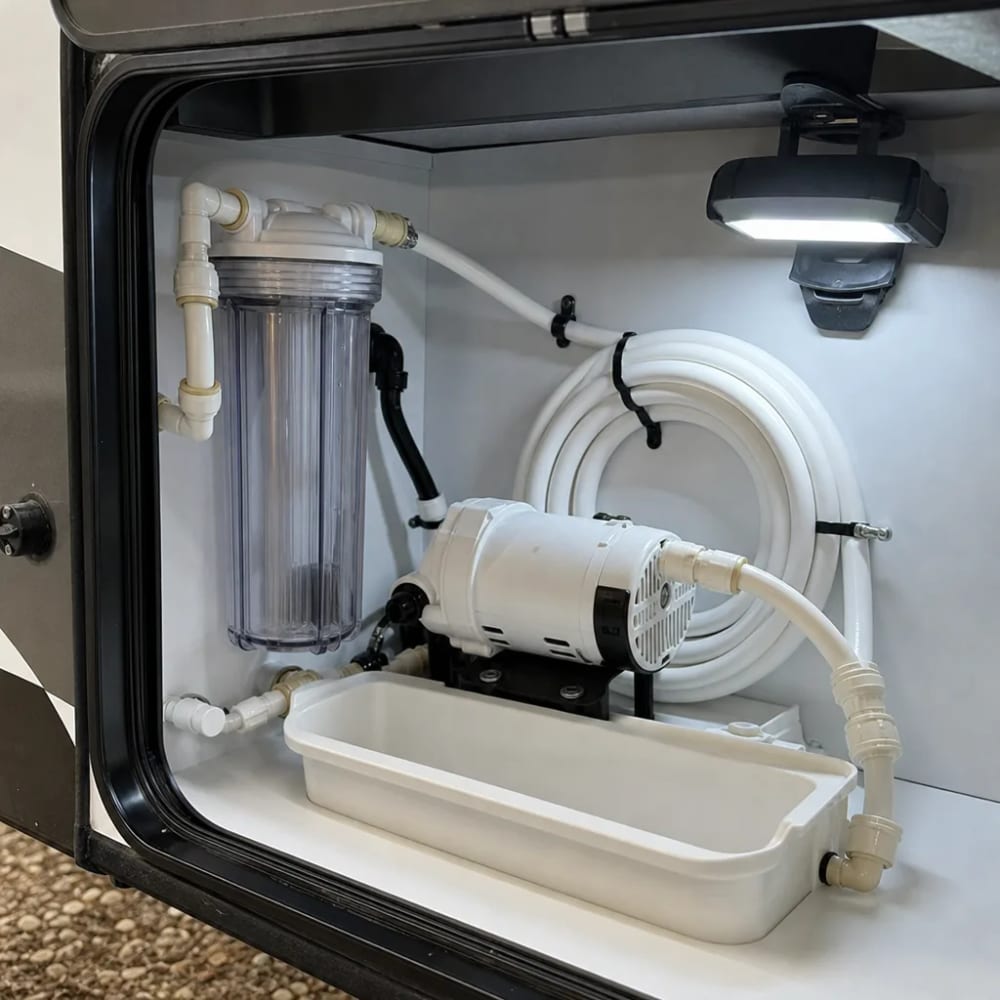
Your fresh tank is just one stop on the trip your water takes. It comes in through a hose, goes into the tank, gets pushed by the pump, runs through lines and the water heater, and comes out a faucet. If any stop along that road is dirty, the clean tank doesn't stay clean for long. So a proper sanitize treats the whole system as one job, not the tank and a prayer.
Here's what a thorough job should reach, past the spots we already covered like the water heater, low points, and filters:
- The way water gets in. That means the fill port, the city water inlet, and the fill cap. A missing or cracked cap is an open door for dust, bugs, and the occasional curious wasp.
- The tank vent. If it's blocked or open to the weather, the tank breathes in whatever's outside.
- The water pump and its strainer screen. Gunk collects right in front of the pump, and it'll keep feeding the lines no matter how clean the tank gets.
- Every fixture, hot and cold. That includes shower heads, the toilet supply, and any line that only gets used once a season.
- Your drinking water hose. An old hose that's been lying in the dirt can undo a perfect sanitize in about ten minutes.
The bigger value isn't the cleaning, though. It's figuring out why the water went bad in the first place. A good tech is looking for the problem behind the smell. A small leak at a fitting can keep a line from draining all the way. A cracked line from a hard freeze can let water sit and go stale. A pump that cycles on and off with every faucet closed is telling you something's wrong. You can sanitize around problems like that all day, and the smell keeps coming back like a bad houseguest.
Say you've flushed twice this spring and the musty smell came back both times. The tank isn't really the question anymore. The question is what's feeding it. That's where someone who works on the whole rig earns their keep. If the trouble turns out to be a leak or a tired pump, that becomes RV Plumbing Repair or RV Water Pump Repair and Replacement, and it gets fixed while everything's already open, not on your next trip.
The finish matters too. The disinfectant has to come all the way back out. Water that smells like a swimming pool isn't a sign of a job well done. It means the rinse stopped too early. When it's done right, you open the tap and get clear water that smells like nothing. That's the goal.
Before you hire anyone, ask them two things. Will they check the pump and lines, or just the tank? And what will they tell you if they find something else? A straight answer to both tells you a lot.
One heads-up: we don't currently do manufacturer warranty work. If your rig is new and the water system is still under warranty, check with your dealer first.
We're RVTI Certified with 15+ years in the RV world, and we'll treat your water system like the whole thing it is. Give us a call to get your fresh water tank sanitized in Cedar City.
Call nowTime It With Your Storage and Travel Schedule
The best time to sanitize is close to when you'll use the water. A sanitized tank that gets refilled and then sits for two months is just a clean tank full of water that's slowly going stale again. You paid for fresh water, so plan on drinking it while it's still fresh.
Here's how we'd line it up with the way most folks use their rigs.
- Before the first trip of the season: Aim for a few days to a week ahead, not the night before. That gives you time to run the taps, check that the water smells like nothing, and get anything fixed if a leak or a tired pump turns up. Finding a drip on Thursday is a lot better than finding it at the campsite Saturday morning.
- After a long sit in the middle of the season: If the rig sat parked for a few weeks between summer trips with water in the tank, treat it like it came out of storage. Warm water that's sitting still is exactly what the stuff in your tank likes best.
- Before a big trip: Heading out for a long haul where you'll be living off the tank? Sanitize before you go, not after you've already got a funny taste three states away.
- When you get back from a long trip: You don't need to sanitize just because you came home. Drain it all the way and let it dry. That's the step that protects your next fill.
That last point is where a lot of good intentions go sideways. Some owners sanitize at the end of the season, fill the tank back up, and park it, thinking they're getting ahead. They're not. Water sitting all winter undoes the work. The better move is to empty the tank, open the low points, and store it dry. Then sanitize when you're ready to wake it back up, which fits right in with spring start-up for most Cedar City owners.
Where your rig lives matters too. If it's parked at home with a hose nearby, it's easy to drain and refill on your own schedule. If it's sitting at a storage lot without a water hookup, plan ahead so the tank isn't left half full because there was no easy way to drain it. A tank that "just has a little water in it" is still a tank with water sitting in it.
Snowbirds and anyone who leaves the rig parked for months while they travel another way have the same rule. It doesn't matter what season it is. If the water sat a long time, sanitize before the next trip.
It also pays to stack jobs. If you've already got a Pre-Trip RV Inspection or a Seasonal RV Inspection on the calendar, that's a natural time to handle the tank too. The water system gets looked at while the rig is already being checked over, and you're not scheduling the same week twice. The same goes for the fall side. If you're booking RV Winterization, ask about getting the tank drained and dry so it's ready for a clean start in spring.
Bottom line: sanitize close to your first use, store it dry, and don't let a clean tank sit full and waiting.
Got a trip coming up or a rig that's been sitting? Call us and we'll get your fresh water tank sanitized in Cedar City before you need it.
Call nowUnderstand How Sanitizing Service Is Typically Priced
Here's the honest answer on price. There's no single number that fits every rig, and anybody who quotes you one before asking a few questions is guessing. What you can know ahead of time is how the bill gets built. Once you understand that, a quote stops feeling like a mystery.
Most mobile RV techs price this job one of two ways. Some charge a flat rate for a standard sanitize. Others bill by the hour plus any parts or supplies. A flat rate is easy to plan around, but you need to know what it covers. Hourly can be fair for a simple rig and climb fast on a complicated one. Neither is better on its own. The question is what's included.
Because the tech comes to you, there may also be a trip or service call charge. That covers driving out to your driveway, your storage lot, or your campsite. Ask about it up front so it doesn't show up as a surprise line on the invoice.
A few things move the cost up or down:
- Tank size and how many fixtures you have. A small travel trailer with one sink and a shower is a shorter job than a big fifth wheel with two baths, an outside kitchen, and an ice maker.
- How bad it's gotten. A tank that just needs a routine clean takes less time than one that's been growing a science project since last fall and needs more than one round.
- Parts that need replacing. An old filter cartridge, a cracked fill cap, or a worn pump strainer adds parts to the bill.
- What turns up along the way. If the tech finds a leaking fitting or a pump that won't shut off, that's a repair, not a sanitize. It should be quoted on its own.
- Whether it's a standalone visit. Pairing it with work already on the calendar can save you a separate trip.
That fourth point is the one to watch. A good tech tells you what they found and what it'll cost before they fix it. You should never come home to a bill twice what you expected and a vague story about why. If the answer to "What happens if you find something?" is a shrug, keep looking.
Before you book anyone, ask these:
- Is this flat rate or hourly, and what does that price include?
- Is there a trip charge to come out to me?
- Does the price include the water heater, low points, and every fixture, or just the tank?
- Are filters or other parts extra?
- Will you call me with a quote before doing any repair you find?
Clear answers to those five questions tell you more about a shop than any ad will. Cheap doesn't help much if the funk comes back in two weeks and you're paying for the same job twice. The cheapest sanitize is the one that only has to happen once.
Want a straight answer on what your rig needs? Give us a call and we'll talk through your setup and get your fresh water tank sanitized in Cedar City.
Call nowFrequently Asked Questions
Can I use hydrogen peroxide instead of bleach to sanitize my RV water tank?
Hydrogen peroxide can work, but bleach-based sanitizing is the more common and reliable method we see get full results. The key with any sanitizer is contact time and a thorough final rinse, not just which chemical you pick. If you're unsure which approach fits your rig, that's a good question to ask before you start.
Is sanitizing the fresh water system necessary, or just a precaution?
It's necessary when your water has sat still, come from an untrusted source, or shows signs like cloudiness or a musty smell. If you camp often, drain between trips, and fill from clean water, you can go longer between sanitizing. The real test isn't the calendar, it's what's happened to that water since the last time you flushed it.
What's the best overall method for sanitizing an RV fresh water tank?
The best method treats the whole system, not just the tank itself, because water moves through the pump, lines, water heater, and every fixture before it reaches your faucet. A sanitizer needs to sit long enough to kill what's growing on tank and line surfaces, then get rinsed completely back out. Stopping the rinse too early is the most common reason the smell comes right back.