
RV Furnace Repair · Cedar City, Utah
RV Furnace Repair in Cedar City, Utah: Know When to Call a Tech
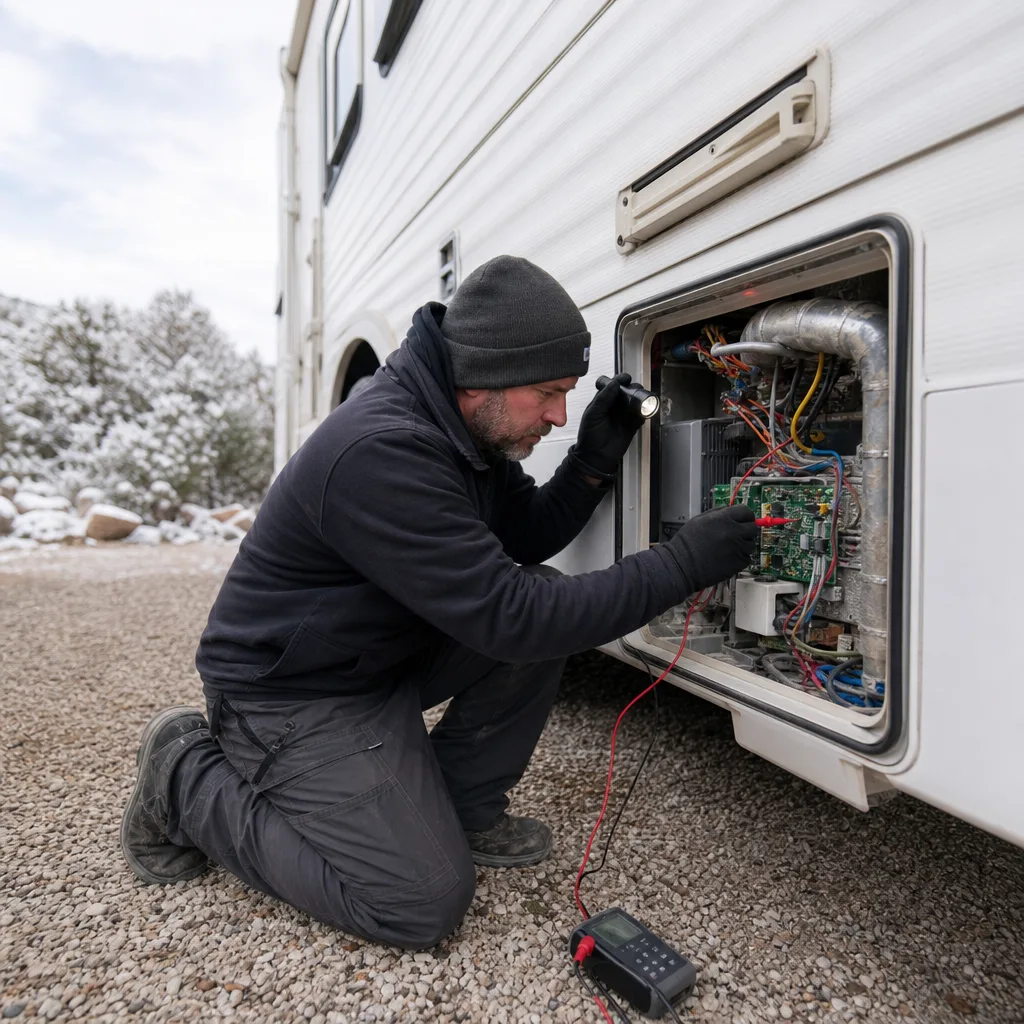
RV Furnaces Need Propane and Battery Power to Run
This part surprises a lot of folks. Your furnace is a propane appliance, but it won't do a thing without your battery. Propane makes the heat. The battery runs everything that makes the heat happen.
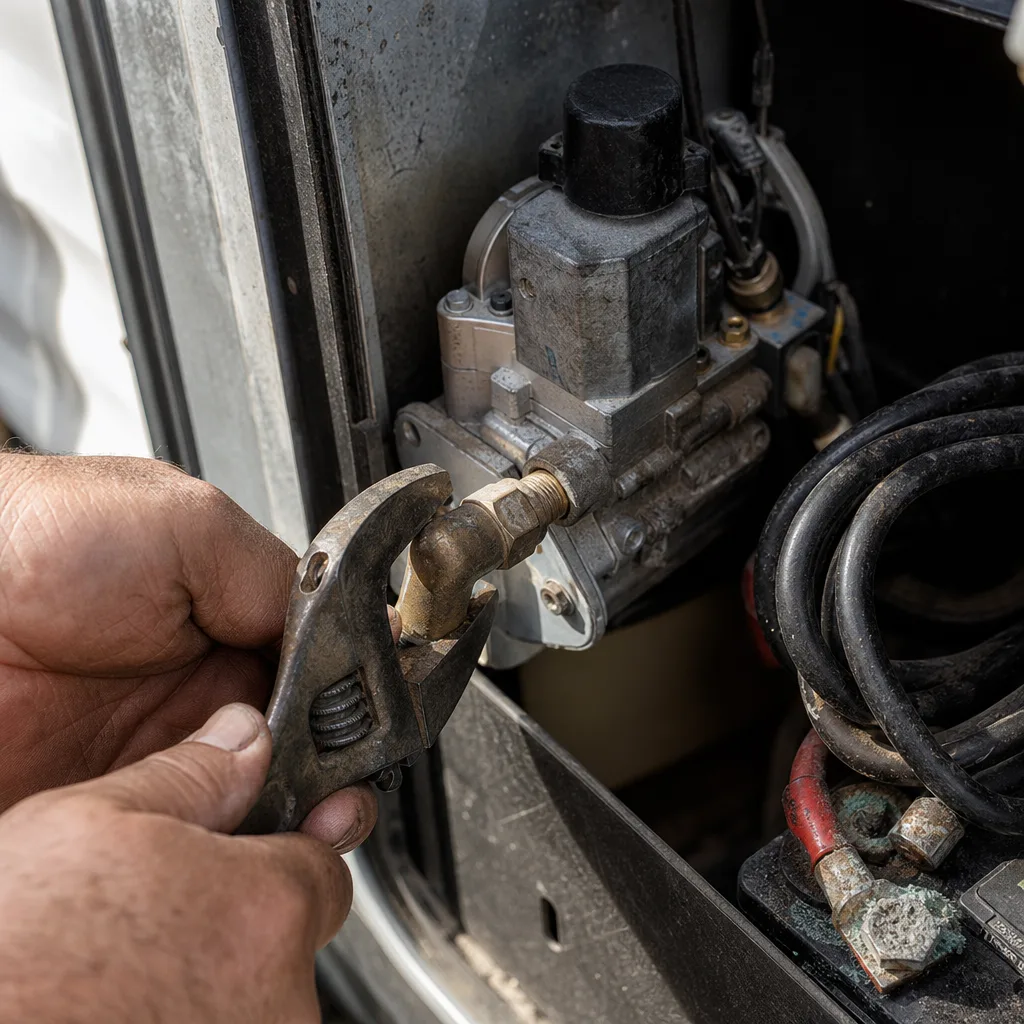
Here's what happens every time your furnace kicks on:
- The thermostat calls for heat.
- The blower motor starts pushing air through the burner chamber.
- A sail switch closes once the airflow is strong enough. It's a safety switch. No airflow means no flame.
- The control board opens the gas valve and sparks the igniter.
- A flame sensor checks that the burner lit. If it didn't, the board shuts off the gas, tries a few more times, and then locks out.
Every step on that list except the flame runs on 12-volt power. So when your battery gets weak, the whole chain gets shaky.
The blower is the hungriest part. When battery voltage sags, the motor spins slower. A slow fan may not move enough air to close the sail switch, so the furnace never even tries to light. Or it lights, the voltage drops a little more, and it shuts down. From inside the coach, you hear the fan running and feel cold air coming out of the vents. It sure looks like a dead furnace. The furnace gets blamed for a lot of crimes it didn't commit.
A tired battery is one cause. Another is a converter that isn't charging the battery while you're plugged in, so it slowly drains even on shore power. Running the furnace all night on battery alone can pull a healthy battery down faster than most people expect.
The propane side has its own tricks. A tank that's nearly empty, a valve that's only partly open, or a regulator that's on its way out can all starve the burner. Cold makes it worse. Propane pressure in the tank drops as the temperature drops, and Cedar City winter nights get well below freezing. A low tank that worked fine on a cool fall evening may not keep up on a January night. Don't take comfort just because your stove lights, either. A small burner can get by on supply that won't keep a furnace running.
Why does this matter to you? A no-heat problem doesn't automatically mean a new furnace. A good diagnosis starts by checking battery voltage under load and propane supply, then moves into the furnace itself. That order can save you from paying for parts you didn't need.
If the real problem turns out to be power or gas, that's its own fix, and we cover it. We offer RV battery replacement and testing, RV converter and inverter repair, and an RV propane system inspection and leak test for the supply side.
Check These Three Things Before Booking a Repair Call
We'd rather you not pay for a service call to find out the thermostat was set wrong. It happens to everybody, including folks who've owned RVs for twenty years. So before you call anyone, us included, take ten minutes and run through these three checks. One of them might get your heat back tonight.
1. The thermostat
- Make sure it's set to heat or furnace mode. If your rig has a heat pump on the roof AC, there may be a separate setting, and heat pump mode won't light the furnace.
- Set the temperature a few degrees above what the room is. If it's 58 inside and the thermostat says 55, the furnace is doing exactly what you asked. Nothing.
- If your thermostat takes its own small batteries, swap them. A blank or flickering screen is a big hint.
- Give it a few minutes. Some thermostats wait before calling for heat, and the furnace runs the fan for a bit before it tries to light.
2. The 12-volt power
Since the fan and controls run on your battery, as we covered above, start by plugging into shore power or firing up the generator. If the furnace suddenly works, the furnace is fine. Your battery or charging setup is the real problem. Also find your 12-volt fuse panel and look for a fuse marked furnace. A blown fuse is a cheap fix, but if a new one blows right away, stop replacing them. Something's shorting, and a fuse is just the messenger.
Don't put too much faith in the battery lights on your monitor panel. They're more of a mood ring than a meter.
3. The propane
- Check the tank level for real. Gauges on RV tanks are often wrong. Lift it or weigh it if you can.
- Make sure the tank valve is all the way open. Open it slowly. Cranking it fast can trip the safety flow limiter in the tank, and you'll get a trickle of gas instead of a full supply.
- If you just swapped or refilled a tank, there may be air in the lines. Light a stove burner first and let it run until the flame is steady. That pulls gas through the system so the furnace doesn't spend its tries lighting air.
Here's a common Cedar City story. Somebody pulls the trailer out of storage in October, tops off one tank, forgets the other valve is closed, and swears the furnace died over the summer. It didn't. It was just waiting for gas.
If all three checks pass and the furnace still won't heat, that's a real repair. Watch for the fan running with no flame, clicking with no ignition, a few tries and then nothing, or a furnace that lights and cuts out after a minute. Those point to parts inside the furnace, like the sail switch, igniter, gas valve, or control board. Those aren't guess-and-swap parts. Throwing parts at a furnace gets expensive fast, and you can still end up cold. That's when it's worth having someone test it properly.
Common RV Furnace Problems That Need a Technician
So you've checked the thermostat, the battery, and the propane, and the furnace still won't behave. These are the problems we'd look at next. Every one of them has more than one possible cause, and that's why swapping parts on a hunch burns money.
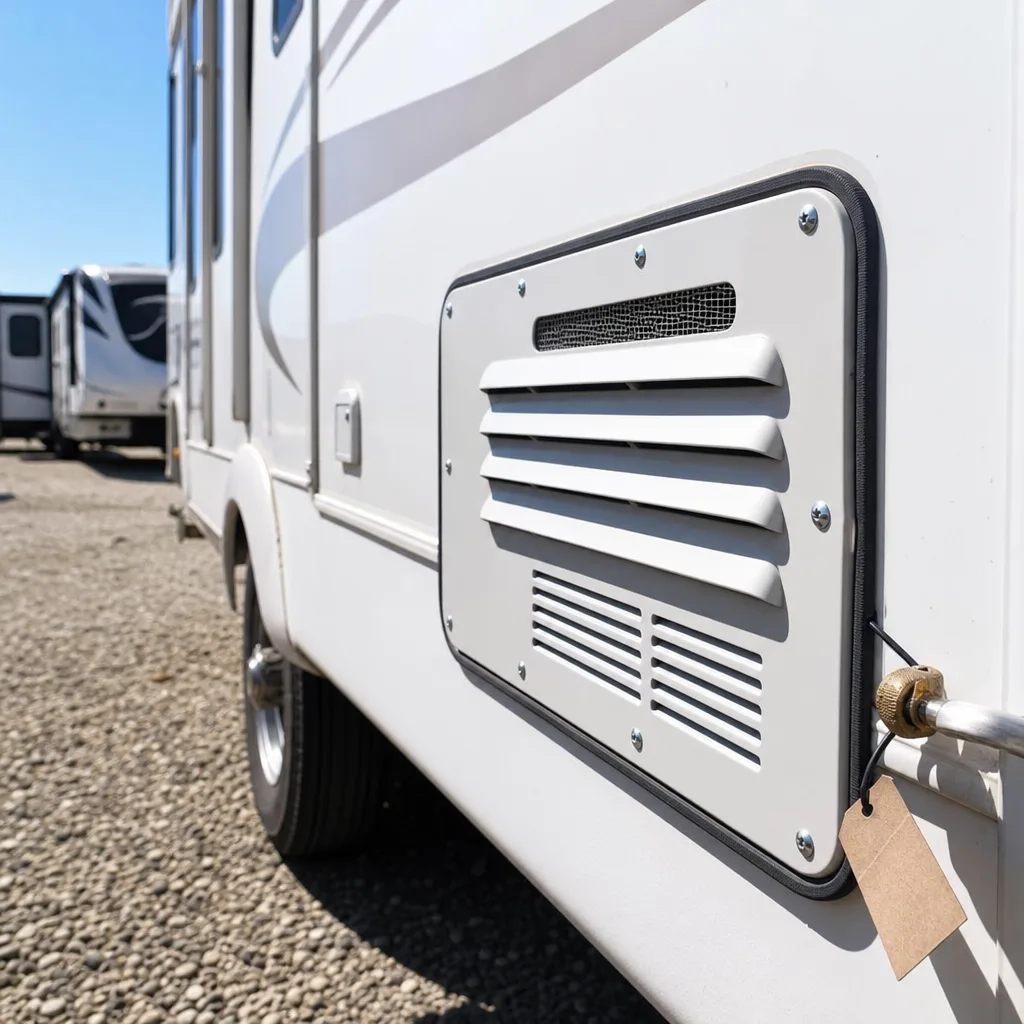
Sail switch trouble. This little switch is fussy. Dust, pet hair, or a spider web on the blower wheel can cut airflow just enough that the switch never closes. A bent switch arm does the same thing. You'll hear the fan run and run with no flame. Before blaming the switch, a good tech confirms whether the switch is bad or the air just isn't getting to it.
Critters in the vents. An RV that sits all summer is prime real estate. Wasps, mud daubers, and mice love the furnace intake and exhaust. A nest can choke airflow or cause poor burning. If your rig spent the off-season parked, a blocked vent belongs high on the suspect list. Bugs don't pay rent, but they sure move in.
Igniter and flame sensor problems. If you hear clicking but get no flame, the igniter may be cracked, dirty, or gapped wrong. If the burner lights and then shuts off after a few seconds, the board probably isn't seeing the flame. That's often a dirty or failing sensor, though a weak gas supply can look exactly the same.
Gas valve failure. The board can do everything right and send power to the valve, but the valve doesn't open. Or it opens weakly. From inside, this looks a lot like an igniter problem, which is why it needs testing, not guessing.
Control board faults. Boards do fail, especially after voltage spikes or a bad converter. But they also get blamed for problems that live somewhere else. A board is one of the pricier parts in the furnace, so it should be the last thing replaced, after everything around it checks out.
Blower motor wear. If the fan squeals, grinds, or spins slowly even with a full battery and shore power, the motor bearings may be worn out. A blower wheel packed with debris can cause the same slow, weak airflow.
Overheating and short cycling. Your furnace has a high-limit switch that shuts the burner off if it gets too hot inside. When the furnace lights, runs a short while, shuts off, and repeats, it's often overheating. Common causes include:
- Return air blocked by a storage bin, a cushion, or a dog bed
- Too many floor vents closed
- A crushed or kinked duct
- A weak limit switch that trips too early
Duct problems. Sometimes the furnace works great and the heat just never shows up where you want it. Ducts run through the floor and underbelly, and they can pull loose or get crushed. When that happens, you're heating the underside of the trailer instead of the bedroom. If one vent blows hot and another barely breathes, look at the ducts before you blame the furnace.
Soot, odd smells, or a yellow flame. Black marks around the exhaust or a burning smell that doesn't fade after the first run of the season point to a combustion problem. That isn't a part you swap and hope for the best. It needs a close look at the burner and the airflow.
When you call about any of these, tell us exactly what you hear and see, and in what order. Something like "Fan starts, clicks three times, then quits" tells a tech a lot more than "it's broken."
Cold Winters at Cedar City's Elevation Make Furnace Reliability a Real Concern
Cedar City sits at around 5,800 feet. That's high enough that the weather doesn't fool around once fall turns. A sunny October afternoon can be shirt-sleeve nice, and that same night can drop well below freezing. In a house, a furnace hiccup is an inconvenience. In an RV with thin walls and single-pane windows, the inside temperature chases the outside temperature fast. A furnace that quits at 2 a.m. in January isn't a comfort problem. It's a long night.
Altitude adds its own wrinkle. The air up here is thinner, so there's less oxygen for the burner to work with. A furnace that's clean and adjusted handles that fine. One with a partly blocked intake, a dusty blower wheel, or a dirty burner has less room for error than it would at sea level. Small problems that might slide by somewhere lower can show up here as hard starts, short cycling, or soot. Add the cold-weather pressure drop in your propane tank we covered earlier, and a furnace that was just getting by in September can give up on the first real cold snap.
There's a bigger reason to care, too. On a lot of rigs, the furnace does double duty. Some of that warm air is ducted into the underbelly or the basement storage, where it keeps your tanks, pump, and water lines from freezing. When the furnace goes down, the plumbing can go next. Now a heating repair has turned into a plumbing repair, and nobody wanted that sequel.
This is where the right repair method really earns its keep. When it's 20 degrees out and the kids are in sleeping bags, the temptation is to grab the first part somebody suggests and hope. That's how people end up with a new control board and the same dead furnace, because the real problem was a mud dauber nest in the intake or a weak battery. Testing in order, power and gas first, then airflow, then ignition, then the board, is what gets the heat back on and keeps it on. Guessing is slower and more expensive, even when it feels faster.
The easiest fix for all of this is timing. Have the furnace looked at in early fall, before you need it, not after it lets you down. Here's when a check makes the most sense:
- Before your first cold-weather trip of the season
- When you pull the rig out of summer storage, since parked rigs are where critters set up shop
- Before you plan to live in it or camp in it through the winter
- Any time the furnace started acting odd last season and you never got around to it
If you're putting the rig away for winter instead, our RV winterization service protects your plumbing while it sits. If you'd rather not keep track of all this yourself, we also offer RV preventative maintenance and an RV seasonal inspection membership.
Call nowOn-Site Furnace Repair at Home, Storage Lots, and Campgrounds
Benny's RV is a mobile RV technician service. You don't have to hitch up a cold trailer, tow it across town, and leave it at a shop for a week. We offer RV repair at home or at your storage lot, on-site campground RV repair, and emergency mobile RV repair when the heat quits at a bad time.
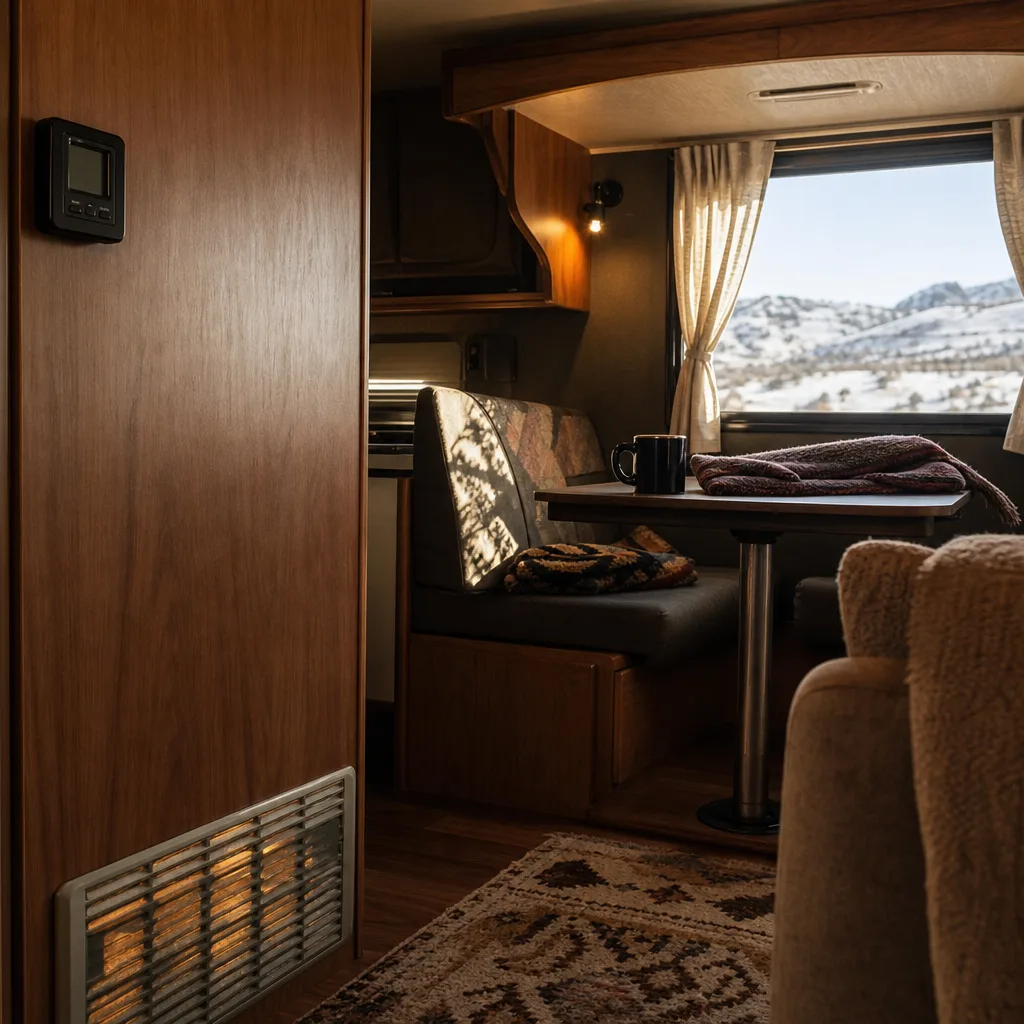
On-site isn't just about convenience. It's a better way to fix a furnace. Many no-heat problems live in the supply side: your battery, your converter, your propane tank, or a vent that something moved into over the summer. Those are part of your rig in the spot where it sits. Testing the furnace right there, on your own battery and your own propane, shows exactly how it acts when you need it. Tow it somewhere else and plug it into different power, and the problem might hide. Furnaces are sneaky like that. They'll run perfectly for the mechanic and quit the second you get home.
A little prep on your end makes the visit go smoother:
- Clear the outside furnace panel. If the trailer next to you in the storage lot is parked tight against it, or a slide-out covers it, move things if you can.
- Clear the inside, too. Pull the storage bins, shoes, and dog beds away from the furnace cover and the return air.
- Leave the propane and battery as they are, and tell us what you've already tried. If you ran the three checks above, that saves time.
- Find the furnace make and model on the data plate if you can reach it. A photo on your phone works great.
- Write down the symptoms in order, like you would for any repair call.
- If you're at a campground, check whether the park has rules about outside service techs working on site. Most are fine with it, but it's worth knowing first.
- Put the dog somewhere comfy. He means well, but he's a lousy assistant.
Mobile repair pricing tends to come down to a few pieces: getting a tech to your rig, the time it takes to find and fix the problem, and any parts. The diagnosis is usually what moves the bill the most. A clean, quick test is cheaper than three wrong parts. Before you hire anyone, ask how they charge for travel and diagnostic time, whether they'll explain what failed before replacing anything, and whether they can source the part or will need to order it.
One thing to know up front: we don't currently offer manufacturer warranty work. If your RV is new enough that the furnace is still under factory coverage, check with your dealer first. If it's not, or you'd rather not wait in a dealer's line in December, we're happy to help.
We're a small outfit, and you'll know who you're dealing with. Our owner started out washing trailers on a dealer lot and spent more than 15 years working his way up to running three locations. Now he's an RVTI Certified Technician, the lead tech, and the main person you'll talk to. His wife runs the office. She sets appointments, keeps the calendar straight, and sends invoices. No call centers, no runaround.
Call nowFrequently Asked Questions
How long does an RV furnace repair visit usually take?
It depends on what's wrong, since a clean diagnosis is often quicker than people expect. Checking battery voltage, propane supply, and airflow comes first, and that process usually points to the real problem fast. Replacing a sail switch or clearing a blocked vent takes far less time than chasing a guess through several wrong parts. The slowest repairs are ones where someone swapped parts before testing, since that often means undoing earlier guesswork first.
Can I run my RV furnace safely if I smell something odd or see soot?
No, you should have it looked at before running it again. A burning smell that doesn't fade after the first run, or black soot marks around the exhaust, points to a combustion problem. That's not something to fix by swapping a part and hoping. It needs a close look at the burner and airflow before you use the furnace again.
Why does my RV furnace work fine at the dealer or shop but not at home?
Furnaces often test fine elsewhere because they're running on different power and propane than what you use. Many no-heat problems live in your own battery, converter, or propane tank, not the furnace itself. Testing it on-site, right at your home or storage lot in Cedar City, shows exactly how the furnace behaves on your own setup instead of borrowed power.
What's the most common reason an RV furnace stops working after sitting in storage?
Critters getting into the vents is one of the most common causes after a rig sits all summer. Wasps, mud daubers, and mice are drawn to the furnace intake and exhaust while it's parked. A nest can block airflow or cause poor burning, which shows up as hard starts or short cycling once you try to use the furnace again.