
RV Leveling System Repair · Cedar City, Utah
RV Leveling System Repair in Cedar City, Utah: Know When You Need a Technician
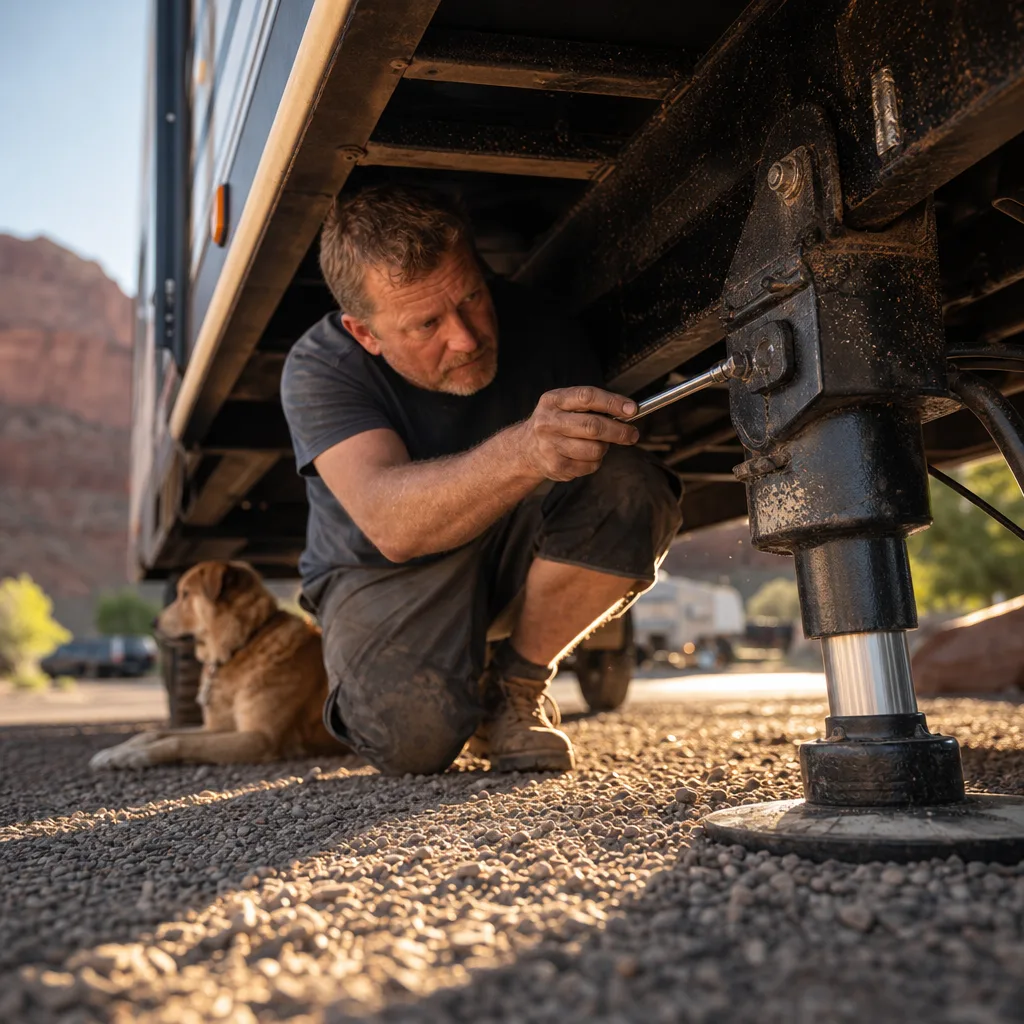
Signs Your Leveling System Needs a Technician
Picture this. You pull into your site, hit the auto-level button, and the coach starts doing a slow-motion dance. One corner goes up, another goes down, the panel beeps at you, and it finally gives up and flashes a code. You're tired, the neighbors are watching, and the RV sits at an angle that makes the fridge nervous. Is it broken, or just being dramatic?
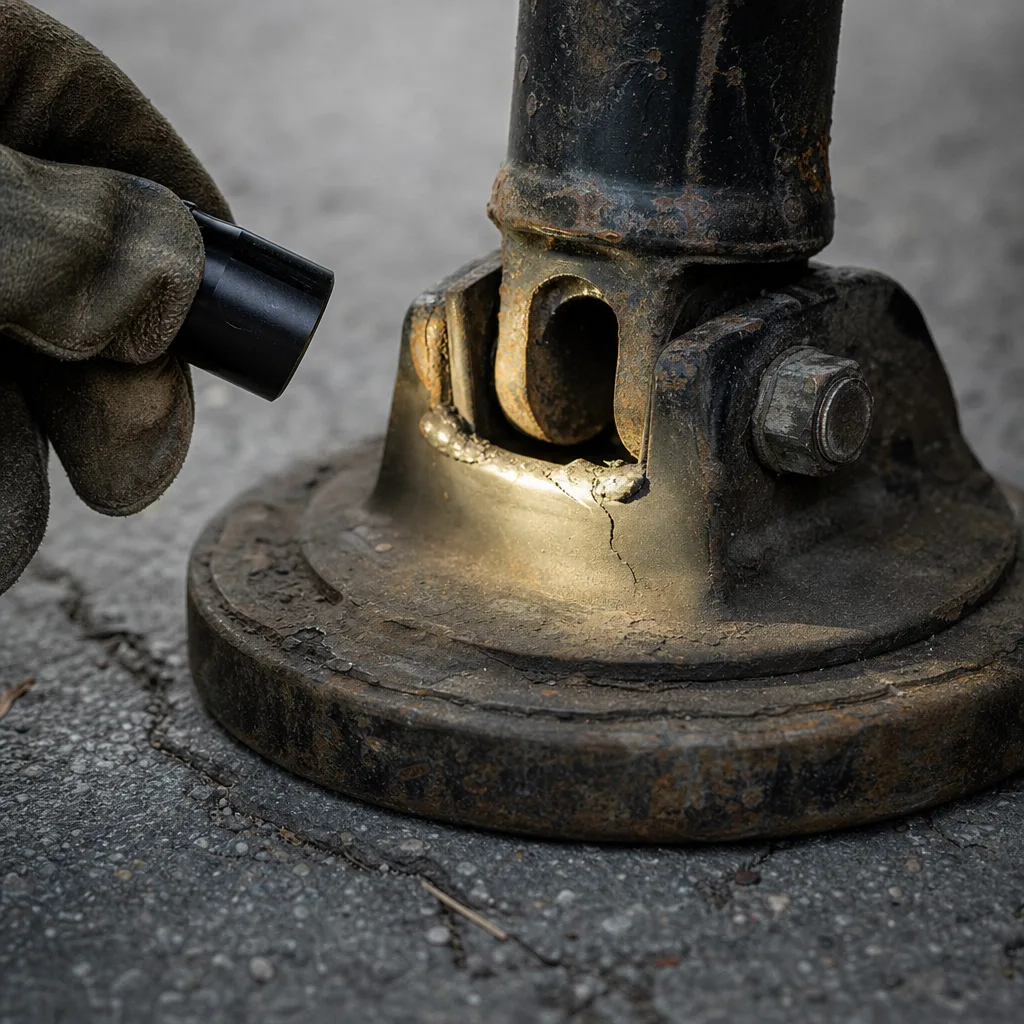
Before you call anybody, check the boring stuff. Most leveling systems won't run unless the engine or ignition is in the right state, the parking brake is set, and the battery has enough voltage to push the pump. A tired battery is behind a lot of leveling systems that act possessed. Also check whether the jacks are pushing into soft dirt or gravel that keeps sinking. That isn't a mechanical problem. That's the ground losing the argument.
If those all check out and you're still seeing any of the signs below, it's time to have a technician look at it.
- Jacks extend or retract much slower than they used to, or one jack lags behind the others. That often points to a weak pump, low fluid, air in the lines, or a sticky valve.
- The pump motor runs, but nothing moves. You can hear it working hard and getting nowhere, like a teenager asked to unload the dishwasher.
- There's oily residue or drips around the jack cylinders, hoses, or fittings. Hydraulic fluid belongs inside the system, not on your tires or the campsite.
- The same error code keeps coming back after you've cleared it and checked power. One code once can be a fluke. A repeat offender is telling you something.
- Your coach won't stay level. If it's sitting level at dinner and leaning by breakfast, a jack may be bleeding pressure.
- Electric jacks grind, click, or chatter instead of moving smoothly. Worn gears, a failing motor, or a bad limit switch usually make that kind of noise.
- A jack won't fully retract, or the jacks-down warning stays on after everything looks up.
- Jacks creep down on their own while you're parked or driving. Of everything on this list, this one goes straight to the top.
Cold weather can make a slow system look worse, because hydraulic fluid thickens when it's chilly. So if your jacks drag on a frosty morning and act normal by afternoon, keep an eye on it, but don't panic. If they're slow on a warm day too, that's not the weather talking.
Here's the practical rule we'd give a friend. If the problem goes away after you fix power, ground, or your startup steps, you're probably fine. If it shows up again, gets worse, or comes with fluid, grinding, or jacks moving on their own, you're past the troubleshooting stage. Small leveling issues have a way of turning into stuck-jack issues at the worst campsite, and nobody wants to be the person who can't leave because a jack won't come up.
When Leveling Trouble Does Not Mean a Broken System
Here's the part most repair shops skip. Plenty of leveling complaints have nothing to do with a broken part. The system did exactly what it was built to do, and the problem is the site, the expectation, or who should be paying for the fix. If one of these fits your situation, save your money.
The site is steeper than your jacks can handle. Every leveling system has a limit to how far its jacks can reach. Park on a hard slope and the jacks on the low side can run out of travel before the coach gets level. Then the panel throws a fit or quits. That isn't a failure. You're asking a 4-foot ladder to do an 8-foot job. Put solid blocks or pads under the low-side jacks to shorten the reach, or pull forward a few feet and try a flatter spot. If it levels fine on reasonable ground, your system is healthy.
Your idea of level and the system's idea of level don't match. Auto-level gets you close, not perfect. You may still see a marble roll on the counter or feel a slight lean in bed. If it's only a touch off and the fridge and slides work like they should, that's usually as good as it gets.
The wheels came off the ground, and that scared you. On a steep site, the jacks may lift a tire off the dirt to get level. A lot of owners see a tire hanging in the air and figure something's wrong. Mostly it means the site was too steep. Blocks under the tires on the low side are the better answer than asking the jacks to do all the lifting, because a coach sitting on its jacks alone isn't as stable as one with its tires on solid ground.
It only happened once. A single hiccup that clears up and never comes back isn't worth a service call. Write down what happened, what the panel said, and what the weather and ground were like. If it shows up again, you'll have real information instead of a vague memory of beeping.
Your coach is still under manufacturer warranty. This one's about money, not mechanics. If a covered leveling problem shows up on a newer RV, take it to a dealer authorized to do warranty work for your manufacturer. We don't currently do manufacturer warranty work, and we'd rather tell you that up front than have you pay out of pocket for something the manufacturer might cover. Check your paperwork before you book anyone.
Here's an easy test. Take the RV to a flat, firm spot like a paved lot and run the system there. If it levels smoothly and holds, the problem was probably where you parked, not what's under the coach. If it still struggles on good pavement, the ground is off the hook, and the signs in the section above are worth taking seriously.
Why Uneven Terrain Near Cedar City Stresses Leveling Jacks
Leveling jacks are built to push straight down onto firm, flat ground. That's their happy place. A lot of the camping around Cedar City doesn't look like that. You've got gravel pull-offs, dirt spurs, and sloped sites up Highway 14 toward the high country. None of that breaks a jack in one trip. It wears it down a little at a time, and the bill shows up later.
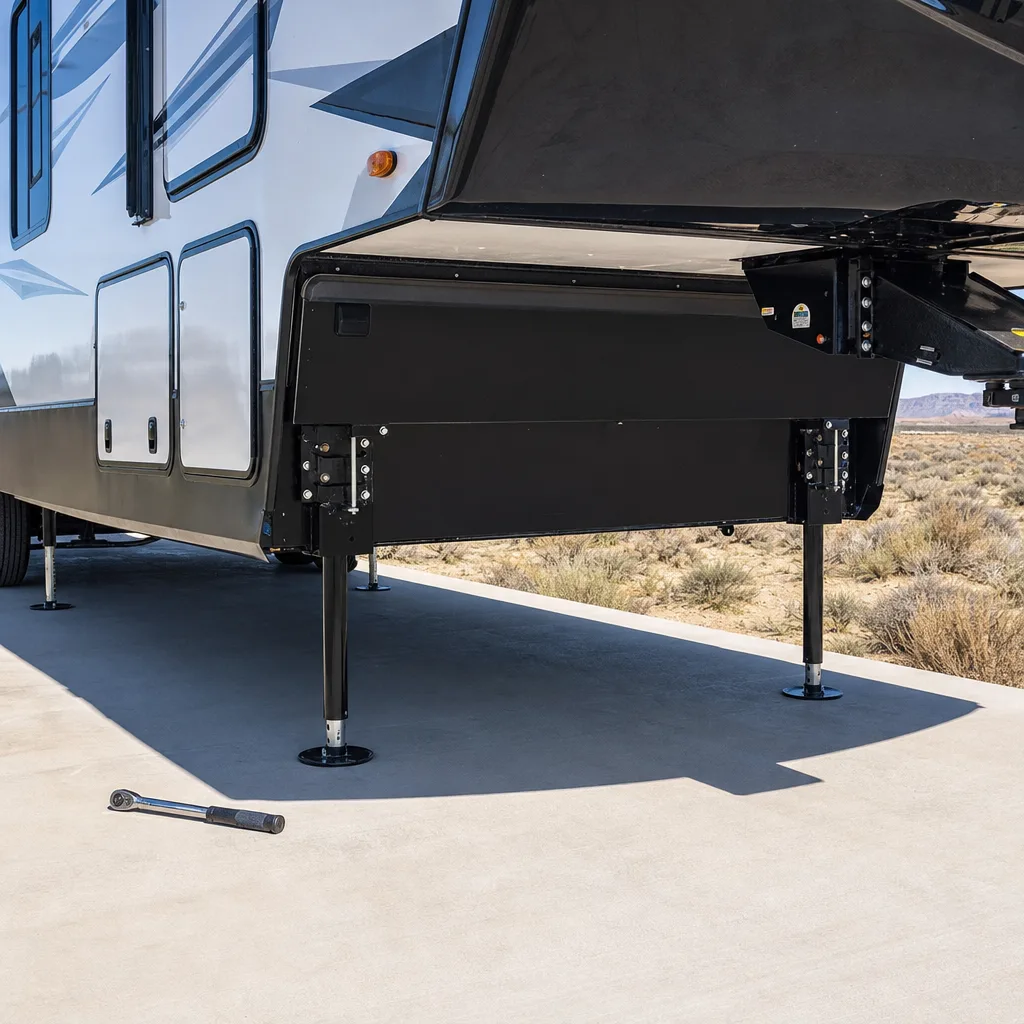
Here's what's going on under the coach.
- Side loading. When a jack pad lands on a slope or the edge of a rock, the pad tilts and the jack gets pushed sideways instead of straight down. Jacks are strong going up and down. They're not built to be pushed sideways. Do that enough and you can bend a ram, wear the seals unevenly, and start a slow leak.
- Endless cycling on soft ground. Loose dirt and gravel give way under a jack. The system senses the coach dropping, so it runs the pump again. Then the ground settles again, and the pump runs again. Every extra cycle adds heat and wear to the pump and motor. A system that has to fight the ground every night ages faster than one parked on pavement.
- Running near full extension. Even when a site is within your jacks' reach, a jack stretched close to its limit has less of the ram inside the cylinder holding it steady. It's a lot like standing on your tiptoes. You can do it, but you're not very sturdy.
- Dust and grit on the rams. Dry, dusty country coats the shiny part of the jack in fine grit. When the jack pulls back in, that grit drags across the seals. Over time it scores them, and scored seals are where leaks start.
- Washboard roads. Miles of rough dirt road shake everything under the RV. Hydraulic fittings, wiring connectors, and sensor plugs can work loose. A loose connector can cause an error code that comes and goes and makes you question your sanity.
Our high desert weather adds its own twist. Ground that's frozen hard at night can soften as it warms up during the day, so a coach that was level at bedtime can settle a bit by lunch. That's not always the jacks bleeding down. Sometimes the dirt just moved. Check the pads before you blame the hydraulics.
The good news is that most of this wear is easy to cut down.
- Use wide, solid jack pads on dirt and gravel. They spread the load so the jack sinks less and the pump cycles less.
- Kick rocks out from under the pad spots before you deploy. Ten seconds with your boot can save a bent ram.
- Wipe the rams down with a clean rag before you retract after a dusty stay. It's the cheapest seal protection there is.
- After a long stretch of rough road, take a quick look at the fittings and connectors near each jack for drips or anything hanging loose.
Treat your jacks like the hardworking part they are, and they'll keep doing their job a lot longer. Ignore the sideways loads, the grit, and the shaking, and those small stresses turn into the leaks and slow jacks we talked about earlier.
On-Site Repair at the Campground or Storage Lot
A leveling problem usually shows up where you're parked, so that's the best place to fix it. Benny's RV offers mobile RV technician services out of Cedar City. You don't have to break camp or tow the coach across town with a jack that won't come all the way up. We come to the campground, your storage lot, or your driveway at home.
There's also a practical reason to look at a leveling system right where it's acting up. The fault you're dealing with is tied to that coach, that battery, and sometimes that patch of ground. A jack that drags on a sloped gravel site might seem fine after a drive to a paved shop lot, and then the problem plays hide and seek. When the RV stays put, the technician sees what you saw.
And if a jack is stuck down or won't fully retract, moving the RV is the last thing you want to do. Dragging a jack pad down the road is expensive in a way nobody enjoys. When you can't leave your site, that's when you need someone to come to you.
A little prep makes any mobile leveling repair go smoother, and it costs you nothing:
- Write down the error codes and snap a photo of the control panel when it acts up. A picture of the code beats "it beeped a bunch."
- Find the make and model of your leveling system. It's often on a sticker near the pump or in your owner's manual. Have the manual handy if you still have it.
- Charge the batteries or plug into shore power if you can. A weak battery muddies the picture.
- Clear the area around each jack. Move bikes, chocks, totes, and the dog's water bowl so the jacks and the pump are easy to reach.
- Check the rules where you're parked. Some campgrounds limit repairs on site, and storage lots have gate codes and hours. Sort that out before the appointment so nobody gets stuck outside a locked gate.
- Note when the trouble started. Did it begin after a rough dirt road, a cold snap, or a steep site? Those details help narrow it down fast.
One more thing before you book. If your RV is new enough to still be under manufacturer warranty and the problem may be covered, check with an authorized dealer first. We don't currently do manufacturer warranty work, and we'd rather you not pay for something the manufacturer might cover.
When you call, you'll usually talk with me. I'm the lead technician and the main point of contact, and my wife handles the scheduling. I'm an RVTI Certified Technician with more than 15 years in the RV business, starting as a lot porter washing trailers. I've seen plenty of coaches doing the slow-motion leveling dance, and I'll tell you straight whether yours needs a repair or just a better parking spot.
Call nowWhat a Leveling System Diagnosis and Repair Involves
A good leveling repair starts with finding the actual problem. The part that looks guilty isn't always the one that failed. A slow jack can come from a bad seal, but it can also come from a weak pump, low fluid, a sticky valve, or a pump motor that isn't getting enough voltage. Replacing the wrong part is how a repair costs twice as much and fixes nothing.
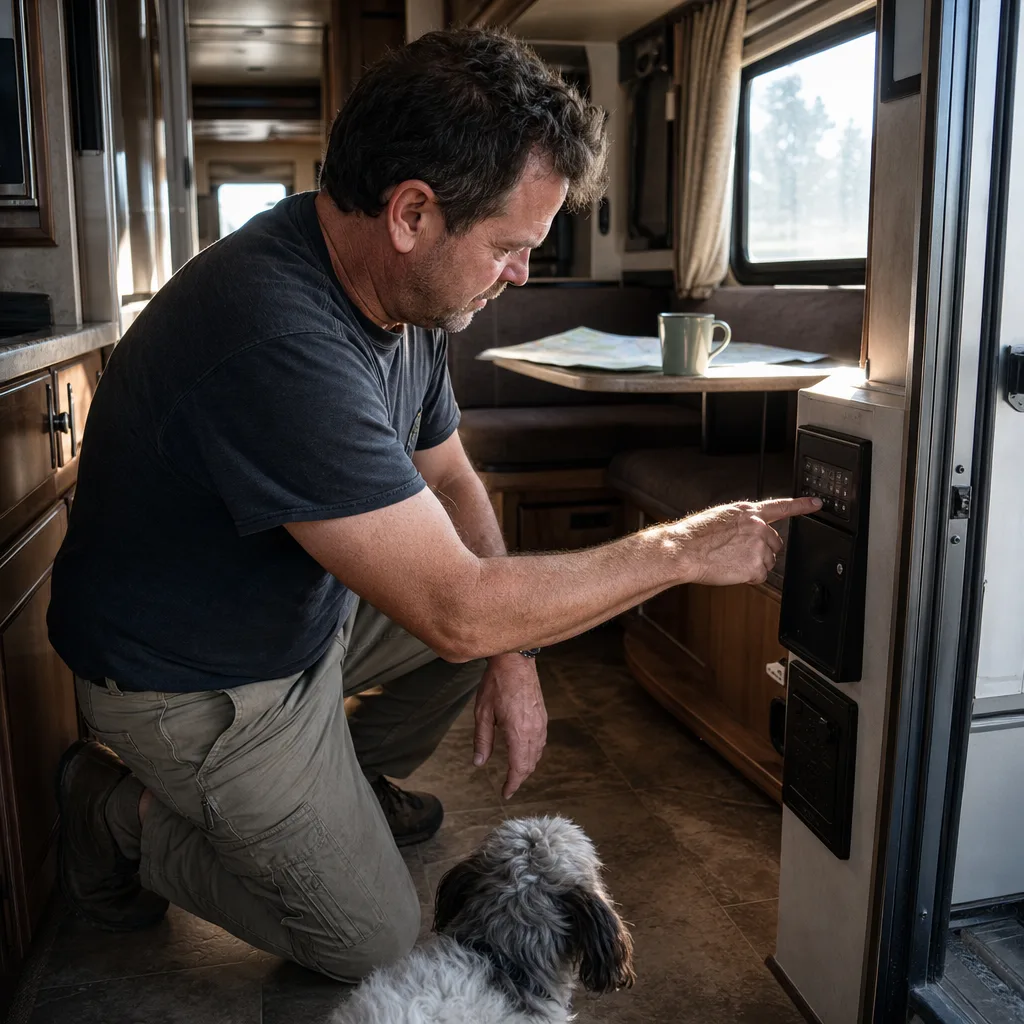
Here's what a solid diagnosis covers, roughly in this order:
- Power first. The technician checks battery voltage at the pump while it's running, not just at rest. A battery can read fine sitting still and then sag the moment the pump kicks on. Corroded grounds and loose cables cause more leveling headaches than most people would guess.
- Error codes and the control panel. Codes point toward a circuit or a sensor, but they don't name the broken part. Treat them as a lead, not a verdict.
- Fluid level and condition on hydraulic systems. Low fluid means it's going somewhere. Milky or dark fluid can mean water or worn-out fluid that needs flushing.
- Each jack, one at a time. Running jacks one by one shows which corner lags, leaks, or won't hold pressure.
- Hoses, fittings, and cylinders. These get checked for wet spots, cracks, and rub marks.
- Sensors, limit switches, and wiring. A bad level sensor or a jack switch that won't report "up" can make a healthy system act broken.
Electric jacks get a slightly different look. With no fluid involved, the focus moves to the motor, the gears inside the jack, and the wiring to each leg. Grinding usually means gears or a motor on its way out.
Once the problem is found, the repair is often smaller than people fear. Common fixes include tightening or replacing a leaking fitting, replacing a hose, bleeding air out of the lines, flushing old fluid, swapping a pump motor or solenoid, cleaning or replacing a valve, resealing or replacing a jack cylinder, replacing a sensor or switch, and recalibrating the system so it knows what level looks like. If a jack is stuck down, the first job is getting it retracted safely so you can move. Most systems have a manual way to do that, and it's worth doing right instead of forcing it.
Cost comes down to a few things:
- Which part failed. A fitting and some fluid is a different job than a new pump or a full jack.
- Hydraulic or electric system, and the make and model. Some parts are easy to find. Others take a while to order.
- Labor time. Jacks tucked behind frame rails or tanks take longer to reach.
- Trips. If a part has to be ordered, the fix may need a second visit, and mobile technicians often charge for travel.
Before you hire anyone, ask how they charge for diagnosis, whether that time counts toward the repair, how they handle trip charges, and whether they'll explain what failed before replacing anything. A tech who can show you the wet fitting or the low voltage reading is a tech you can trust. One who wants to replace the whole pump without testing it first is just guessing with your money.
Frequently Asked Questions
Can I run my generator while leveling my RV at a Cedar City campground?
Most campgrounds allow generator use during set daytime hours, but check the posted quiet hours before you start leveling. Running the pump off a generator works fine as long as your battery and connections are solid, since a weak battery is one of the most common causes of leveling systems acting up. If your jacks still move slowly or unevenly with the generator running, that points to a real fault rather than a power issue.
Is it safe to level my RV on a gravel pull-off or dirt spur near Cedar City?
Yes, but loose gravel and dirt make your jacks work harder than they would on pavement. Soft ground lets the jack sink a little, so the system senses movement and cycles the pump again, which adds wear over time. Using wide, solid jack pads on gravel spurs helps the jacks sit still and cuts down on that extra cycling.
What should I do if a jack won't fully retract before I tow the RV away?
Stop and get the jack retracted safely before you move the coach, since dragging a stuck jack down the road causes expensive damage. Most leveling systems have a manual override to bring the jack up when the motor won't finish the job. If you're parked somewhere you can't easily leave, that's exactly when a mobile technician coming to your site, like at a Cedar City storage lot or campground, saves you from towing a damaged jack.