
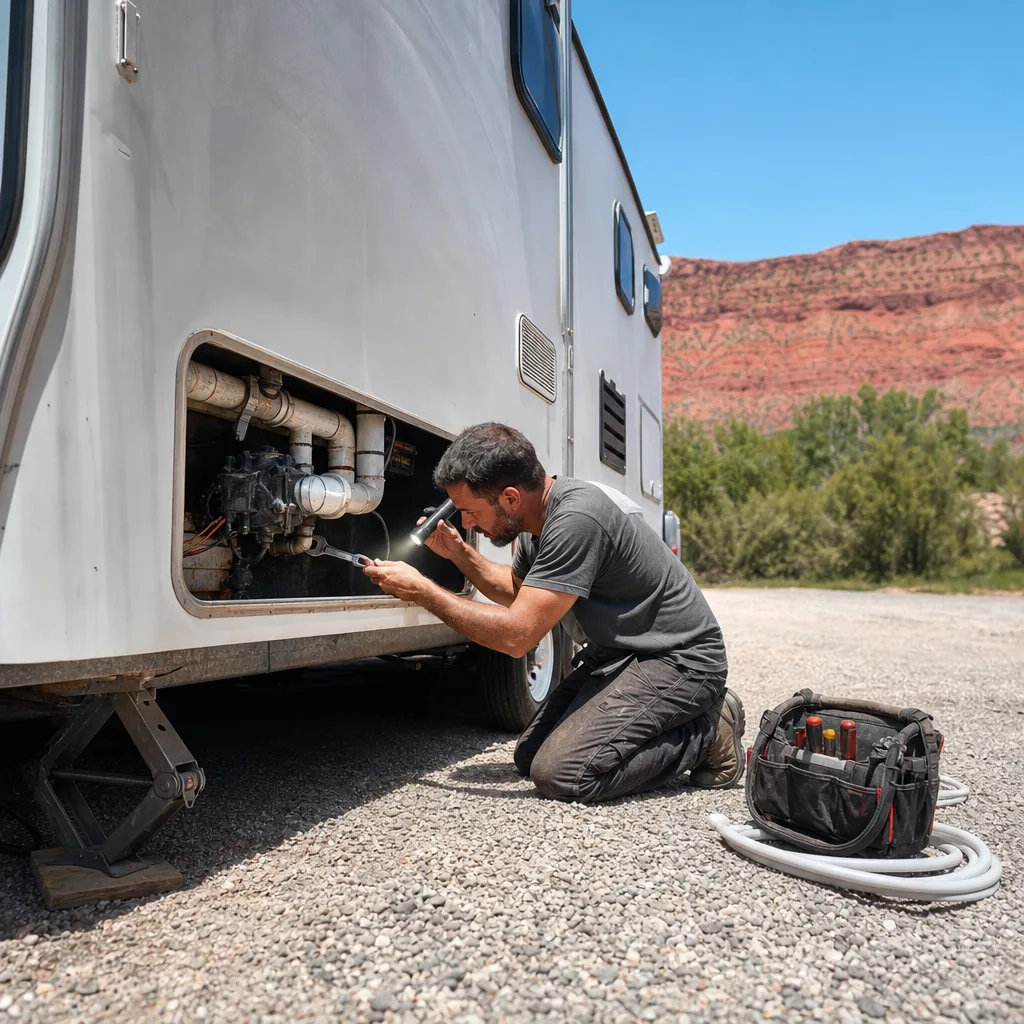
RV Plumbing Problems Need an RV-Specific Technician
Here's the simple version. Your house sits still on a slab. Your RV is a house that rides down the highway, twists over speed bumps, and bakes and freezes in a storage lot. Its plumbing is built for that life, and it has to be repaired with that life in mind.
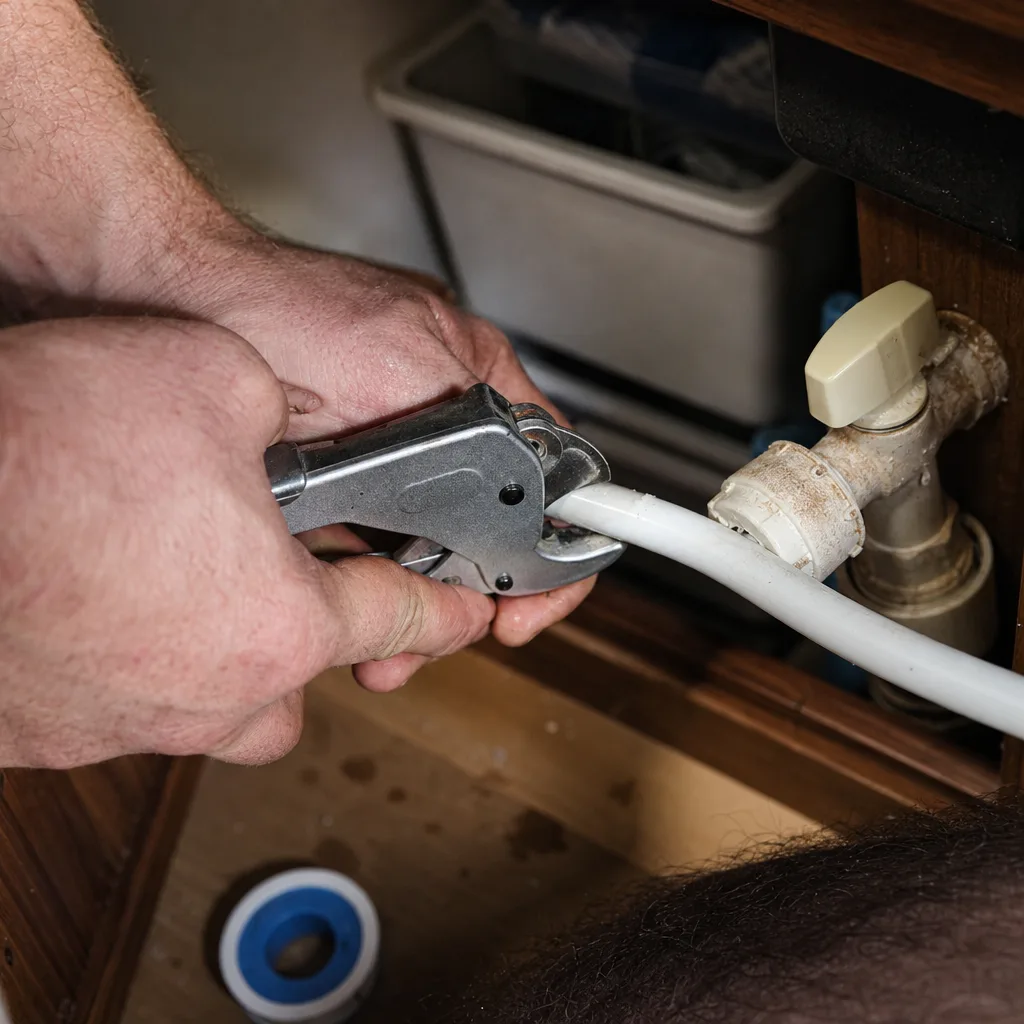
A good house plumber knows copper, cast iron, and city water pressure inside and out. RV plumbing is a different setup, and the differences matter:
- Water pressure comes from a 12-volt pump when you're dry camping, or from a city water hookup when you're plugged in at a campground. Either one can be the reason a faucet sputters.
- The lines are usually flexible PEX tubing with RV-style crimp or push-fit fittings. They run behind cabinets, under the floor, and sometimes into slide-outs.
- Fresh, gray, and black tanks each have their own valves, vents, and sensors. A slow drain can start in any of them.
- The water heater has bypass valves that need to be set right for winterizing, filling, and normal use. One valve in the wrong spot can look like a much bigger problem.
- Everything shakes on the road. A fitting that's just a little off will work itself loose a few hundred miles later.
That last point is where most bad repairs come from. A house-style patch, a hose clamp, or a wrap of tape can stop the drip for a weekend. Then you hit a rough road, the floor flexes, and water finds the subfloor. In an RV, a slow leak under the floor can quietly soak wood for weeks before you ever see a stain. By the time you notice a soft spot by the toilet, you've got more than a plumbing problem.
Diagnosis is different too. If the pump runs and cycles while every faucet is off, the cause could be a leak, a bad check valve, or a worn-out pump. Low pressure at the city inlet might be the regulator, a clogged screen, or a kink you can't see behind a panel. Knowing where RV makers usually route lines, and which parts tend to fail first, keeps us from cutting into walls looking for trouble.
That's the background we bring. We started in the RV industry and stayed in it for more than 15 years, working our way from washing trailers on a dealer lot to running locations, before starting Benny's RV in Cedar City. Our lead technician is an RVTI Certified Technician. RVs are all we do, so we already know how these systems go together.
One thing to know before you call: we don't currently do manufacturer warranty work. If your RV is new enough that a plumbing problem might be covered, check with your dealer or manufacturer first. If it's out of warranty, or you just want it fixed right without the wait, that's where we come in.
Common Signs Your RV Plumbing Needs Repair
RV plumbing rarely fails all at once. It drops hints first. The trick is catching them while the fix is still a fitting and not a floor. Here's what to watch, smell, and listen for.
What you'll see:
- Water stains, warped panels, or damp carpet near the bathroom, kitchen, or water heater. Check the floor of the cabinet under your sink too. It's the first place a slow drip shows up.
- Weak pressure at every faucet. That points to the pump, the city water inlet, or a leak somewhere in the line. Weak pressure at just one faucet is often a clogged aerator, which is a five-minute fix you can do yourself.
- A toilet bowl that won't hold water after you flush. The seal in the toilet valve is likely worn or dirty, and that seal is also what keeps tank smells out of your bathroom.
- Drains that empty slowly, or gurgle and back up into the shower when you run the sink.
- Tank gauges that read full when you just dumped. Sensors get coated with gunk, so this doesn't always mean a broken part, but it's worth sorting out before you trust them on a trip.
What you'll smell:
- A sewer smell inside the rig. That can come from a dry trap under a sink, a bad toilet seal, or a blocked or cracked roof vent. Your nose is a better leak detector than you think. Don't ignore it and hope the air freshener wins.
- A musty, damp smell that sticks around after you air things out. That usually means water is sitting somewhere you can't see, like under the floor or behind a panel.
What you'll hear:
- The pump kicking on by itself with every faucet closed. We covered why that's worth chasing down in the section above.
- The pump running and running with little or no water coming out. Before you panic, check that the fresh tank has water in it and that the water heater bypass valves are set right. If both are fine, the pump may have lost its prime, have a clogged inlet screen, or be wearing out.
- Sputtering faucets that spit air. A little air after filling is normal. Air that keeps coming means a loose fitting is letting it in.
A couple of related problems often get lumped in with plumbing. Water dripping from the outside water heater compartment is usually a relief valve or tank issue, which we handle as RV water heater repair. A dump valve handle that sticks, leaks, or won't close all the way falls under our RV sewer hose and valve repair.
Here's a common scenario. You pull into a campsite, hook up city water, and an hour later there's a small puddle by the back tire. It's easy to blame the hose connection and move on. Sometimes that's all it is. But if the puddle comes back after you've tightened the hose, the water is coming from inside the rig, and the road has probably been working a fitting loose mile by mile.
Mobile Repair at Your Home, Storage Lot, or Campground
Benny's RV is a mobile RV technician service based in Cedar City, so we come to you. That means your driveway, your storage lot, or your campsite. For plumbing, that's more than a convenience. It's often the better way to find the problem.
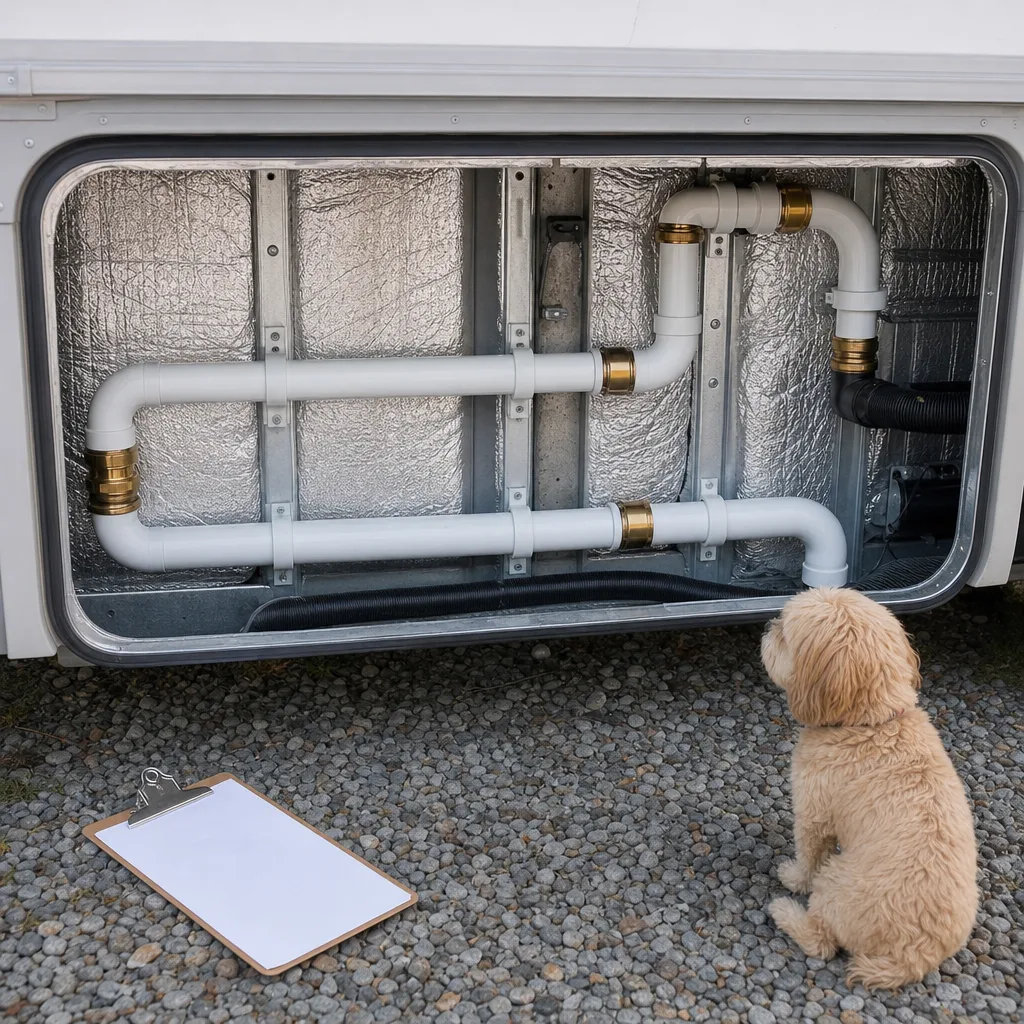
Think about what happens when you tow a leaking rig to a shop. You hitch up, drain what you can, and drive. The road shakes every fitting on the way there. Then the rig sits on a lot, maybe hooked to different water pressure than you use, and the leak that showed up every morning at camp decides to behave. Plumbing problems are a lot like a car noise that disappears the second the mechanic listens. Fixing it where it happens, on the same hookup or the same pump, lets us see what you've been seeing.
There's also the simple math of hassle. Nobody wants to hitch up a fifth wheel, pull out of a good campsite, and give up a weekend just to find out the trouble was one loose fitting behind a drawer.
Where we can help:
- At home or at a storage lot. Good for problems you found while getting ready for a trip, or ones you've been meaning to deal with.
- At a campground. Good for when you hook up and something starts dripping, backing up, or smelling wrong mid-trip.
- Emergency mobile repair. Good for active leaks or a rig you can't use until it's fixed.
A few things on your end make a real difference in how fast we can track it down:
- Note when it happens. Only on city water? Only on the pump? Only after a long drive? That one detail can narrow the search to a single part of the system.
- Keep some water in the fresh tank and the batteries charged, so the pump can run and we can watch the system work.
- Empty the cabinets under the sinks and around the water heater access. We need to get to the plumbing without moving your entire pantry first.
- Dump and rinse the tanks if the problem involves a drain, the toilet, or a smell. Everyone will be happier.
- If it's at a storage lot, get the gate code or access details ahead of time.
- Snap a photo of any stain, puddle, or soft spot. Water damage can dry out and look like nothing by the time anyone arrives.
When you call, tell us the year and type of RV, what you're noticing, and anything you've already tried. If you tightened a fitting or swapped a part and the problem came back, say so. That's useful information, not something to be embarrassed about.
Plumbing also ties into a few seasonal jobs we handle on their own. If your rig sits through a cold stretch, RV winterization protects the lines before the first freeze. In spring, RV de-winterization and spring start-up gets the antifreeze out and lets you catch any damage early. If the water tastes off after storage, RV fresh water tank sanitizing is worth doing before your first trip.
Call Benny's RVFreeze Damage Drives Many Spring Repair Calls
Water gets bigger when it freezes, and it doesn't care what's in its way. In an RV, the plumbing is a tight web of plastic lines, fittings, and valves, so even a little water left in the wrong spot can crack something over a cold Cedar City night. The worst part is that the damage stays quiet all winter. You find it in spring, usually the first time you turn on the pump.
Here's how it tends to go. It's a nice spring day and you pull the rig out of storage. You fill the fresh tank, flip on the pump, and head inside to make coffee. Ten minutes later there's water spreading under the bathroom vanity. The line didn't fail that morning. It cracked back in January and just waited for pressure.
Freeze damage likes to hide in the parts that hold a little water even after you drain:
- The water pump head, which can crack and leak right at the pump.
- Faucet bodies and shower valves, where water sits inside the valve itself.
- The toilet water valve, which can split and drip behind the toilet base.
- Low spots in the lines, especially runs along an outside wall or under the floor.
- The outdoor shower and the city water inlet, two spots that are easy to forget.
- Ice maker and washer lines, if your rig has them.
- PEX fittings, which can crack at the joint even when the tubing looks fine.
A rig that was winterized can still freeze. Missing one low point drain or skipping the outdoor shower is enough. If the water heater wasn't bypassed, the antifreeze can get thinned out by the tank, and thinned antifreeze doesn't protect much. Nobody's handing out medals for winterizing 90 percent of an RV.
So when you start things up in spring, don't just turn on the pump and walk away. Stay inside the rig for a few minutes with the cabinets open and a flashlight handy. Look under every sink, around the toilet, and at the water heater and pump compartments. If the pump starts cycling with every faucet closed, that's the sign we covered earlier, and after a winter, a freeze crack is high on the list.
Not every spring drip is freeze damage. A hose washer that dried out over winter or a fitting that worked loose on the last drive home can look the same. That's good news, because those fixes are quick. The repair can get bigger when the crack sits behind a wall panel, under the floor, or inside a slide-out. Then the time goes into reaching the part, not swapping it.
If you find water, shut off the pump and the city water right away. Mop up what you can and take a photo of where it showed up. Catching a freeze crack on day one means replacing a fitting. Catching it a month later can mean replacing a floor.
What Happens During a Plumbing Repair Visit
A good RV plumbing repair follows the water. It doesn't follow a hunch. Swapping parts until the drip stops is one way to fix a leak. It's just the most expensive way. Whoever works on your rig, here's what a solid repair should look like.
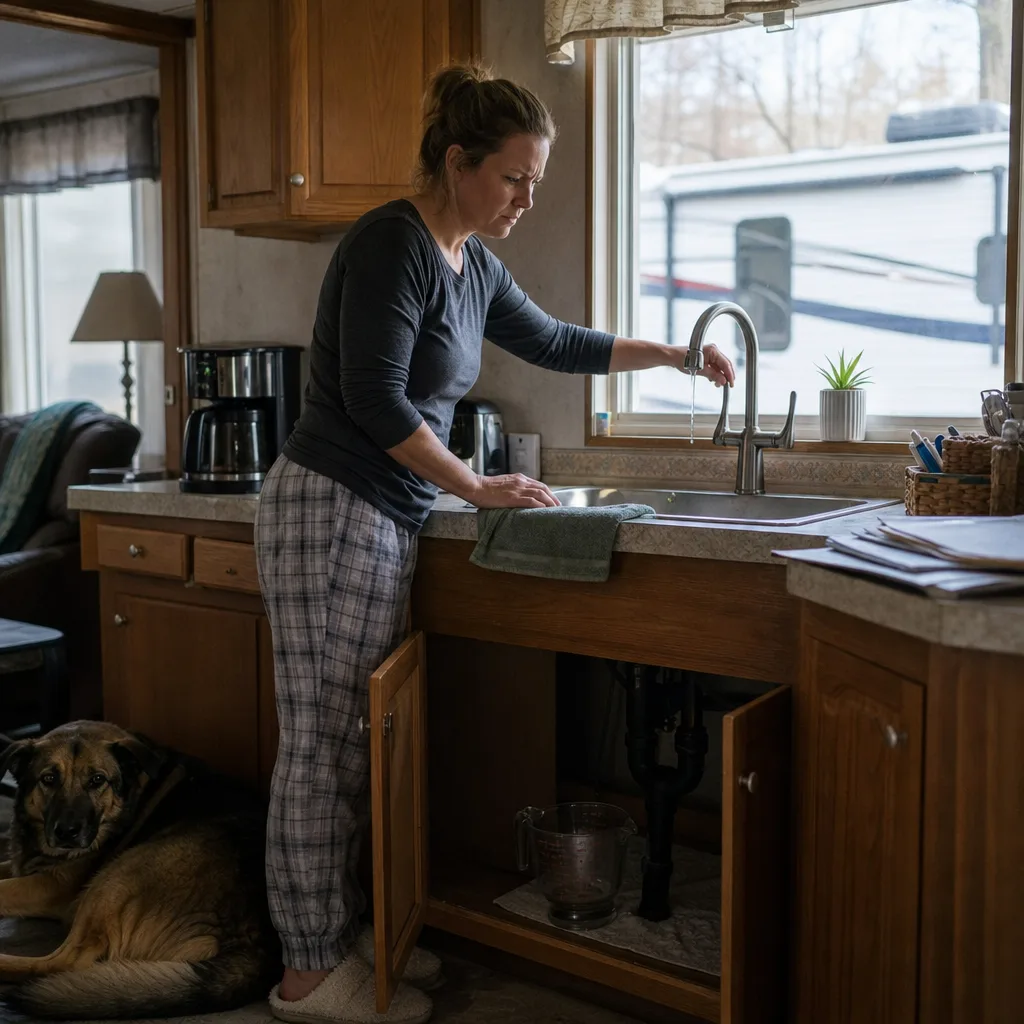
- Make it happen again. The tech should run the system the way you use it, on the pump, on city water, or both. A leak you can watch is a leak you can trace.
- Narrow it down. Splitting the system into pieces, like the fresh side vs. the drain side or the pump vs. the city inlet, tells you which part is at fault before anything gets taken apart.
- Get to it the least messy way. RVs hide plumbing behind access panels, drawers, and toe kicks. Knowing where the lines usually run means fewer panels come off and no guess holes get cut.
- Fix it with parts made for the road. That means fittings and parts rated for RV plumbing, installed to handle flex and vibration. It doesn't mean a hose clamp and good intentions.
- Test it under pressure. After the repair, the system should be filled and run again on every water source you use, and someone should watch the repair for a few minutes. A fitting that holds for ten seconds hasn't proven anything yet.
- Check what the water touched. If the leak was there a while, the floor, the cabinet base, and the panels nearby should be checked for soft or wet spots, so you know if there's more going on than plumbing.
That last step gets skipped a lot, and it matters. Fixing the fitting doesn't dry out the plywood under it. You deserve to know if the subfloor took a hit, even if the news isn't fun.
How long it takes mostly depends on access. A cracked faucet body under an open sink is a quick job. A leaking line inside a slide-out wall or under the floor takes longer. Usually that's not because the part is hard to replace. It's because getting to it carefully takes time.
On cost, mobile RV repair is usually billed as some mix of a trip or service call charge, labor time, and parts. Things that push the bill up are a problem that's hard to reproduce, plumbing that's hard to reach, and more than one failed part, which is common after a freeze. Before work starts, it's fair to ask a few questions:
- How do you bill for the trip, the diagnosis, and the repair time?
- Will you check with me before going past the first fix if you find more damage?
- Will you show me what failed?
Here's how it works with us. Our office handles scheduling and sends your invoice, so the paperwork side stays simple. Our lead technician, an RVTI Certified Technician, is your main point of contact from the first call to the finished repair. You won't be explaining your leak to three different people.
Call Benny's RVFrequently Asked Questions
Can I keep using my RV while I wait for a plumbing repair?
It depends on what's leaking and where. A slow drip under a sink might be fine to live with for a short trip, but active leaks near the floor or a stuck dump valve can turn into bigger damage fast. If you're not sure, note when the problem happens and call us so we can tell you if it's safe to wait or needs attention right away.
Will a plumbing leak show up on my tank sensor readings?
Yes, sometimes. A leak can throw off tank gauges, but so can gunk coating the sensors, so a bad reading alone doesn't always mean a leak. If your gauges read full right after dumping, it's worth checking both possibilities before you trust them on your next trip.
Do I need to winterize every year even if I don't use my RV much in winter?
Yes, if your rig sits through a cold Cedar City stretch, winterizing matters even if you barely drive it. Freeze damage happens from sitting, not from miles, and a line can crack quietly in January and not show a drop of water until you fire up the pump in spring.