
RV Preventative Maintenance · Cedar City, Utah
RV Preventative Maintenance in Cedar City, Utah: Know When to Book
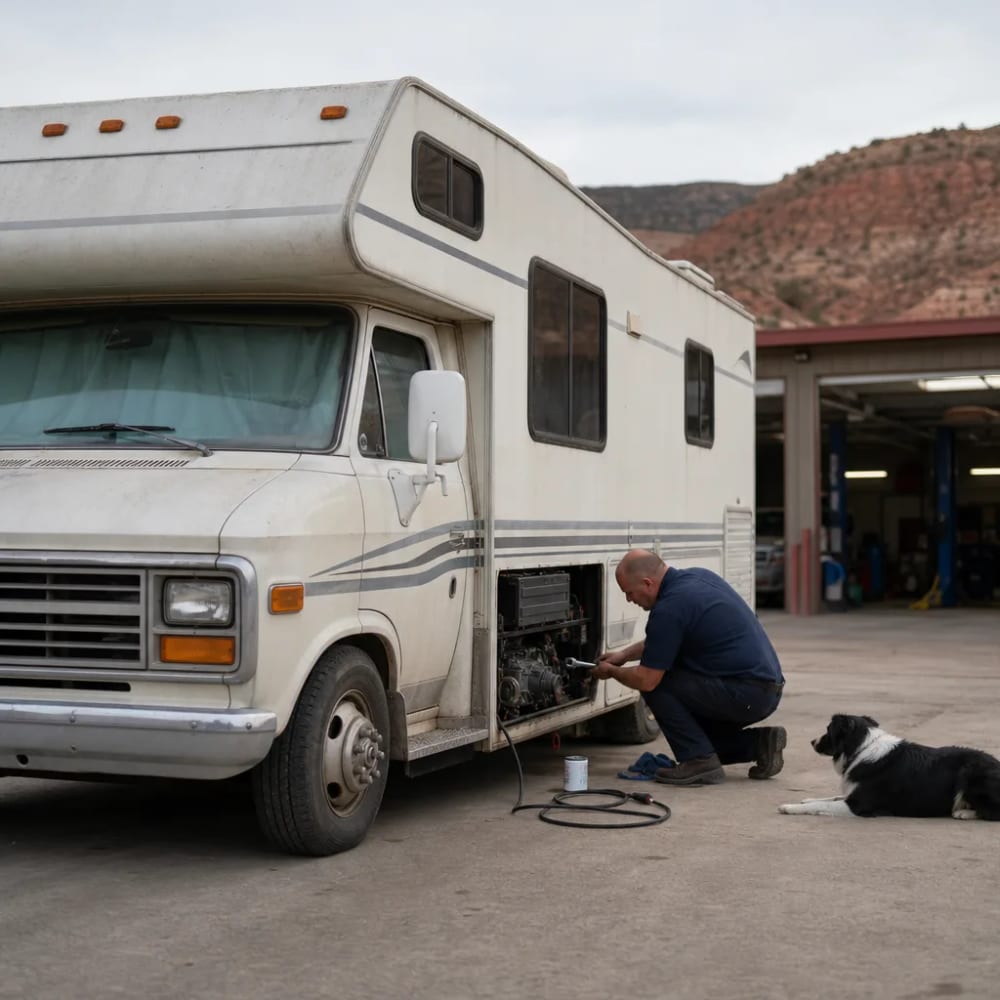
Deciding When Your RV Needs a Preventative Maintenance Visit
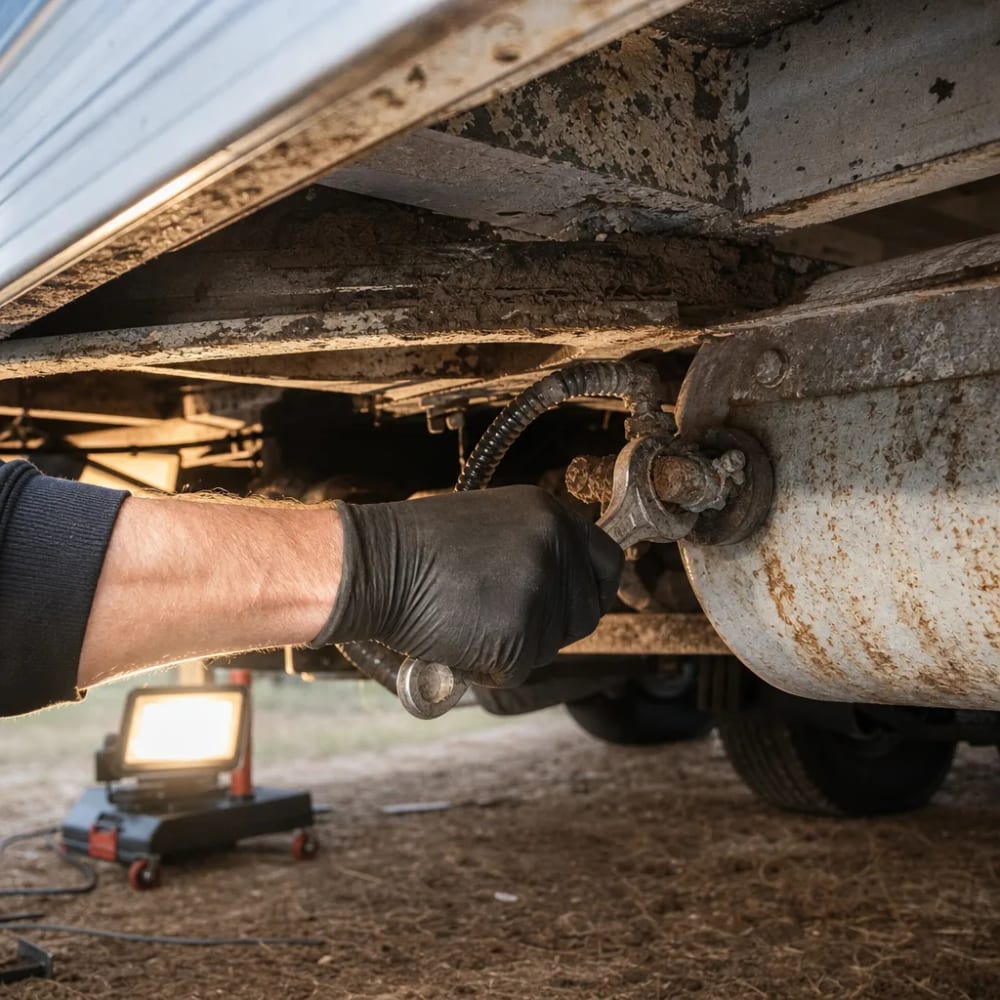
Here's the simple version. Preventative maintenance is cheapest and most useful before your RV has a chance to let you down. Small problems like a dried-out seal, a tired battery, or a loose connection don't announce themselves. They wait for the worst possible moment, usually a holiday weekend with a full campground and a long line at the dump station.
These are the times we'd tell a friend to get on the calendar:
- Your RV sat parked through a Cedar City winter. Cold nights and long months of not running are hard on batteries, seals, and anything that holds water.
- You've got a big trip coming. Before you put real miles on it, it's smart to know the tires, bearings, brakes, and roof are ready for the road.
- You can't remember the last time anyone looked at it. If the honest answer is "Hmm, maybe when we bought it?", that's your answer.
- You just bought a used RV and don't know its history. A baseline check tells you what you're starting with.
- Your owner's manual says something is due. The manufacturer's intervals for things like bearings, roof sealant, and the propane system are a good guide to follow.
Sometimes a check-up isn't the right call. If your fridge quit, your furnace won't light, or you smell propane, skip the maintenance visit and get it repaired. If you're about to buy an RV, a Pre-Purchase RV Inspection fits better. If you're closing the rig up for the cold months or opening it back up in spring, RV Winterization or RV De-Winterization / Spring Start-Up covers that job directly. And if you just want a quick once-over before heading out, there's a Pre-Trip RV Inspection for that.
Now for the part most service pages leave out. You don't always need us. If your RV was checked a few months ago and it's been sitting in storage since, you can probably wait. If you're handy, you can keep an eye on a lot yourself between visits. Walk the roof and look for cracked sealant. Check your tire pressure and look at the sidewalls for cracks. Keep the batteries charged. Open the door now and then and use your nose. A musty smell is your RV's way of telling you water got somewhere it shouldn't.
Where we come in is the stuff that's hard to judge from the driveway, the parts that need tools, training, and a good eye to catch early. As an RVTI Certified Technician with 15+ years in the RV industry, I'd much rather find a five-minute fix on a Tuesday in your driveway than have you find it on the shoulder halfway to the lake. One small heads-up: we don't currently offer manufacturer warranty work. If your RV is still under a manufacturer's warranty and the problem is covered, the dealer is the right first call.
What Happens During a Preventative Maintenance Visit
A good preventative maintenance visit is more than somebody walking around your rig and nodding. It's a system-by-system look at the parts most likely to fail, and the parts that hurt the most when they do. Because we offer mobile RV technician services, the work happens where your RV is already parked, so you don't have to tow it anywhere just to find out it's fine.
Here's what any thorough check-up should cover, and why each piece earns its spot:
- Roof and seals. Sealant around vents, skylights, and edges gets checked up close for cracks, gaps, and soft spots. Water is the number one thing that quietly ruins an RV, and it almost always gets in from the top.
- Running gear. Tires get checked for age and sidewall cracking, not just tread. A tire can have plenty of tread and still be too old to trust. Wheel bearings, brakes, suspension, and the hitch or coupler get looked at too, because that's what keeps the whole house attached to the road.
- Electrical. Batteries, the converter, the shore power cord and plug, and the lights. A burnt or loose plug end is easy to miss and not fun to find with your nose.
- Propane. Lines, the regulator, and whether the appliances light and burn the way they should. If you want a full leak test with documentation, the RV Propane System Inspection and Leak Test covers that on its own.
- Water system. The pump, water heater, fittings, and tank valves. Small drips under a sink can sit hidden for months behind a cabinet door.
- Appliances and comfort. The fridge, furnace, and air conditioner get run, not just looked at. An AC that turns on isn't always an AC that cools.
- Moving parts. Slides, leveling jacks, entry steps, and doors. Anything with a motor or a hinge wears faster than you'd think.
The point isn't to find something wrong with everything. Most of the time a lot of this checks out fine, and that's good news worth paying for. What you're really buying is the early catch: the bearing that's starting to dry out, the seal that's one storm away from a leak, the battery that'll get you through this weekend but not the next one.
You should walk away knowing three things: what's in good shape, what needs attention now, and what can wait until next time. If a tech can't sort your RV into those three buckets, you got a look, not a check-up.
A little prep on your end makes the visit smoother and helps you get more out of it:
- Make sure the RV is somewhere a tech can reach all the way around it, roof included.
- Have shore power and water hooked up if you can, so appliances and plumbing can be run.
- Make sure there's propane in the tanks.
- Jot down any quirks you've noticed, like a slide that hesitates, a faint smell, or a breaker that trips when the microwave and AC run together. That last one isn't haunted. It's just math.
That short list of oddities is gold. You know your RV's habits better than anyone. A two-minute note from you can point straight at a problem that would otherwise take a lot longer to track down.
Signs Your RV Needs Attention Now, Not Later
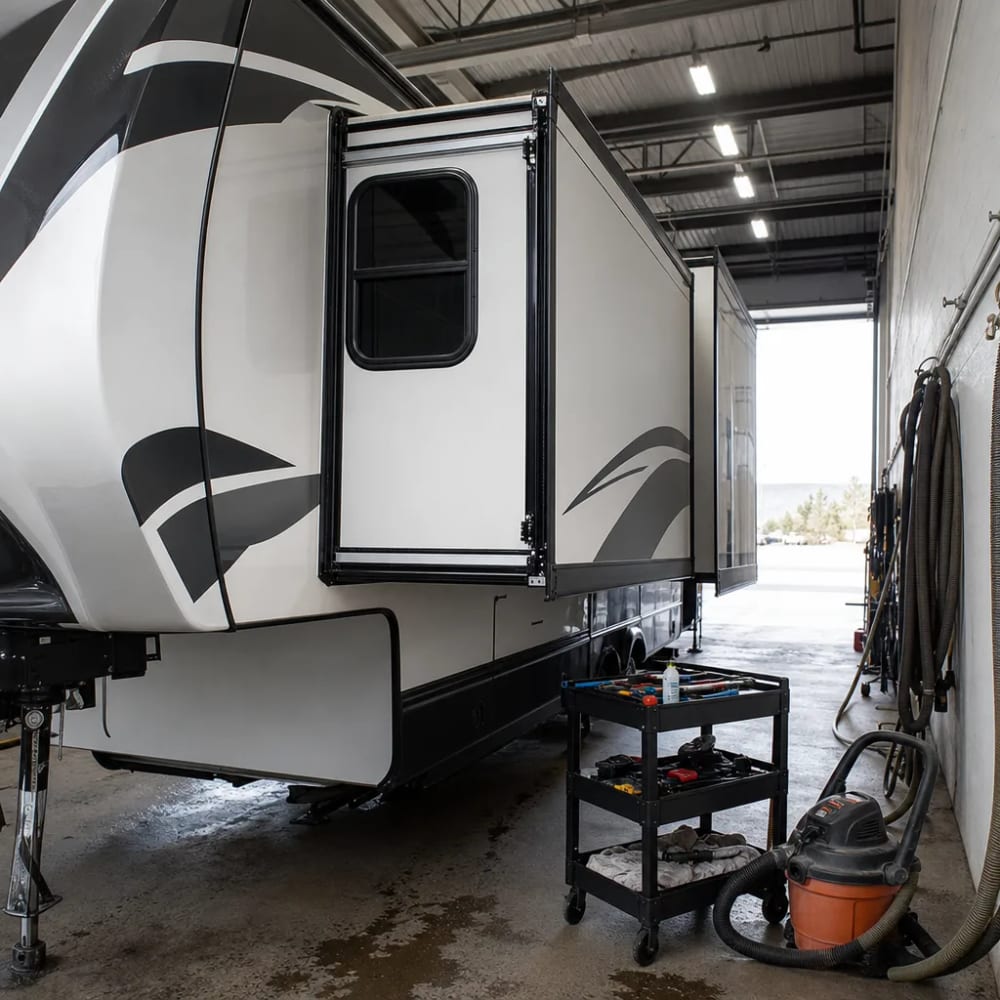
Preventative maintenance is for problems that haven't happened yet. Some signs mean the problem already showed up and is just being polite about it. When you notice one of these, don't wait for your next scheduled check-up. Get it looked at now, while it's still a small repair and not a big one.
Earlier on this page, we covered the big ones: a propane smell, a musty smell, and a breaker that keeps tripping. Here are the quieter signs owners tend to shrug off.
- A stain or soft spot on the ceiling or wall. Brown rings, wavy paneling, or a spot that gives a little when you press it all mean water is already inside. Wood doesn't dry out on its own once it's wet behind the walls. It just rots slower than you'd like to think.
- Bubbles or ripples in the outside walls. That's often the skin pulling away from the wall underneath, and water is a common cause. It won't flatten back out with time.
- A wheel hub that's much hotter than the others after a drive. If you can't keep your hand near one hub and the rest feel normal, that bearing or brake needs attention before the next trip. The same goes for grinding, squealing, or a wobble you can feel.
- A bulge on a tire. Cracks are a sign of age. A bulge means the tire is failing. Don't tow on it.
- A shore power plug that's warm, brown, or melted. Heat at the plug means a bad connection, and bad connections only get worse.
- Batteries that are dead again the next morning. If the lights dim fast or the batteries won't hold a charge after a full night plugged in, something is draining them or failing to charge them.
- The water pump kicking on when every tap is closed. Your pump is telling you water is leaking somewhere. It's a lot easier to find that leak today than after it soaks the floor.
- A slide or leveling jack that groans, stalls, or moves crooked. Forcing it can turn a simple adjustment into a bent part.
Here's a common one. You pull out of storage in spring, everything seems fine, and then you notice a faint tan ring around the bathroom vent. It's easy to tell yourself it's an old stain. Maybe it is. But if you didn't see it last fall, it's new, and new means it's still happening.
None of these mean your RV is junk. Most of them are very fixable when you catch them early. The trouble starts when a sign gets ignored for a season or two and a little leak turns into a new subfloor. Waiting doesn't make these cheaper. It just makes them a surprise.
If your RV is parked and can't safely move, Emergency Mobile RV Repair or RV Repair at Home or Storage Lot means we come to it. If you're out at a campground, On-Site Campground RV Repair covers that. Either way, you don't have to tow a problem across town just to have someone look at it.
Noticed one of these signs, or just want your RV looked over before it has a chance to give you one? Give us a call, and we'll get you on the calendar.
Call Benny's RVWhen a Full Preventative Visit Isn't Necessary
A full preventative visit isn't always the best use of your money. If you only need one thing done, your RV was recently checked and you have proof, or the rig is brand new, a smaller job or no visit at all is often the smarter move. We'd rather tell you that up front than have you pay to hear that everything we checked last month is still fine.
Here's when we'd tell you to skip the full visit:
- You already know what's due. Say your notes show the roof was resealed last fall and everything else checked out, but the bearings are coming up on their interval. Book an RV Wheel Bearing Repack and leave it at that. Paying to recheck a fresh roof is like getting your teeth cleaned twice in one month. Your dentist won't complain. Your wallet will.
- You only care about one system right now. If you're heading out to dry camp and just want to know your batteries will last the weekend, RV Battery Replacement and Testing covers that. If your fresh water tastes a little off after sitting, RV Fresh Water Tank Sanitizing is the job. If you're worried about old tires, RV Tire Inspection and Replacement is a better fit than a full walk-through.
- Another qualified tech just went through it and you have it in writing. A recent, written report that lists what was checked is real information. You don't need us to do the same work again just because it's a new season.
- Your RV is brand new. Fresh seals, new tires, and new batteries usually aren't where your first headaches come from. Early problems on a new rig are the dealer's to sort out, and as we mentioned, that isn't work we do.
- You're selling it soon. If the RV goes on the market next month, fix what you already know is wrong and be honest about it. A serious buyer will often bring in their own inspector anyway.
What makes skipping safe is a simple maintenance log. It doesn't need to be fancy. A notebook in the glove box or a note on your phone works fine. Write down the date, what got done, and who did it. Roof sealant checked, bearings repacked, batteries replaced, tires bought, and the date code on those tires. That's the whole system.
A log turns "I'm pretty sure somebody looked at that" into a fact. With one, you can book only the job that's due and skip the rest without guessing. Without one, every item becomes a question mark, and a question mark is the one thing a full visit is built to answer.
So if your log has no gaps and only one or two items are coming due, book those and keep your money. If the log is blank, or the pages stop a couple of years back, that's when a full visit earns its keep. Skipping a visit on purpose is smart. Skipping one because you forgot is how small stuff turns into big stuff.
What Drives the Cost of a Preventative Maintenance Visit
The cost of a preventative maintenance visit comes down to a few things: how big and complicated your RV is, what shape it's in, how much needs checking, and whether any parts or supplies get used along the way. There isn't one standard price across the industry, so it helps to know what's on the bill before you book.
Most RV techs price a check-up in one of two ways. Some charge a flat rate for a set list of items. Others charge by the hour. A flat rate is easier to plan around. Hourly can come out cheaper on a small, simple rig. Neither one is a trick, but you should know which kind you're getting before anyone climbs a ladder.
These are the things that push the number up or down:
- Size and type of RV. A small travel trailer has fewer systems than a big motorhome with slides, a generator, leveling jacks, and two AC units. More stuff to check takes more time. A motorhome also has an engine and chassis, and those are their own world.
- Age and condition. A rig that's been well kept goes quickly. One that's sat for years with a blank history takes longer, because every item gets a closer look.
- How much you want covered. A full system-by-system visit costs more than a focused check on one or two items. That's why it pays to know what's due.
- Access. A rig parked with room on all sides and shore power hooked up is faster to work on than one wedged between two others at a storage lot with no power. Mobile techs may also charge a trip fee, so ask about it up front.
- Parts and supplies. Sealant, bearing grease, seals, fuses, and bulbs add to the bill when they're used. They're usually small items, but they belong on the invoice.
The biggest swing in cost is the line between checking and fixing. Finding a cracked seal is part of the inspection. Resealing the whole roof is a repair. A good tech tells you what they found and what it'll take to fix before doing any extra work. Nobody likes a bill that grew legs while they were at work.
Before you hire anyone, ask these questions:
- Is this a flat rate or hourly?
- Is there a trip fee for coming to me?
- What exactly is on the checklist, and what isn't?
- Will you call me before doing any repair work?
- Do I get a written list of what's good, what needs work now, and what can wait?
Clear answers to those five questions tell you a lot about who you're dealing with. Fuzzy answers tell you even more.
Keep the real math in mind, too. A visit costs a little now. A roof leak that soaks into the walls, or a bearing that fails on the highway, costs a lot later, plus the trip you didn't get to take. Preventative maintenance is the cheap version of the same problem.
Want to know what a preventative maintenance visit would look like for your RV before it has a chance to surprise you? Give us a call. We'll talk through your rig, what's due, and what makes sense to check.
Call nowFrequently Asked Questions
How long does a preventative maintenance visit usually take?
It depends on your RV's size and how much needs checking, but a full system-by-system visit takes longer than a focused check on one or two items. A small travel trailer goes faster than a big motorhome with slides, a generator, and two AC units. A rig that's been well kept also moves quicker than one with a blank history, since every item gets a closer look when there's no record to go on.
Can I be there while the technician works on my RV?
Yes, and it helps. Since the visit happens wherever your RV is already parked, you can walk through any quirks you've noticed, like a slide that hesitates or a breaker that trips when the microwave and AC run together. That two-minute note from you can point straight at a problem that would otherwise take much longer to track down.
What should I do if I find a problem between scheduled check-ups?
Get it looked at right away instead of waiting for your next visit. Preventative maintenance catches problems before they happen, but signs like a warm shore power plug, a hot wheel hub, or batteries that die overnight mean something is already wrong. Catching these early keeps a small fix from turning into a big repair.