
RV Refrigerator Repair · Cedar City, Utah
RV Refrigerator Repair in Cedar City, Utah: Know When to Call a Tech
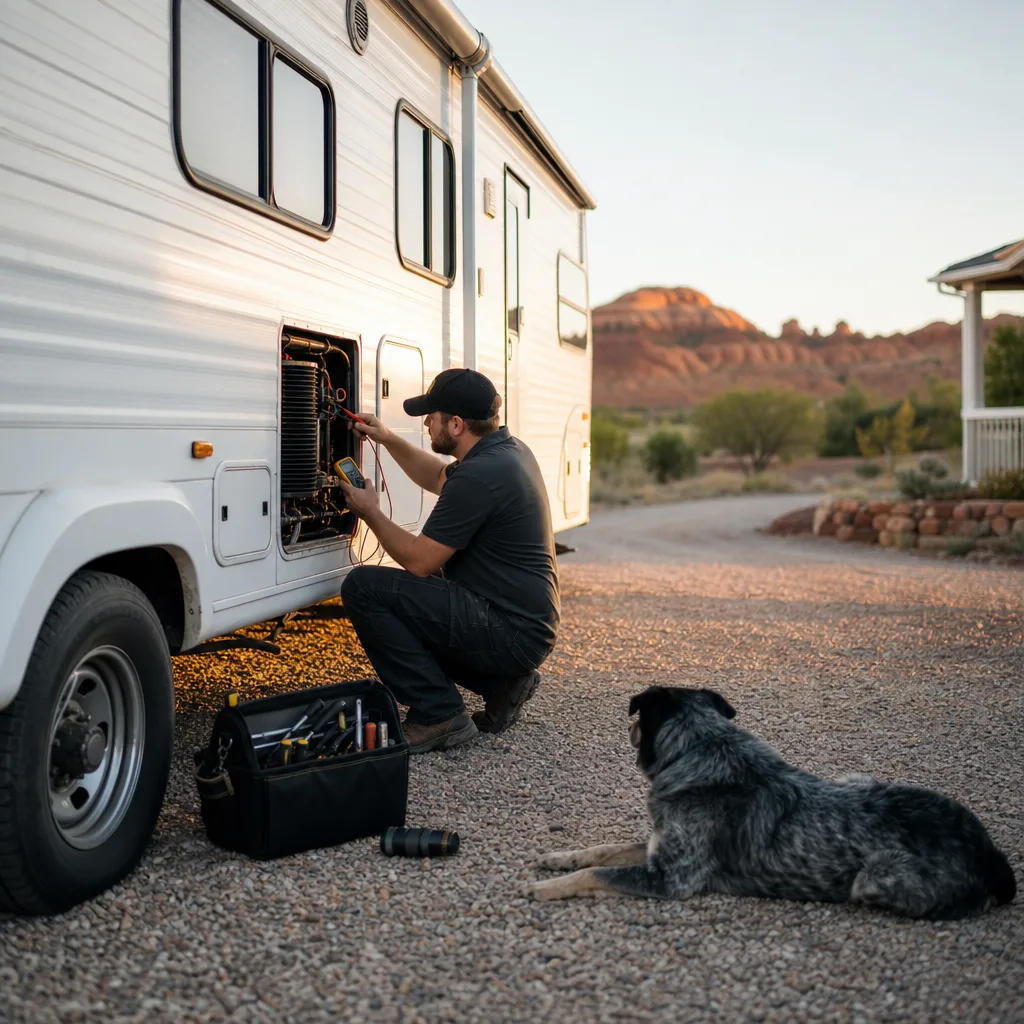
Diagnose the Real Cause Before Booking a Repair
Most RV fridges work as a team, and a cold fridge needs every part of that team to show up. On a standard absorption fridge, 12-volt power runs the control board, which you can think of as the fridge's brain. Propane or 120-volt power makes the heat that drives the cooling. The vent on the outside wall carries that heat away. If any one of those parts quits, the fridge stops cooling, and from the kitchen it looks exactly like the whole thing died. Some newer rigs use a 12-volt compressor fridge instead. Those work more like your fridge at home, but the same rule applies: check what feeds it before you blame the fridge.
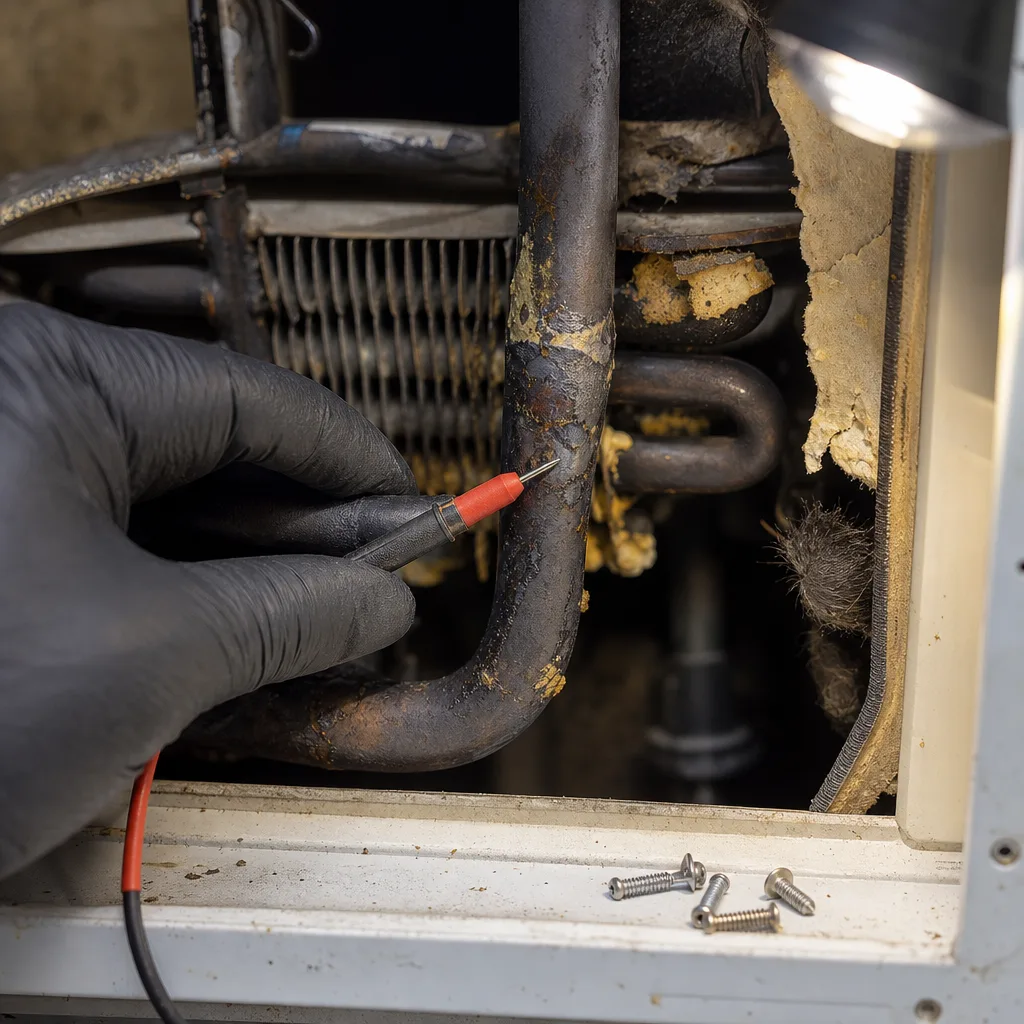
Here's how the symptoms usually point:
- Cools on propane but not on electric: The usual suspects are the heating element, a fuse, or the outlet or breaker that feeds the fridge.
- Cools on electric but not on propane: Look at the igniter, a dirty burner or flue, or low gas pressure. Spiders love to build nests in burner tubes, which is rude but true.
- No lights, no display, nothing at all: This is a 12-volt problem. Common causes are a weak battery, a blown fuse, a loose connection, or a failed control board.
- Freezer is cold but the fridge section is warm: Check for a failed or loose temperature sensor, a worn door seal, or blocked airflow inside.
- Cools fine at night but falls behind on hot afternoons: This points to airflow. The vent may be blocked, a vent fan may be dead, or the rig may be parked off level.
- Warm on every mode, with an ammonia smell or yellow powder near the back vent: This points to the cooling unit itself, and it's the expensive one.
Before you call anyone, you can check a few things just by looking. Is the rig close to level? Is the house battery charged? Is the propane tank full, or are you running on hope? Did a breaker trip or a fuse blow? Does the fridge do the same thing on both power modes? Write down what you notice. A clear answer like "works on gas, not on shore power" helps a tech narrow things down fast.
Picture this. You pull into camp after a long drive, open the fridge, and find warm milk and sad lettuce. Your first thought is that the fridge is toast and a big bill is coming. In a lot of cases like that, the real culprit is something small, like a fuse, a connection, or a weak battery that couldn't keep the control board awake. The fridge was fine. Its supply chain wasn't.
If the cooling unit really has failed, it's not a weekend project. That system is sealed and pressurized, so it's a job for a trained tech. Either way, you deserve to know which problem you have before anyone talks about replacing parts. With RVTI certification and years of hands-on RV experience, we'd much rather tell you it's a fuse than sell you a fridge you didn't need.
Know When You Don't Need a Repair Call
We'll be straight with you. Plenty of warm-fridge calls don't need a tech at all. Some fridges are working fine and just need time or better habits. Here's when you can save your money.
You just turned it on. A standard absorption fridge isn't fast. Fresh out of storage, it can take several hours to get cold, and often it needs a full night. If you flipped it on two hours before the trip and the milk's still room temp, the fridge isn't broken. It's just slow. Turn it on the day before you load it, and let it get cold while it's empty.
You loaded it with warm food. Throwing a case of warm soda and a grocery run into a barely cool fridge is asking a lot. An absorption fridge removes heat slowly, so a big warm load can hold the temperature up for most of a day. Pre-chill what you can at home, and pack drinks in a cooler for the first day.
It's packed too tight. Cold air has to move around inside the box. When every shelf is jammed and something's pressed against the fins at the back, one section stays warm and the other gets icy. That looks like a sensor problem, but it's really a packing problem. Leave a little breathing room. Some folks add a small battery-powered fridge fan, which is about the cheapest fix in the whole RV world.
The fins are buried in frost. A thick layer of ice on the cooling fins acts like a blanket and slows everything down. Shut the fridge off, prop the doors open, and let it defrost. Don't chip at it with a knife. That's how a free fix turns into a cooling unit replacement.
The door seal just needs a quick test. Close the door on a dollar bill and pull it out. If it slides out with no drag, that spot isn't sealing. Sometimes a good cleaning brings the gasket back. Sometimes the door latch just needs to catch fully. Kids and grandkids are famous for "mostly" closing fridge doors.
Your checklist found the problem. If the quick checks in the section above turned up a dead battery, a tripped breaker, or an empty propane tank, fix that and give the fridge a few hours. If it cools again, you're done. You don't need to pay anyone to agree with you.
Sometimes you should call someone, just not us. If your RV is new enough that the fridge is still under a manufacturer warranty, start with your dealer or the manufacturer. We don't currently offer manufacturer warranty work, and paying out of pocket for something that might be covered doesn't make sense.
- Give a freshly started fridge a full night before you judge it.
- Load it cold, not warm.
- Leave room for air to move inside.
- Defrost heavy ice instead of chipping it.
- Check the door seal with a dollar bill.
- Call the dealer first if the fridge is still under a manufacturer warranty.
If you've tried all of that and the fridge still won't hold temperature, or the symptom matched one of the bigger causes covered earlier, that's when a real diagnosis is worth paying for.
Recognize Warning Signs That Need Immediate Attention
Most fridge trouble is an inconvenience. Warm drinks, a sad cooler run, a grumpy camper. A few signs are different. They mean your fridge may be leaking, burning, or overheating, and they don't belong on the "we'll deal with it next weekend" list. Any one of these means you should stop using the fridge and get it checked.
- You smell propane near the fridge or at the outside vent. A rotten-egg smell is a gas problem first and a fridge problem second. Don't light anything or keep running the fridge on gas.
- You see the cooling-unit warning signs covered earlier, like an ammonia smell or yellow powder near the back vent. Turn the fridge off. A leaking sealed system isn't something to keep running to save the groceries.
- There's black soot around the burner area, the flue, or the outside vent cover. Soot means the flame isn't burning clean, and that's not something to ignore.
- You smell something hot or burnt, or you see melted wire insulation, scorch marks, or browned paint behind the outside vent. Heat damage back there doesn't fix itself.
- A breaker keeps tripping or the fridge fuse keeps blowing. Resetting it once is fine. Resetting it five times means something is pulling too much power, and the breaker is doing its job by stopping you.
Here's how it can play out. You're parked for the night, the fridge has been acting a little off, and you step outside and catch a whiff of something sharp near the vent. You'd really like to ignore it and go to bed. Don't. Turning the fridge off costs you a cooler full of ice in the morning. Leaving it on and guessing can cost a lot more.
A few things make these signs easier to catch. Take a quick look behind the outside vent cover a couple of times a season, especially after the rig sits in storage. Look for soot, nests, chewed wires, or anything that looks cooked. Trust your nose. The fridge compartment shouldn't smell like gas, chemicals, or burning plastic. If it does, that's your answer.
If the smell points to propane, the problem may be bigger than the fridge. We offer an RV Propane System Inspection and Leak Test that checks the whole gas system, not just the appliance that tipped you off.
What's not on this list matters too. A fridge that's slow to cool, a freezer that's colder than the fresh side, or a fridge that falls behind on hot afternoons is annoying, but it isn't dangerous. Those can wait for a regular appointment. The signs above can't. They're about keeping you, your family, and your rig safe, and that comes before cold milk every time.
When one of these shows up, we can come to you. We offer Emergency Mobile RV Repair, along with repairs at your campsite, your home, or your storage lot around Cedar City. As an RVTI Certified Technician with years of hands-on RV experience, I'll tell you straight whether it's a quick fix or a fridge that shouldn't be turned back on.
Call nowWhy Fridges Often Fail Right After Spring Start-Up
Here's a pattern every RV tech knows. The fridge worked great on the last trip in October. The rig sat all winter. Now it's spring, you flip the fridge on, and nothing. It feels like the cold killed it. In most cases it didn't. The fridge had a quiet winter. Everything around it had a rough one.
Cedar City winters are cold, and a lot of rigs spend months parked in a storage lot or beside the house with nobody checking on them. Months of sitting still is when the little stuff goes wrong.
- The battery drained. A house battery that sat all winter without a charger or disconnect is often too weak to wake the control board, which is the 12-volt problem covered earlier. It can even show lights and still not have enough left to fire the igniter.
- Air got into the propane line. If the tank was swapped, refilled, or shut off for storage, the line can fill with air. The fridge tries to light, gets no flame, tries a few more times, and then gives up and shows a fault. Lighting a stove burner first and letting it run for a bit usually pushes the air out so the fridge can find real gas.
- Critters moved in. A warm, quiet compartment behind the outside vent looks like a five-star hotel to a mouse. Mice chew wires and build nests. Mud daubers and wasps plug burner parts. Your fridge didn't fail. It got new tenants who didn't pay rent.
- Something got switched off. A breaker flipped off for storage, a fridge fuse pulled, or the fridge left set to a mode with no power behind it. It's an easy fix, but only if you think to look.
- The door seal dried out or got crushed. If the doors were shut tight all winter, the gasket can take a set or grow mildew. If they were propped open, which is the smarter move, the seal usually comes through fine.
Picture the first trip of the year. You've loaded the rig, the kids are buckled in, and the fridge flashes a code and stays warm. It's tempting to assume the worst and start pricing a new fridge. In a case like that, the cause is usually one of the items above: a tired battery, a propane line full of air, or a mouse who decided your wiring looked tasty.
The fix is timing. Start the fridge a day or two before the trip, not the morning you leave. That gives you time to notice a fault, check the battery, purge the gas line, and take a look behind the vent cover while you're still in the driveway and not at a campsite with a cooler full of melting ice.
If you'd rather not play detective every April, our RV De-Winterization / Spring Start-Up service puts the rig back in working order after storage. That way the fridge gets a fair test before your groceries do.
What an On-Site Diagnosis and Repair Involves
A good fridge diagnosis isn't someone opening the door, frowning, and saying "yep, it's warm." You already knew that part. A real diagnosis tests each part of the system on its own, so the answer is based on readings and not on a hunch.
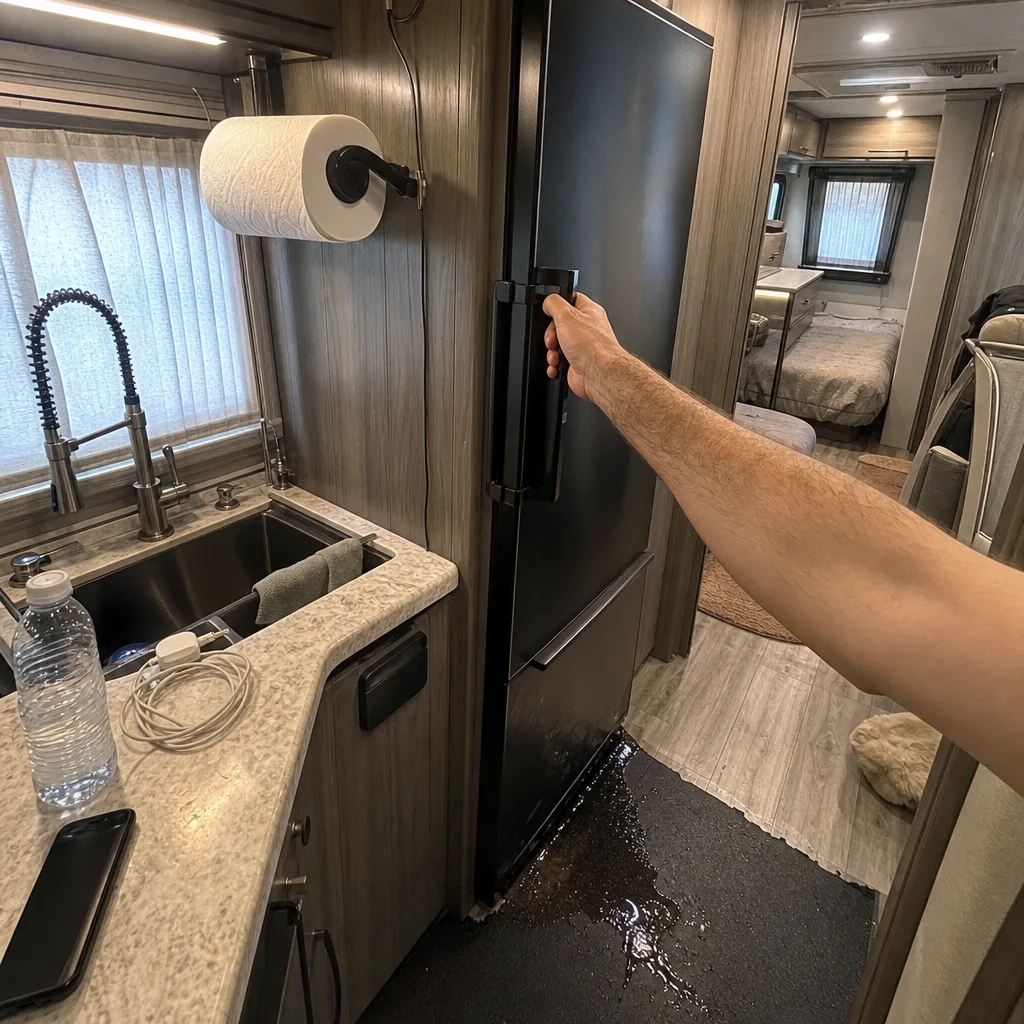
Here's what a proper check on an absorption fridge should cover:
- 12-volt supply: Voltage at the control board, not just at the battery. A battery can read fine at the terminals and still drop off by the time power reaches the fridge.
- 120-volt side: Power at the outlet behind the fridge, the heating element, and the fuse on the board.
- Propane side: Gas pressure, the igniter spark, and a clean burner and flue.
- Airflow: The outside vent, the roof vent, and any vent fans, plus a look for nests or blockages.
- Sensors and seals: The temperature sensor's reading and placement, and how well the doors seal.
- Cooling unit: Whether it's getting heat and moving it, which usually takes time and temperature readings to confirm.
On a 12-volt compressor fridge, the list is shorter. It covers power supply, the control module, the compressor, and airflow. The idea stays the same, though. Rule out what feeds the fridge before you condemn the fridge.
Once the cause is clear, repairs tend to fall into three groups. Small fixes like a fuse, a loose connection, cleaning a burner, or clearing a vent can often be handled right where the rig sits. Part swaps like an igniter, a heating element, a sensor, or a control board may need a part ordered for your model. Cooling unit replacement is the big one. The fridge usually has to come out of the wall, and sometimes out of the rig, so it takes more time and more hands.
Across the industry, cost follows that same order. Most bills come down to the trip or service call, diagnostic time, labor, and parts. A blown fuse and a cooling unit sit at opposite ends of that scale, which is exactly why knowing the cause first matters so much. Before you hire anyone, it's fair to ask a few questions:
- How do you charge for the trip and the diagnosis?
- Will you tell me what's wrong and what it'll cost before you start the repair?
- If it needs a part, can you order the right one for my fridge model?
You can make the visit faster with a little prep. Park where the outside fridge vent is easy to reach, and not tight against a fence or the neighbor's boat. If you can, have shore power available, propane in the tank, and a charged house battery, so every mode can be tested. Find the model and serial number on the label inside the fridge, usually on a side wall or the ceiling of the box. Then have your notes ready from the checks you did earlier.
We offer RV Repair at Home or Storage Lot and On-Site Campground RV Repair, so the fridge gets tested where it lives. As an RVTI Certified Technician with more than 15 years in the RV industry, I'll show you what's wrong before any money goes toward parts.
Call nowFrequently Asked Questions
Can RV refrigerators be repaired, or do they usually need to be replaced?
Yes, most RV refrigerator problems can be repaired without buying a new unit. Issues like a weak battery, blown fuse, dirty burner, or blocked vent are common fixes that restore cooling. Only a failed cooling unit, which is sealed and pressurized, is a bigger job. A proper diagnosis tells you which type of problem you have before any repair starts.
How long should I wait after starting my RV fridge before deciding it's broken?
Give it a full night before judging it. A standard absorption fridge cools slowly, and one fresh out of storage can take several hours, sometimes overnight, to reach a safe temperature. Starting it the morning you leave and finding warm milk two hours later doesn't mean it's broken, it just hasn't had enough time.
Do I need to do anything special to my RV fridge before storing it for winter in Cedar City?
Prop the fridge doors open before storing it through a Cedar City winter. Shutting the doors tight for months can let the door seal take a set or grow mildew, while propped-open doors usually come through storage fine. This small step can save you a seal problem come spring start-up.