
RV Repair at Home or Storage Lot · Cedar City, Utah
RV Repair at Home or Storage Lot in Cedar City, Utah
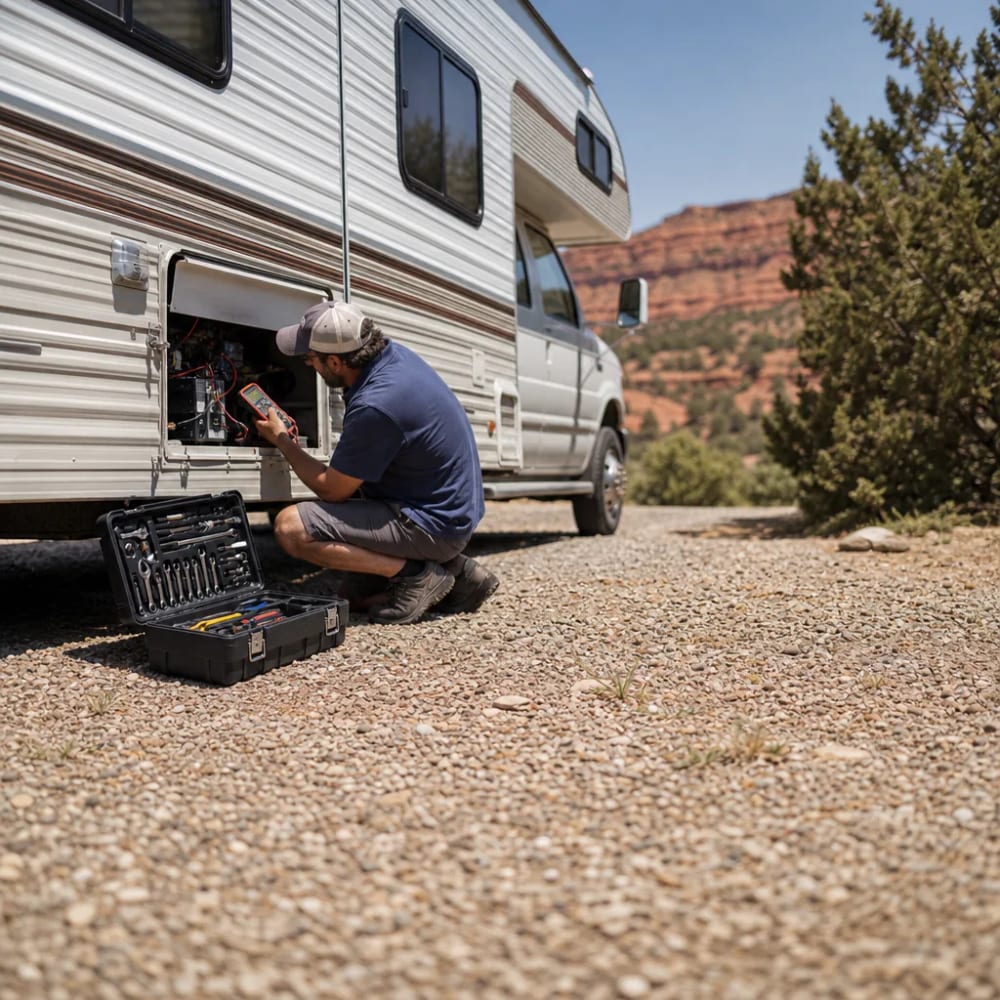
Home Driveway or Storage Lot, Same Repair Visit
Here's the good news. The repair itself is the same job in either spot. A furnace that won't light, a slide that groans, or a converter that quit charging gets diagnosed the same way on your driveway as on a gravel lot. The tools don't get dumber when the rig is parked next to a boat. What changes is everything around the RV, and that's the part you can help with.
If your RV is at a storage lot, a few details make or break the visit:
- Lot rules. Some storage lots limit repair work on site or only allow access during set hours. A quick call to the lot manager now beats a surprise at the gate later.
- Gate code and space number. Give us the exact row and spot. Wandering a lot full of white trailers looking for "the one with the blue stripe" is a fun game exactly zero times.
- Room to work. If you're wedged tight between two fifth wheels, the slides may not open and a side compartment may not either. If the lot will let you move to an end spot, do it.
- Power and water. Many lots don't have shore power or hookups. That matters for electrical and plumbing diagnosis, so tell us up front what's there and what isn't.
- Battery state. A rig that's been sitting all season on a dead battery can make a working part look broken. Let us know how long it's been parked.
At home, it's mostly about clearance. Roof work needs open sky, so low branches or power lines over the RV are worth mentioning. A steep driveway can throw off leveling checks, and slide-outs need room to fully extend without kissing the fence. Pets inside, kids clear of the work area, and a cleared path to the door you're having trouble with. That's about it.
Cedar City winters add one more wrinkle. A rig that sat cold on a lot all season can come out of storage with problems that hid until spring. A quick look under the RV for drips and a note about anything that smells, clicks, or won't start gives us a head start before we ever open a panel.
When you call, you're talking to the guy who'll do the work. I'm the lead technician and RVTI certified, with more than 15 years in the RV industry, so the questions I ask on the phone are the same ones I'd ask standing next to your rig. My wife runs the office and handles scheduling, so once the details are set, you'll know when to expect us.
One thing to know before you book: we don't currently do manufacturer warranty work. If your RV is new enough that the repair is covered under the factory warranty, that claim usually has to go through a dealer. For everything else, it doesn't matter whether your RV sleeps in your driveway or on a lot across town.
Repairs Commonly Completed On-Site
Most of what goes wrong on an RV can be fixed right where it sits. An RV is basically a small house strapped to a trailer, and almost all of that house is reachable from the outside access panels, the roof, the underbelly, or a cabinet door. If you can see the part or open a hatch to it, odds are good it doesn't need a trip to a shop.
Here's what that covers, grouped by what you're likely dealing with:
- Heating, cooling, and hot water. A furnace that clicks but never lights, a water heater that only gives you lukewarm showers, or an air conditioner blowing warm air. These units are built to be serviced in place, through an outside panel or from the roof.
- The fridge and kitchen. An RV refrigerator that won't cool, a stove burner that won't stay lit, or a microwave that died mid-popcorn. All workable in your kitchen, not ours.
- Power problems. Dead batteries, a converter that quit charging, an inverter that won't wake up, lights that flicker, or a 30 or 50 amp shore power plug that's scorched or loose. Electrical troubleshooting is mostly testing and tracing, and a meter fits in a pocket.
- Water and sewer. A water pump that runs nonstop, a leak under the sink, or a black tank valve that sticks. Plumbing runs are tight, but they're meant to be reached.
- Moving parts. Leveling jacks that won't retract, an entry step that's stuck, a door that won't latch, or a roof vent fan that's gone quiet.
- Roof and seals. Resealing the roof is outdoor work by nature, so a driveway or lot is right where it belongs.
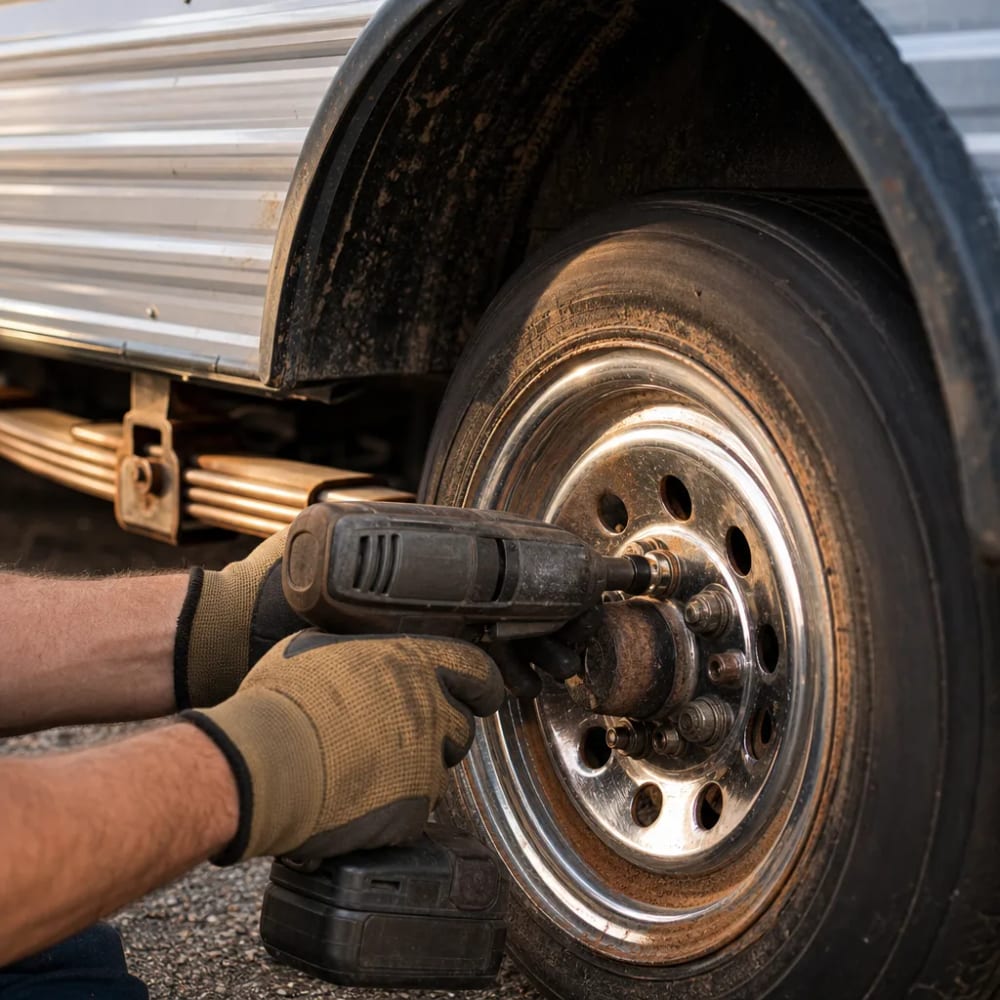
- Running gear and towing. Wheel bearing repacks, tire checks and replacement, trailer wiring and plug repair, and fifth wheel and hitch repair.
Interior fixes travel well too. Cabinet doors that swing open every time you take a corner, loose furniture, and torn upholstery don't need a building around them.
Here's a real-life example of why on-site makes sense. Say your RV furnace won't fire and it's been sitting all fall. Towing it to a shop means hitching up, driving it in, and then waiting your turn in line. The likely suspects, like a weak battery, a dirty sail switch, or a bad igniter, are all reachable from the outside panel in minutes. Hauling a 30-foot trailer across town to look at a part the size of your thumb is a lot of diesel for a little fix.
Parts are the one wild card, and that's true anywhere. If a control board or a specific pump has to be ordered, that wait happens whether your RV sits at a shop or in your driveway. The difference is your RV isn't stuck on someone else's lot while you wait.
Now the honest part. Some jobs really do belong in a shop. Heavy frame or collision damage, big structural rebuilds, and anything that needs the whole rig up on a lift aren't driveway work for anyone. Motorhome engine and transmission problems are also a job for a chassis mechanic, not an RV technician. If your problem falls in that group, it's better to know now than after you've cleared the driveway.
For everything else, the systems that make an RV a home on wheels, the fix can come to you.
When a Repair Needs a Shop Instead of On-Site Service
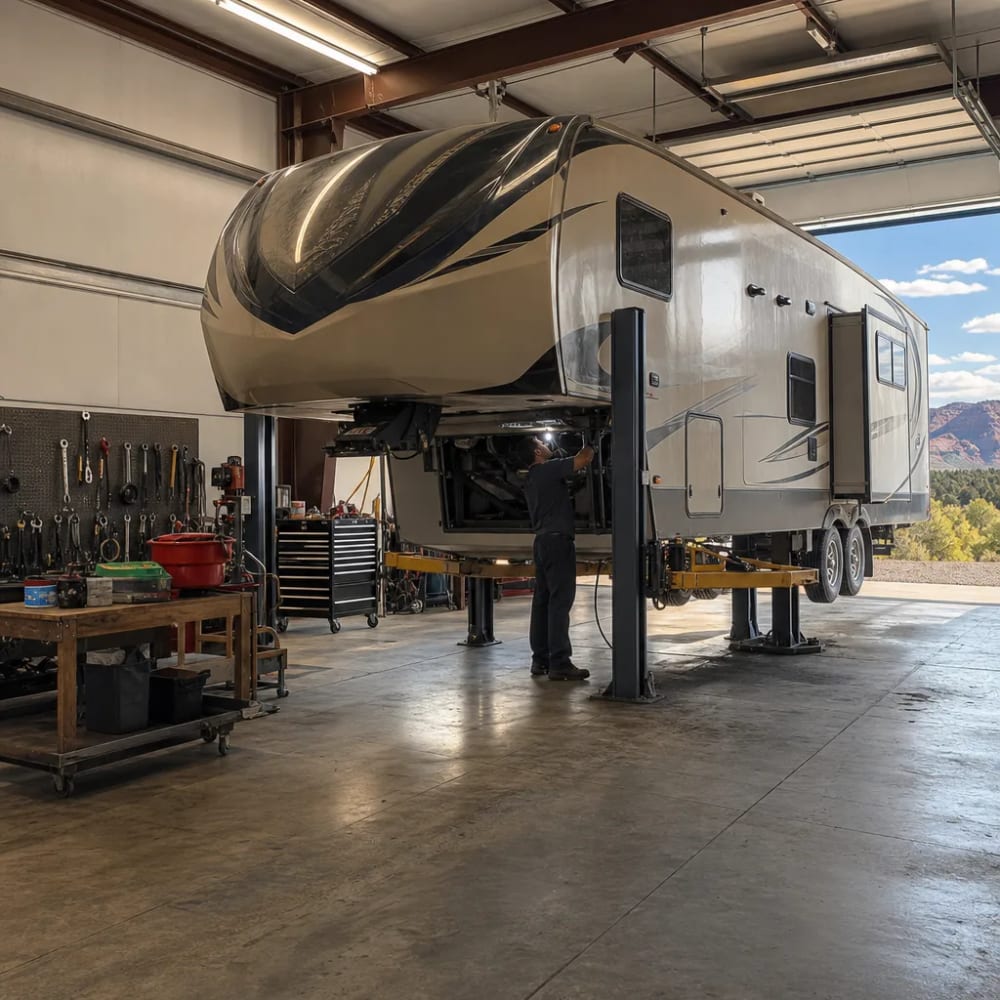
The obvious shop jobs, like frame damage, anything that needs a lift, or engine and transmission trouble, we already covered. The harder calls are the problems that start small and quietly grow up. Here's how to tell if yours has crossed that line.
- Soft floors or spongy walls over a big area. A small leak around a vent or window gets resealed right where the RV sits. Rot that has spread under the floor or behind a wall is different. Fixing it means pulling panels, drying things out, and rebuilding, and that takes a building and a lot of days.
- Bubbles or ripples in the outside wall. That's called delamination, and it usually means water has been sneaking in for a while. Fixing it right is bodywork, not a service call.
- A slide-out that sags or has a damaged box. A slide motor, switch, or adjustment is fair game on-site. When the room itself is racked or rotting, it's shop work.
- Running gear that's bent, not just worn. Bearings get repacked on-site all day long. A bent axle or a cracked spring hanger means the rig has to be lifted and supported safely, and a gravel lot isn't the place for that.
- Insurance claims after an accident. Insurers often want a body shop estimate anyway, so starting there can save you a step.
If you're not sure which side of the line you're on, tell us exactly what you see when you call. "There's a soft spot by the toilet" and "the floor dips when I walk past the toilet" are two very different conversations. If it sounds like shop work, it's better for you to hear that on the phone than after you've cleared out the driveway.
Now the other side of honest. Sometimes you don't need anybody yet. Plenty of "broken" RVs are really just switches in the wrong spot, especially right out of storage. Before you call anyone, us included, check these:
- The battery disconnect switch. It's easy to forget you turned it off before storage, and with it off, a lot of things look dead.
- Tripped breakers and GFCI outlets. One GFCI in the bathroom or kitchen often controls other outlets around the rig, so a single tripped button can kill power in three places.
- The propane tank valve. If it's closed or the tank is empty, a furnace or fridge running on gas won't do a thing.
- The water pump switch and the fresh tank. No water in the tank means no water at the faucet, no matter how hard the pump tries.
- The thermostat. Make sure it's on the right mode and set warmer or cooler than the room, depending on what you want.
Nobody likes paying for a visit that ends with someone flipping a switch, including the guy flipping it. Five minutes with that list can save you the call.
Some things can also just wait. A torn seat cushion or a cabinet door that won't stay shut is annoying, but it isn't getting worse in storage. Bundle it with your next real repair or your pre-season checkup instead of booking a trip just for it. And if the RV is still under the factory warranty, that's a dealer claim, as we mentioned up top.
Everything that's left, the systems that keep you warm, fed, lit, and rolling, is exactly the kind of work that comes to you.
Who Shows Up and Who Does the Work
Short answer: me. As I mentioned up top, I'm the lead technician and the guy you talk to on the phone. I'm also the head of sales, so the person you describe the problem to is the same person who shows up with the meter. What I didn't tell you yet is how I ended up here.
I started in the RV business at the very bottom, washing trailers. I was a lot porter at Johnny Walker RV, paying my way through college one dusty rig at a time. Somewhere between the hose and the bug guts on the front caps, I figured out I loved this industry. I stuck with it for 15 years and worked my way up through sales, then sales management, and then general manager of three locations. After we started a family, we moved to Cedar City and opened Benny's RV to bring mobile RV repair to people's driveways and storage lots.
Why should that matter to you when your water heater is cold? I've seen RVs from just about every side of the lot. I've cleaned them, sold them, run the stores that sold them, and fielded the calls that came in after the sale. You learn what owners worry about and which problems are a quick fix versus a real headache. That's handy when someone's describing a weird noise over the phone.
The other half of the operation is my wife. She manages the office and marketing. She sets the appointments, keeps the calendar straight, and sends the invoices. The person who books you and the person who bills you are part of the same small family business, not a call center in some other time zone.
Whoever you call, us or anyone else, it's fair to ask a few questions before a tech pulls up next to your rig:
- Who's coming? Is the person on the phone the one doing the diagnosis and the repair, or does it get handed off?
- What training or certification does the tech have, and from whom?
- Do they handle manufacturer warranty work? If your RV is still covered, this decides where you should start.
- How is the visit billed? Mobile RV repair is often priced as a trip or service call charge plus labor and parts, but setups vary. Ask what's included before anyone opens a panel.
- If a part has to be ordered, what happens next? Does the tech come back to install it, and is that a separate visit?
You already know our answers to the first three. For the rest, just ask when you call. You'll get a straight answer, and if your problem sounds like shop work, you'll hear that too.
If your RV is sitting in the driveway or on a storage lot with something that won't light, cool, charge, drain, or close, give us a call. Tell me what you're seeing, and we'll figure out the next step together.
Call Benny's RVStorage Lot Access and Scheduling Before the Visit
The checklist up top gets your rig ready. This part is about the calendar and the gatekeeping. Get it right and the visit doesn't stall at the gate or end with "I'll have to come back for that."
Start with the lot office. Having the gate code isn't the same as having permission. Some storage facilities want outside vendors named ahead of time, and a few ask for proof of insurance before anyone works on their property. When you call about lot rules, also ask whether a mobile tech can come in, whether we need to be added to a list, and whether there are hours when work isn't allowed. Then pass along what they tell you when you book. My wife sets the appointments and keeps the calendar, so if she has those details up front, the day she schedules is a day we can get in.
Next, sort out the keys. That means the entry door, the outside compartments, and any hitch or coupler lock. If you won't be at the lot, talk through how keys will get to the tech when you book. A locked water heater door has stopped more repairs than any bad part.
When you call, have these ready:
- Year, make, model, and length, plus whether it's a travel trailer, fifth wheel, or motorhome.
- A photo of the data plate on the problem appliance. Furnaces, fridges, water heaters, and AC units all have a sticker with a model and serial number. If a part needs to be ordered, that sticker saves a lot of guessing.
- When it last worked and what changed since then. Examples: it just came out of storage, it quit after a trip, or it stopped after a hard freeze.
- A short video of the problem if you can get one. Ten seconds of the noise beats my best impression of your description of the noise.
- The exact location: lot name, row, and spot, or your home address and any gate or HOA access.
Timing matters as much as access. Don't book a repair for the day before you leave. If the fix turns out to need a part that has to be ordered, that wait is real, and you don't want your trip hanging on a delivery truck. Leave yourself a buffer of a couple of weeks before a planned departure when you can.
Spring is the other crunch. In Cedar City, lots of rigs sit through the cold months and then come out of storage at about the same time. If you already know you'll want an RV De-Winterization / Spring Start-Up, get on the calendar before the first warm weekend, not after it. If you're mostly worried about a big trip, a Pre-Trip RV Inspection can catch small stuff while there's still time to fix it.
Weather can move the day, too. Roof sealant doesn't cure well on a cold or wet roof, and nobody wants to be up on a ladder in a stiff wind. If your job involves the roof or long stretches of outdoor work, plan on some flexibility. Most inside and compartment repairs aren't bothered by a gray sky.
Handle the lot permission, the keys, and a realistic date, and the visit gets spent on your RV instead of on the phone with the storage office.
Frequently Asked Questions
Can you work on my RV if it's parked at a storage lot outside my own driveway?
Yes, storage lot visits work just like driveway visits once access is sorted out. Call the lot office first to ask if outside vendors are allowed, whether you need to be added to a list, and what hours work is permitted. Give us the exact row and spot number so we aren't wandering a lot full of white trailers looking for yours.
What if my RV needs a part that has to be special ordered?
Parts delays happen no matter where your RV sits, but your rig stays at your place instead of taking up space on someone else's lot. If a control board or specific pump needs ordering, leave a buffer of a couple of weeks before any planned trip so the wait doesn't hold up your departure.
My RV just came out of storage and nothing seems to work. Do I need a repair visit?
Maybe not yet. Before booking, check the battery disconnect switch, tripped breakers or GFCI outlets, the propane tank valve, the water pump switch and fresh tank, and the thermostat setting. Cold-season storage often leaves one of these in the wrong position, and a dead battery alone can make working parts look broken.
Will clearance around my RV cause problems during the repair?
It can, especially for slide-outs and roof work. If you're parked tight between two fifth wheels, slides may not fully open and side compartments can be blocked, so ask the lot about moving to an end spot if possible. At home, low branches or power lines over the RV, a steep driveway, and a fence too close to a slide-out are worth mentioning when you call.