
RV Stove Oven and Microwave Repair · Cedar City, Utah
RV Stove Oven and Microwave Repair in Cedar City, Utah
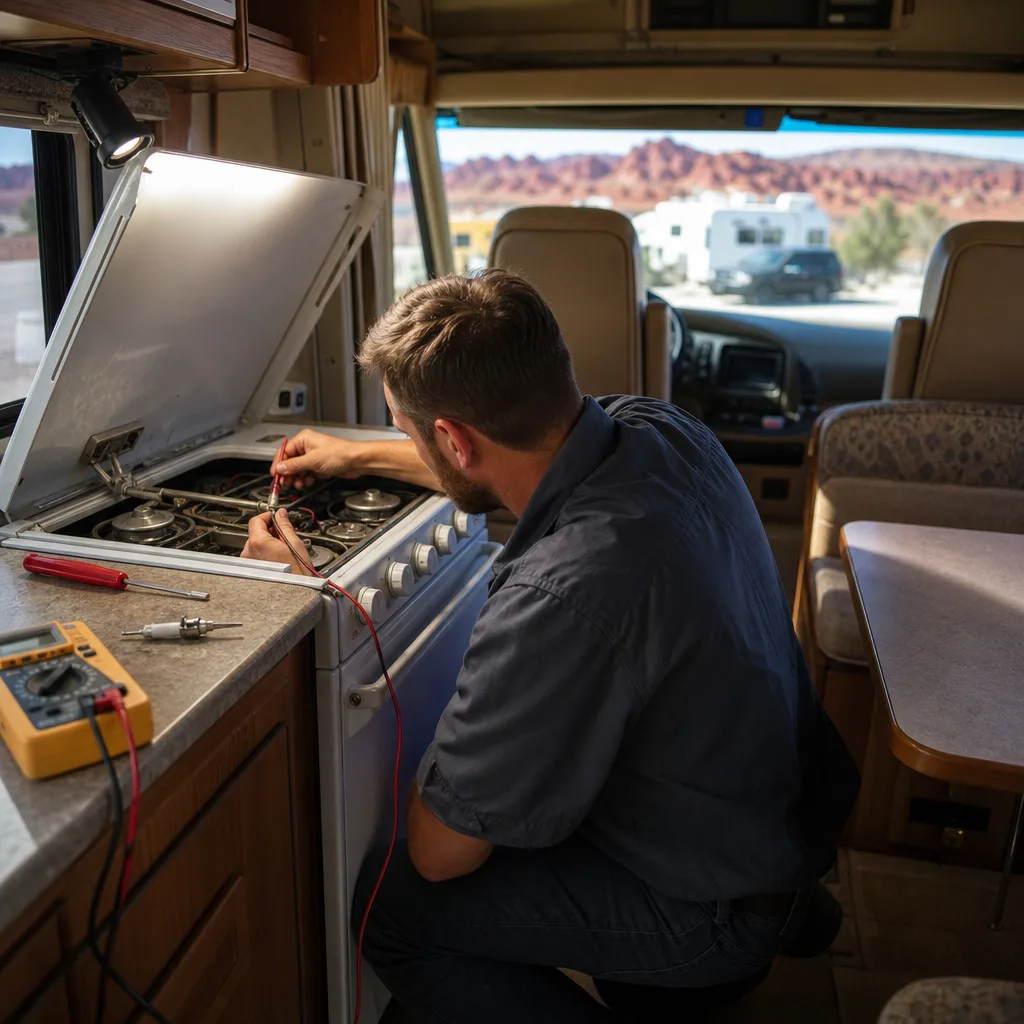
On-Site Repair Means Your RV Never Leaves Home
Here's the thing about RV kitchen appliances. They don't work alone. Your cooktop and oven run on propane that travels from the tank through a regulator and a run of gas line. Your oven's igniter or control board may need 12-volt power from your battery and converter. Your microwave needs clean 120-volt power from the campground pedestal or your generator. When one of those quits, the appliance usually takes the blame, even when the real problem sits three feet away.
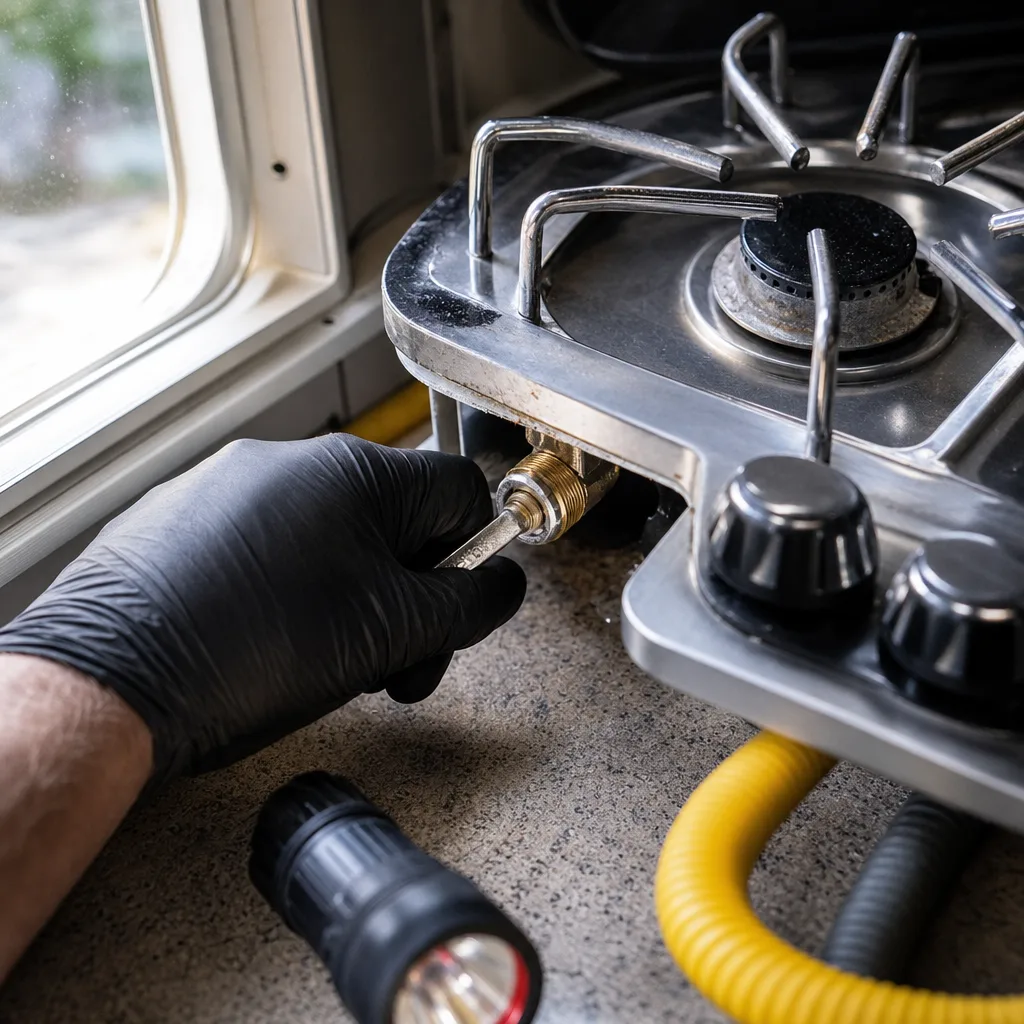
That's why we'd rather work on your stove where it sits. A burner that won't stay lit might be a bad thermocouple. It might also be weak gas pressure coming from the regulator. A microwave that dies every afternoon at the campground might be fine on the bench and only struggle when the pedestal sags under everyone's air conditioners. Testing in your rig, on your actual hookups, shows us what's really going on instead of what's probably going on.
Then there's the hassle factor. Taking an RV to a shop means hitching up, driving it in, and then living without it while it waits its turn. All for a burner that won't light. Your stove hasn't moved from that spot since the day the trailer left the factory. It doesn't need a road trip to get fixed.
We're a mobile RV service based here in Cedar City, so we come to you:
- At your house, if the rig is parked in the driveway or side yard.
- At your storage lot, so you don't have to pull it out first.
- At the campground, so a dead oven doesn't end your trip early.
When you call, you're talking to our lead technician, who's also the one doing the work. He's an RVTI Certified Technician with more than 15 years in the RV industry. You don't have to explain your problem to a front desk and hope the details make it to the guy holding the multimeter. Our office handles the appointment, the calendar, and the invoice, so the repair conversation stays between you and the person fixing it.
If the trouble turns out to be upstream of the appliance, we'll tell you. A suspect regulator or a gas smell falls under our RV propane system inspection and leak test. A pedestal or power cord problem falls under shore power and 30/50 amp repair. Either way, you'll know what failed before anything gets replaced.
Now, who shouldn't call us for this? If your RV is new enough that the stove, oven, or microwave is still under the manufacturer's warranty, take it through your dealer or the manufacturer. We don't currently offer manufacturer warranty work. Paying us for a repair the warranty would have covered doesn't do you any favors. Once that coverage runs out, or if you'd rather not wait on a dealer's schedule for something outside it, we're glad to help.
Signs Your Stove, Oven, or Microwave Needs a Repair Visit
Most RV kitchen trouble announces itself pretty clearly. The trick is reading what the appliance is telling you, because the same complaint can mean a worn part inside it or a problem in the system feeding it. Here's what to watch for, and what each sign tends to point toward.
Cooktop burner signs:
- The burner lights while you hold the knob in, then goes out as soon as you let go.
- You hear the igniter clicking, but nothing catches.
- The igniter keeps clicking after the burner is already lit.
- The flame burns yellow or orange, looks lazy, or leaves black soot on the bottom of your pans. A healthy flame is mostly blue and steady.
- One burner works fine and the one next to it won't light at all.
A single bad burner usually points to that burner. Its igniter, its valve, or its safety sensor is the likely suspect. When every burner acts weak at the same time, the stove may be innocent. That's the upstream gas supply issue we covered above.
Oven signs:
- The pilot won't light, or it lights and dies a few seconds later.
- The oven lights but won't hold a temperature, so dinner takes twice as long as the recipe says.
- The temperature swings far enough that the bottoms burn while the tops stay pale.
- You smell gas when you try to light it, but it never ignites.
A quick word on that burned-bottom problem. RV ovens are small, and the burner sits close to the food, so they run hotter on the bottom than the oven at your house. A baking stone or an extra sheet pan on the lower rack helps plenty of folks. If you've done that and the oven still runs way off from the dial, the thermostat or burner may need attention. That's worth a look.
Microwave signs:
- The light comes on and the plate spins, but your coffee comes out just as cold as it went in.
- It trips the breaker or kills the outlet every time you start it.
- The display is dead, or the buttons only work when they feel like it.
- You hear a loud hum, buzz, or grinding that wasn't there before.
- You see sparks or arcing with nothing metal inside.
A microwave that runs but won't heat has a failed part inside it. That's a real repair. One that only quits at the campground, or only quits when the air conditioner kicks on, may be getting starved for power. That's the shore power question from the section above.
Before you call, notice a few things. Does the problem happen on one appliance or on all of them? Does it happen every time, or only on certain hookups? Did it start after a trip, a storm, or a long stretch in storage? Mud daubers and spiders love to build nests in burner tubes over a quiet winter, and they don't pay rent. Those details help us narrow things down fast once we're standing in your kitchen.
One more thing. A smell of gas with nothing lit isn't a stove symptom. It's a propane system concern, so treat it that way and don't keep trying to light burners to see what happens.
Propane Smell Near the Stove Is a Safety Priority
Propane has no smell of its own. Suppliers add an odorant that smells like rotten eggs or cabbage, so your nose can catch a leak before it turns into a problem. That makes your nose the cheapest leak detector in the rig, and it's worth listening to.
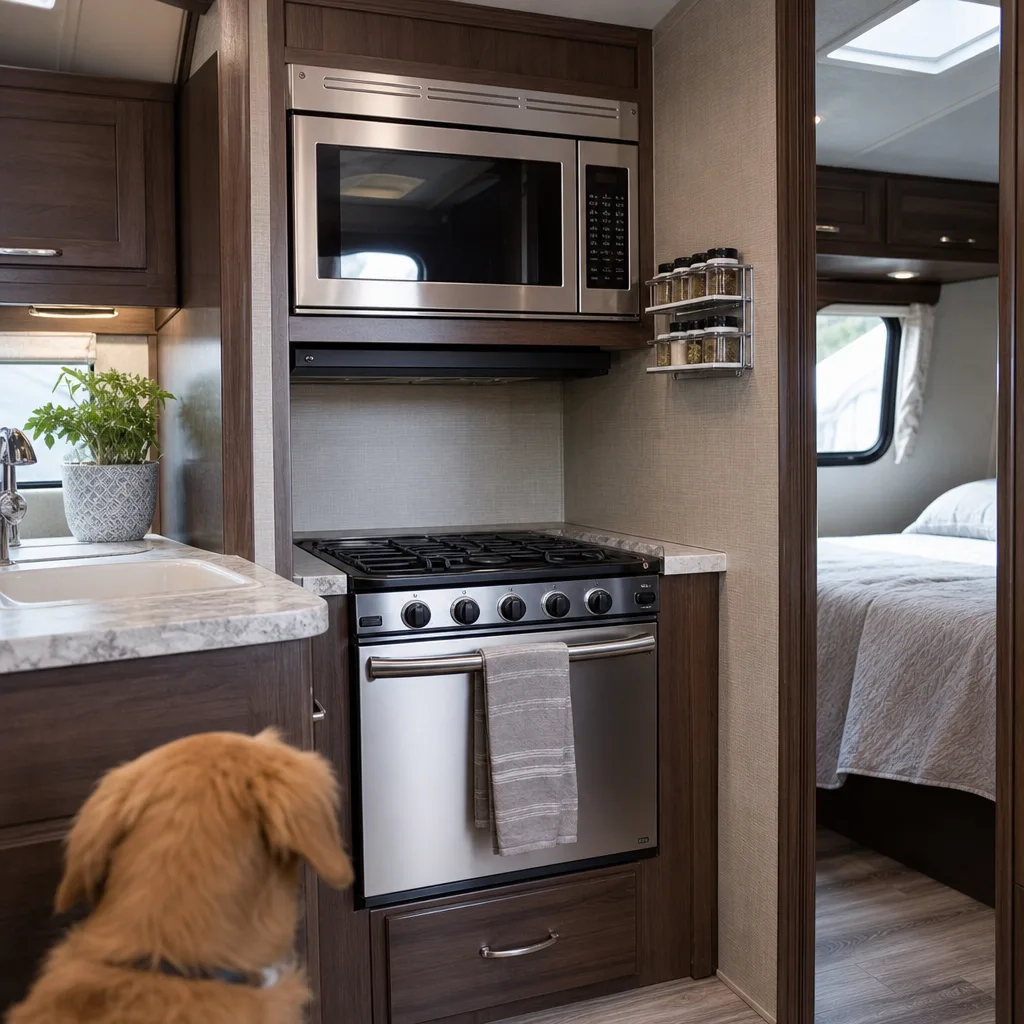
Not every whiff means trouble, though. A quick puff of gas smell right as you light a burner, gone a second later, is pretty common. It's the bit of propane that slips out before the flame catches. What isn't normal is a smell that hangs around, shows up with nothing lit, or gets stronger near the floor. Propane is heavier than air, so it settles low. That's why the LP detector in most RVs sits down near the floor and not up by the ceiling.
If the smell is strong, doesn't fade, or your LP detector is sounding off, skip the troubleshooting. This is the short list:
- Don't light anything, and don't flip switches, start the generator, or fire up the engine.
- Get everyone, pets included, out of the RV.
- If you can do it safely, close the valve on the propane tank.
- From a safe distance, call 911 or your propane supplier.
- Leave the RV alone until someone has confirmed it's safe to go back in.
That's not a service call yet. It's a safety call. The repair conversation comes after the air is clear.
Once things are safe, the smell has a source, and it isn't always the stove. Sometimes it's simple, like a burner knob that got bumped a hair open while you were cleaning or a pilot that went out. Other times it's a loose fitting behind the cooktop, a worn valve, or a regulator that's past its prime. A rig that bounced down a washboard road to a campsite can shake a fitting loose. So can a long sit in storage. The stove gets blamed because that's where your nose is, but the leak could be anywhere along the line from the tank.
That's why a gas smell gets checked before anybody swaps a stove part. Replacing a burner valve won't help if the real leak is at a fitting under the floor. Our RV propane system inspection and leak test covers the whole run, so the stove repair, if you even need one, happens on a system you know is tight.
A quick story you might recognize. You're at the campground, you come back from a hike, and the trailer smells faintly of gas. All the knobs look off. You don't smell it outside, and the detector isn't going off. That's still worth shutting the tank valve, opening the windows, and getting it looked at before dinner. A faint smell is a small problem now, and small problems are the cheap kind.
If it happens mid-trip, that's what our emergency mobile RV repair is for. We'd much rather come out for a loose fitting than have you cook another meal next to one.
What You Can Check Yourself Before Calling
Plenty of these calls end with a two-minute fix the owner could've done in their socks. We'd rather you save the money. So before you pick up the phone, run through these. If one of them fixes it, great. Go make dinner.
For the cooktop and oven:
- Check that the tank valve is open and the tank has propane in it. It sounds silly. It's also the most common no-flame fix there is. If you've got two tanks on a changeover valve, make sure it didn't stay on the empty one.
- After storage or a tank swap, light a cooktop burner first and let it run a bit. Air in the line has to clear out before gas gets to the oven, so a pilot that won't catch on the first try might just need a minute.
- Look at the burner caps. If one got bumped off center during cleaning, the flame comes out lopsided or won't light at all. Set it back so it sits flat and even.
- If a pot boiled over, the igniter may just be wet or crusted. Let it dry, then gently wipe off the gunk. A soggy igniter clicks all day and lights nothing.
- If your oven or cooktop uses a 12-volt igniter, check your battery. A low battery can make the igniter weak or silent even with plenty of propane on board.
- Check the 12-volt fuse panel for a blown fuse on the range circuit.
For the microwave:
- Check the breaker in your RV's panel, then any GFCI outlet that might have tripped. A tripped GFCI in the bathroom can kill an outlet in the kitchen, and nobody thinks to look there.
- Make sure you're on 120-volt power. The microwave won't run off the battery alone unless your rig has an inverter set up to feed it.
- Try it with the air conditioner and water heater off. If it suddenly works, the microwave probably isn't the problem. It's getting starved for power, which is the shore power issue we covered above.
- Open and close the door firmly. A door that doesn't latch all the way keeps the microwave from heating.
Now, where to stop. Don't take the cover off the microwave. The parts inside can store a dangerous charge even when it's unplugged, and that's not a YouTube project. Don't loosen gas fittings, swap valves, or adjust the regulator either. And if you smell gas that doesn't go away, skip this list entirely and follow the steps in the section above.
A good rule of thumb: if the fix involves a switch, a knob, a fuse, or a rag, it's yours. If it involves a wrench on a gas line or a screwdriver on a microwave, it's ours.
And if you tried everything here and it's still not working, that's useful too. Tell us what you checked when you call. It saves time, and it tells us the problem is further down the line than a closed valve.
Why DIY Stops at the Igniter, Gas Valve, or Magnetron
Once the easy checks are done, the next idea is usually to order the part that seems broken and swap it yourself. We get it. The part looks cheap, the video looks easy, and the guy in the video makes it look like a coffee break. Here's why we draw the line at these three parts.
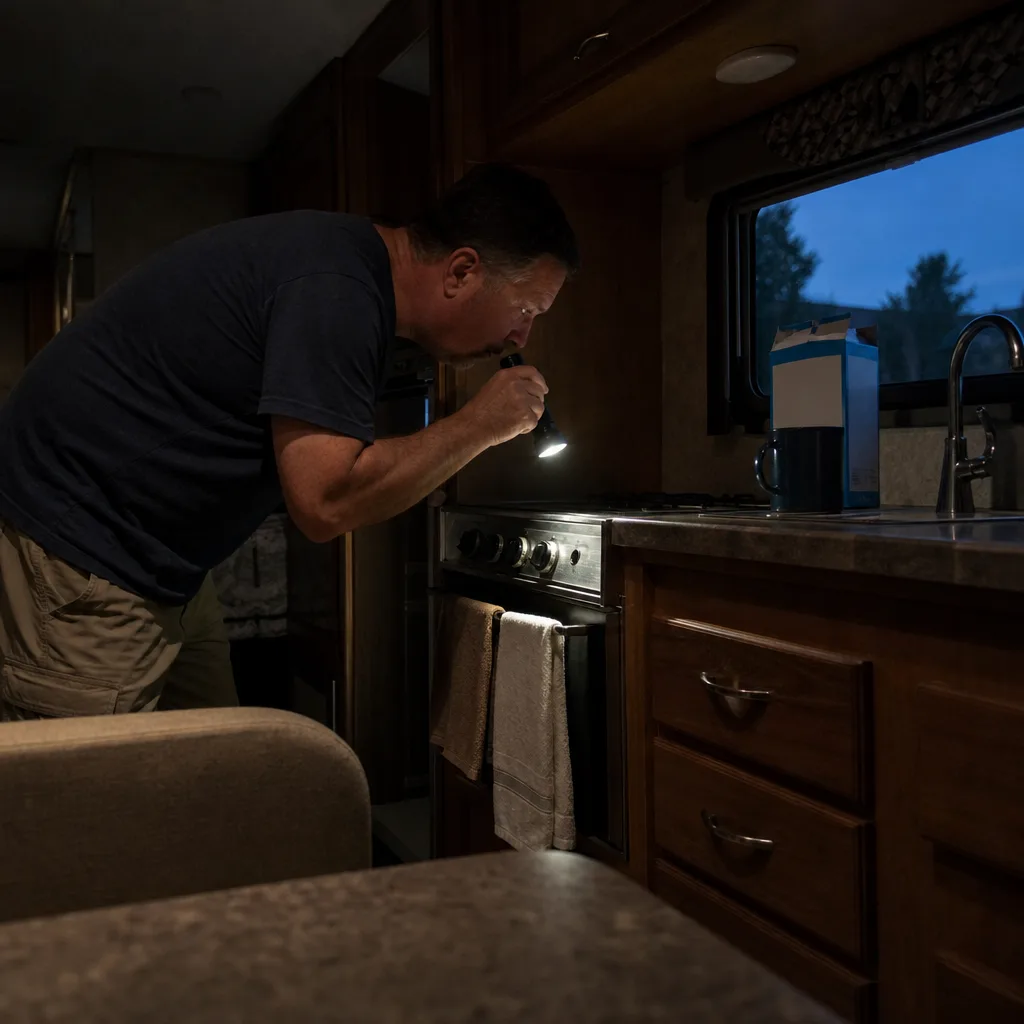
The igniter is the part people swap most, and it's often the wrong one. A clicking igniter that won't light a burner can be the igniter itself. It can also be a spark gap that's set wrong, a cracked ceramic, a bad ground, a tired spark module, or weak 12-volt power from a low battery or converter. A new igniter won't fix any of those. The parts store will happily sell you three of them. They just won't tell you which one is the problem.
The oven has its own catch. On many RV ovens, the pilot is watched by a safety sensor called a thermocouple. It tells the gas valve to stay open only while there's a flame. When the pilot won't stay lit, the sensor, the valve, or a dirty pilot tube could be to blame. Each needs a different fix, and guessing gets pricey fast.
Gas valves and fittings are a different kind of line. The part might be simple, but opening the gas line isn't. Any connection that gets taken apart has to be checked for leaks when it goes back together, and the gas pressure feeding the stove needs to be right for the burners to work. Too low and the flames are lazy. Too high and they're too big and can make soot. Those checks take gauges and leak-test tools that most folks don't keep in the junk drawer. A fitting that's almost tight is the worst kind, because it can seem fine on the first trip and start leaking after a few bumpy roads.
The magnetron is the part in your microwave that makes the heat. When the plate spins but nothing gets warm, people often blame it first. It does fail. But the same symptom can come from a blown fuse, a bad diode, a failed capacitor, or a door switch that isn't closing. To test any of them, you have to work in the high-voltage part of the microwave, which is the danger we mentioned in the checklist. Even unplugged, the microwave doesn't care that you meant well.
The door switches are worth a special warning. They're the safety parts that shut the microwave off when the door opens. Bypassing one to get it running again is how people get hurt. If a switch is bad, it gets replaced. It doesn't get skipped.
There's also a money question with microwaves. Many RV models are built into the cabinets with their own trim and mounting, and some are convection combo units. Sometimes a repair makes good sense. Sometimes the part costs so much compared to the microwave that replacing it is smarter. You can't make that call until you know what failed.
That's the real reason DIY stops here. These parts can't be judged by looking at them. They have to be tested where they're installed, on your gas supply and your power, to know which one quit. Testing first and buying parts second is cheaper than the other way around.
Frequently Asked Questions
Can you fix my RV oven if it's still mounted in the cabinet, or does it need to come out?
We work on your stove, oven, or microwave right where it's installed in your RV. There's no need to pull the unit out of the cabinet for us to diagnose or repair it. We test the appliance along with the propane, 12-volt, and power systems feeding it, all in place, whether your rig is parked at your house, in storage, or at the campground.
Will a mouse or bug nest in the burner stop my stove from lighting?
Yes, a nest in the burner tube can block gas flow and keep a burner from lighting properly. Spiders and mud daubers like to build nests in burner tubes during a quiet winter in storage. If your stove worked fine before storage and now one burner won't light or burns weak, that's a detail worth mentioning when you call.
Do I need to be home when you come fix my RV appliance?
You need to be there so we can walk through what you've noticed and test the appliance on your actual hookups. Since we come to your house, storage lot, or campsite, having you nearby to answer a few questions about when the problem started helps us narrow things down faster once we're in your kitchen.