
RV Trailer Wiring and Plug Repair · Cedar City, Utah
RV Trailer Wiring and Plug Repair in Cedar City, Utah: Fix It Without Towing It
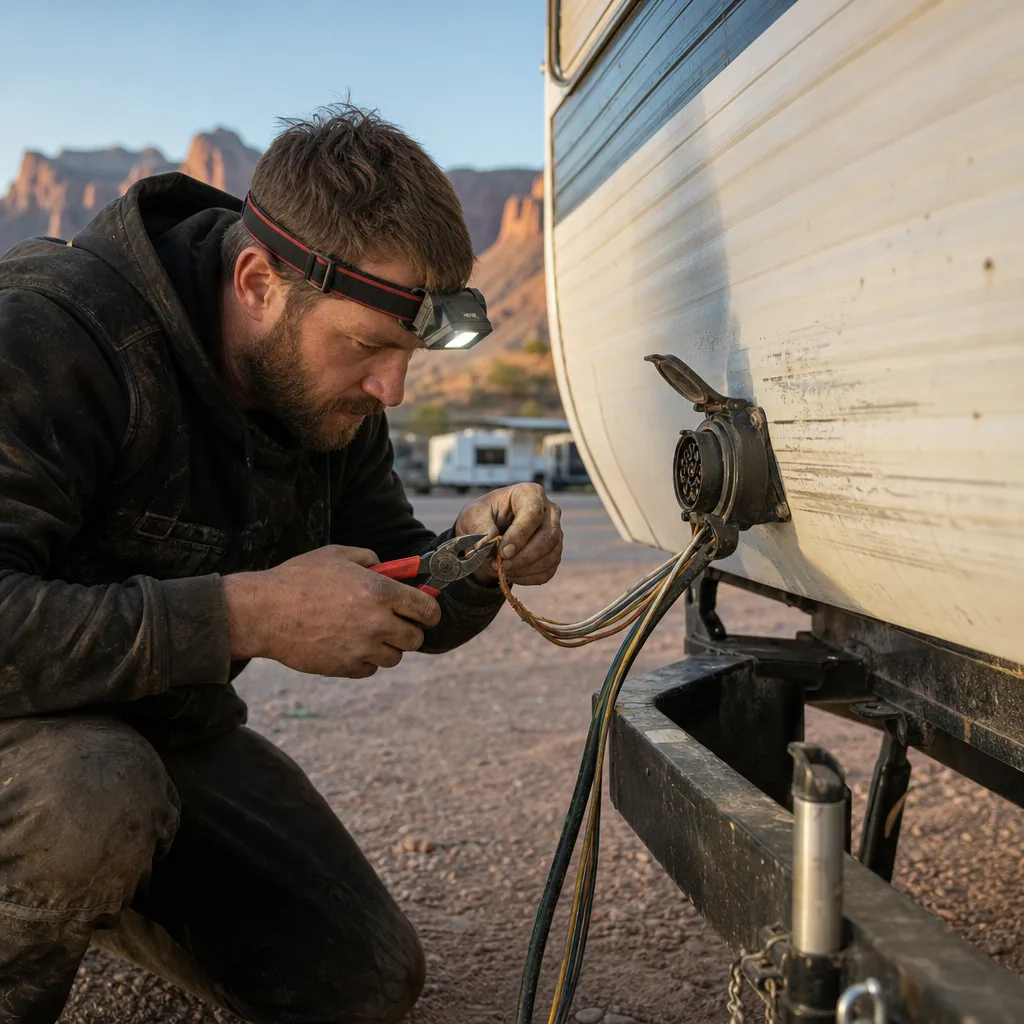
A Dead Trailer Plug Is a Legal Problem, Not Just a Light Out
Most folks treat a dead trailer plug like a burned-out bulb. Something to get to eventually. We get why. The trailer still rolls, the truck still pulls it, and nothing is smoking. But that plug is the only conversation your truck and your trailer ever have. When it goes quiet, a lot more than one light stops working.
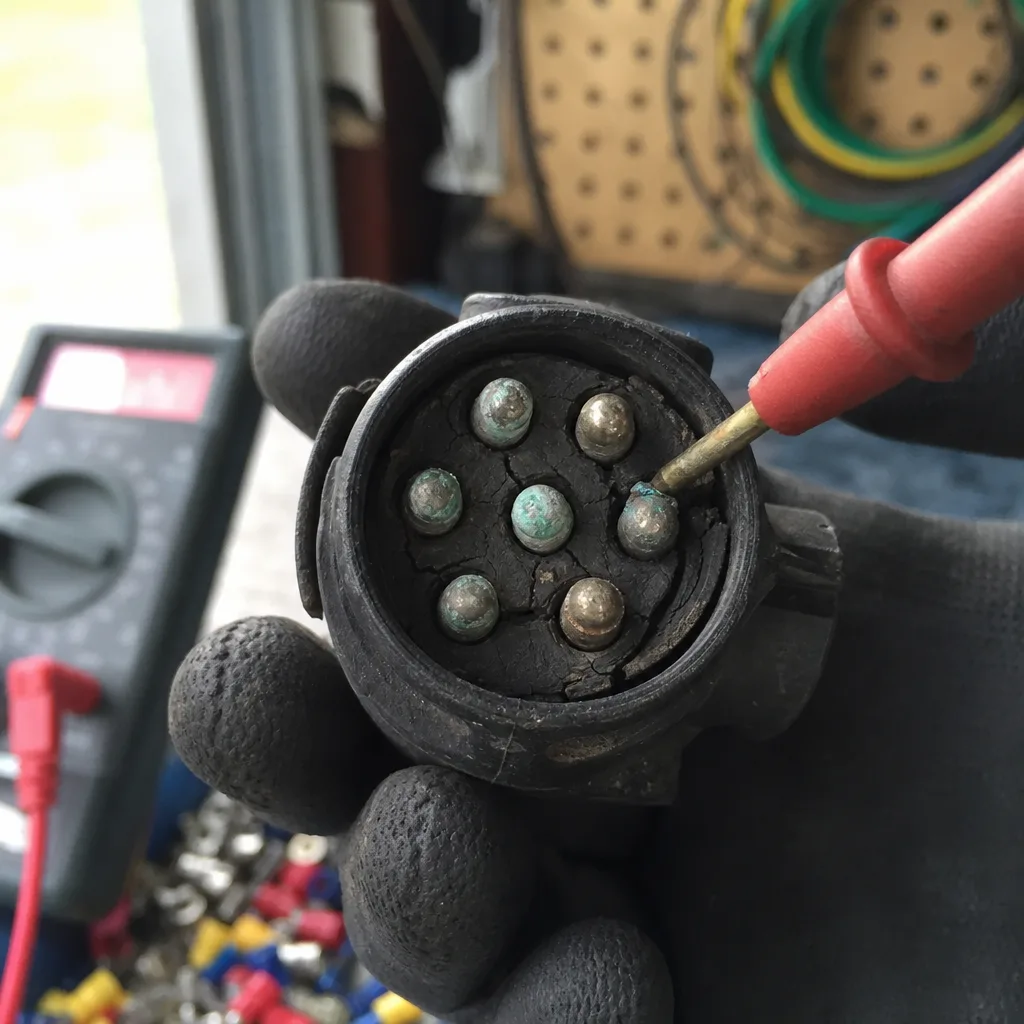
Here's what rides through those pins on a typical RV setup:
- Running lights and taillights, so people can see you at dusk and at night.
- Brake lights, so the car behind you knows you're slowing down.
- Left and right turn signals, so nobody tries to squeeze into the lane you're moving into.
- The brake controller signal, which tells the electric brakes on your trailer to grab when you hit the pedal.
- A charge line, which keeps your trailer battery topped off while you drive.
Lose the plug, and you lose all of that at once. Lose one pin or a bad ground, and you get the weird stuff. Turn signals that blink on both sides. Brake lights that only work when you hit a bump. A battery that's dead at the campsite even though you drove four hours to get there.
Now the legal part. Trailers on public roads have to show working tail, brake, and turn signal lights. That's not a fussy rule someone made up to sell bulbs. It's how the driver behind you knows you're about to stop with a lot of weight behind you. A trooper who sees a dark trailer at night has every reason to pull you over, and that's the cheap version of this story.
The expensive version is a rear-end collision. If someone runs into the back of your trailer and your brake lights weren't working, you've handed them a pretty good argument about whose fault it was. Same goes for a lane change with no signal. You may have done everything else right, and the wiring still puts you on the hook.
Then there are the brakes. When the brake controller signal doesn't reach the trailer, your truck is doing all the stopping for the truck and the trailer. That might feel fine around town in Cedar City. It feels a lot less fine on a long downgrade with a full fresh water tank and a week of groceries pushing on your bumper. Your truck's brakes weren't built to carry that load alone, and they'll let you know by fading right when you need them most.
So when a customer tells us, "It's just the lights, I'll deal with it after the trip," our honest answer is that the trip is exactly when it matters. A plug that's flaky in the driveway rarely gets better at highway speed with road grime and vibration working on it. Fix it before you hook up for the drive, not after you've already been pulled over or found out the hard way that your trailer brakes weren't helping.
Common Signs Your Trailer Wiring or Plug Needs Repair
You already know the headline symptoms from above, like flashers blinking on both sides or brake lights that only show up when you hit a pothole. But wiring trouble usually leaves clues long before it fails all the way. Some you can see. Some you'll only notice if you're paying attention when you hook up.
Start with the plug itself. Pull it out of the truck socket and take a good look. Here's what should make you pause:
- Green, white, or crusty buildup on the pins. That's corrosion, and it chokes the power trying to get through.
- Brown or black marks, or plastic that looks soft or warped. That's heat. Something has been working too hard, and melted plastic is never a good sign in a part that carries power.
- A plug that slides in loose or falls out on its own. The spring cover on the truck socket should hold it snug.
- Bent, pushed-back, or missing pins. One pin sitting lower than the rest may not touch at all.
- Cracked, chewed, or rubbed-through cord jacket, especially where the cord hangs near the hitch or drags when you turn.
Then watch what the lights and gauges tell you once everything is plugged in.
- Lights that are dim, flicker, or get brighter when you tap the brakes. That's often a weak ground, and it makes everything act a little haunted.
- Your brake controller shows no trailer connected, or it flips between connected and not while you drive.
- Pressing the brake pedal makes the running lights or other lights do something odd. Power is leaking where it shouldn't go.
- A fuse on the truck that keeps blowing. Fuses don't blow for fun. Something is shorting out.
- Lights that work fine in the driveway but quit after a few miles of washboard road.
That last one fools a lot of folks. You check the lights at home, everything blinks right, and you feel good. Then vibration and road dust go to work on a loose connection. By the time you're at the gas station, half your lights are on vacation. A connection that's only good when parked isn't a good connection.
Here's a quick test that saves a lot of guessing. If you can, plug your trailer into a different truck, or plug a different trailer into your truck. If the problem follows the trailer, the fault is on the trailer side. If it stays with the truck, look at the truck socket and wiring. It's not a full diagnosis, but it tells you which half of the rig is lying to you.
A little cleaning can help with light surface grime on the pins. But if you see heat marks, a cracked cord, or a loose fit, cleaning won't fix it. Those parts are worn out or damaged, and they need repair or replacement before the rig goes back on the highway.
Check These Before Assuming the Wiring Is Bad
Before you decide your trailer's wiring is toast, run through a few easy checks. A good chunk of 'my trailer lights are dead' calls come down to something you can sort out in the driveway with a flashlight and five minutes. We'd rather you fix it yourself and save the money than pay someone to flip a fuse.
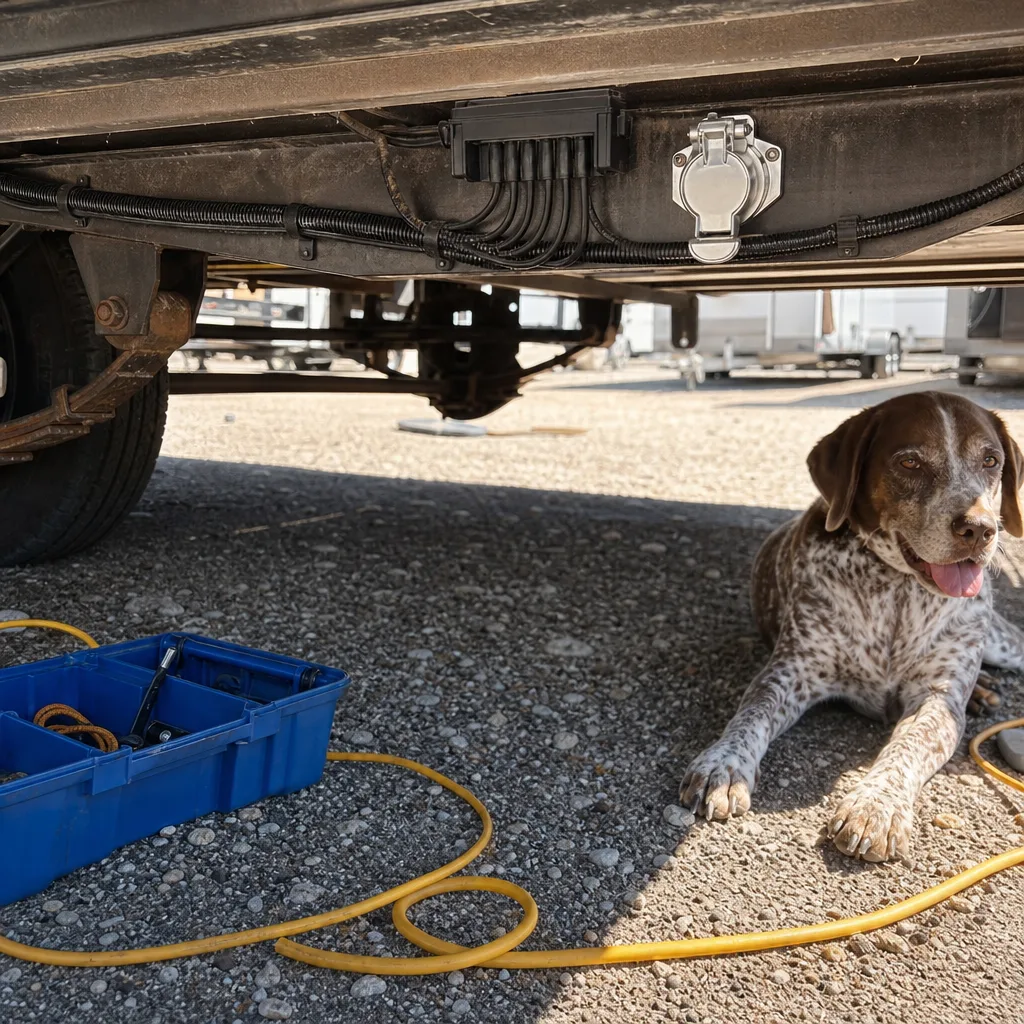
- Truck fuses and relays. Most trucks with a tow package have their own trailer fuses and relays, often in the box under the hood. Check your owner's manual for which ones run the trailer lights, brakes, and charge line. A blown fuse can kill one function and leave the rest working fine. If a new fuse blows right away, stop there. That's a short, and swapping fuses won't fix it.
- Bulbs. Yes, really. If only one light is out, check the bulb before you check anything else. Wiring trouble usually takes out more than one light or makes them act strange. A single dark lamp is often just a dead bulb.
- Adapters. If you're running a 7-pin to 4-pin adapter, or the other way around, try it without the adapter or with a different one. Cheap adapters fail all the time, and they're easy to forget about because they live on the plug.
- Seating. Push the plug all the way in until it stops, and make sure the socket cover clicks down over it. A plug that's in most of the way can give you some lights and not others.
- Brake controller settings. If your controller shows the trailer as connected but the brakes feel weak, check the gain setting before you blame the wiring. Someone may have turned it down, or it was never set right for your trailer's weight.
- Battery disconnect switch. If your trailer battery isn't charging while you drive, check that the disconnect switch on the trailer is on. It's an easy one to miss after storage.
One more that catches folks after an upgrade. If you swapped your trailer's old bulbs for LEDs and now your turn signals blink super fast, the wiring is probably fine. LEDs pull so little power that some trucks think a bulb burned out and speed up the blink to warn you. That's a flasher or load issue, not a broken wire.
Trucks also play tricks. Some newer models have trailer settings in the dash menu, and a software update or a dead truck battery can reset them. If the truck suddenly acts like it doesn't know a trailer is hooked up, poke around the trailer menu before you start pulling wires.
Here's where we'd stop doing it yourself. If you've checked all of the above and the problem's still there, if a fuse keeps blowing, or if the trouble comes and goes as you drive, it's time to let someone trace it. Those are the jobs where the real fault is buried in a harness, a junction box, or a ground hiding behind the trailer frame. Guessing at those can eat a whole Saturday with nothing to show for it but sore knees.
Mobile Repair at Home or Your Storage Lot
Here's the catch with a bad trailer plug. The usual fix means getting the rig to a shop, and getting it there means towing a trailer with spotty brake lights, no turn signals, and maybe no trailer brakes down a public road. That's the exact drive we just spent three sections telling you not to make. Mobile repair takes that problem off the table, because the trailer doesn't have to go anywhere.
Benny's RV was started right here in Cedar City to offer mobile RV technician services, and RV repair at home or at your storage lot is a big part of what we do. If your trailer is parked beside the house or tucked into a storage spot, we can fix the wiring where it sits. Nobody has to risk a ticket or a sketchy downhill stop just to get a plug fixed.
It also helps that the person you talk to is the person who knows the work. Our owner is the lead technician and your main point of contact. He's an RVTI Certified Technician with more than 15 years in the RV industry. He started out washing trailers as a lot porter and worked his way up to general manager of three locations, so he's seen trailers from the hose end to the front office. His wife runs our office, so she's the one setting your appointment and sending the invoice. Two people, no phone tree.
Trailer wiring is a good fit for on-site work because the trouble lives where the truck and trailer meet. The fault could be on either side, so the most useful place to track it down is right where the rig is parked, with the actual truck that pulls it. A few things make that go faster:
- Have your tow vehicle there if you can. Half the puzzle might be in the truck socket, and it's hard to test a conversation with only one side in the room.
- Write down what you noticed. Which lights acted up, whether the brake controller complained, and whether it only happens on rough roads. Little details save a lot of hunting.
- Tell us about anything that's changed. A new adapter, an LED swap, a new truck, or wiring someone else already worked on.
- Leave room to work around the hitch and the back of the trailer. If your storage lot has a gate code or set hours, mention that when you book.
- Check whether your trailer is still under manufacturer warranty. We don't currently offer manufacturer warranty work, so if it's covered, your dealer is the place to start.
Sometimes a plug problem turns out to be part of something bigger. If the trouble runs into your house power, our RV Electrical Troubleshooting service picks up from there. If the hitch hardware itself is worn, Fifth Wheel and Hitch Repair covers that. And if you'd like the whole rig checked before a long haul, a Pre-Trip RV Inspection is the way to go.
The bottom line hasn't changed. A trailer that can't signal, brake, or light up shouldn't be on the road, and that includes the road to the repair shop. Let the fix come to you.
Call nowWhat Happens During a Wiring and Plug Diagnosis
A good wiring diagnosis isn't someone wiggling the plug, shrugging, and selling you a new one. It's a process of elimination. Your truck and trailer are two halves of one circuit, and the job is to find out which half is lying and exactly where. Here's what a proper diagnosis should cover, no matter who does it.
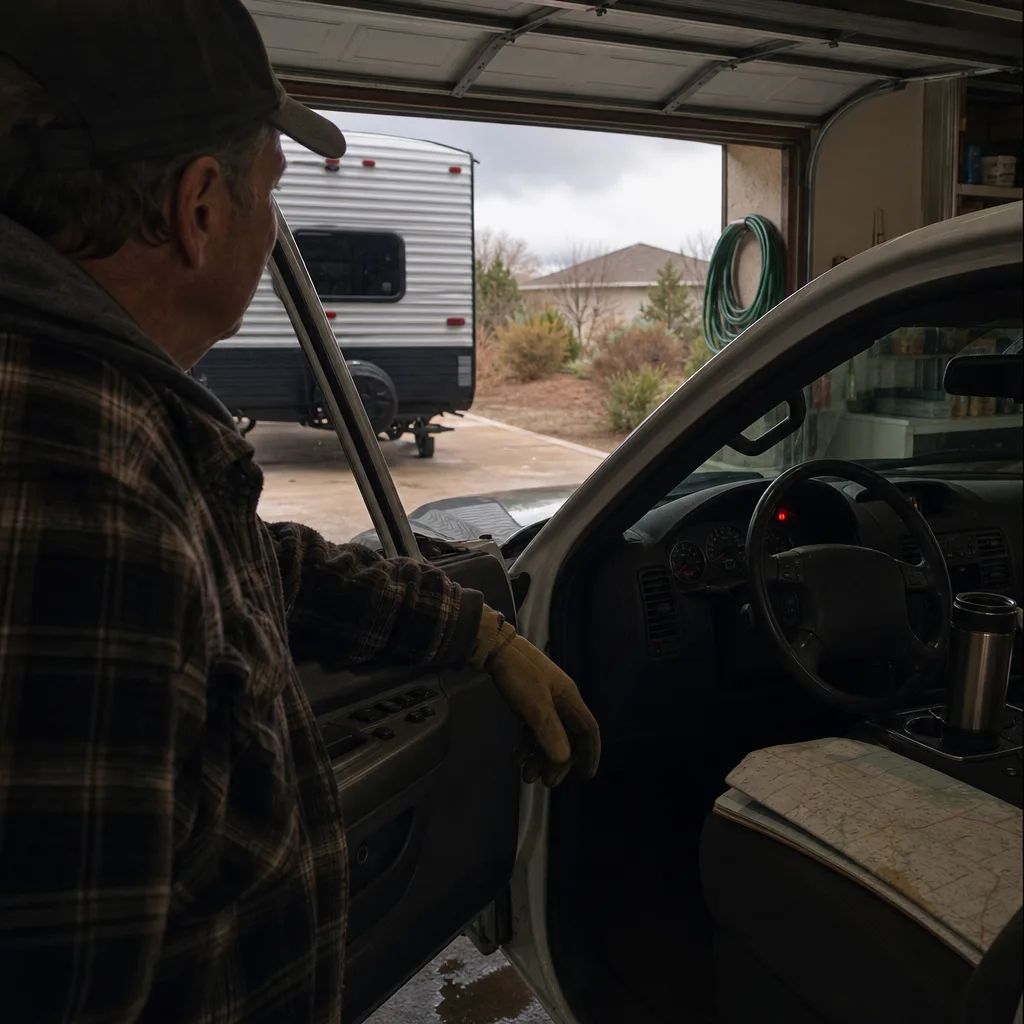
First, split the rig in two. The truck socket gets tested by itself with a tester plugged in where the trailer would go. Each function gets turned on one at a time: running lights, left signal, right signal, brakes, brake controller output, and the charge line. If the truck side checks out, attention moves to the trailer. It's the same idea as the swap-a-truck test from earlier, just done with a meter instead of borrowing your brother-in-law's pickup.
On the trailer side, the work usually goes in this order:
- The plug end. Open it up and look at how the wires are attached inside. Corrosion loves to hide in there, and a pin can look fine from the outside while the wire behind it is green and crumbly.
- The ground. This is the usual suspect. A ground has to make a solid path from the plug to the trailer frame. One rusty bolt or painted-over contact point can make every light on the trailer act strange.
- The cord and harness. The cord runs from the plug back to a junction box, usually near the front of the trailer. Every inch where it rubs the tongue, hangs low, or passes through a hole in the frame gets checked for chafing.
- Splices and connections. Old crimp joints, twisted wires wrapped in tape, and leftover add-ons from a previous owner are all places where trouble likes to start.
Two tests separate a real diagnosis from a guess. One is a load test. A bad wire can show full voltage on a meter with nothing connected and still fall flat once it has to light a lamp or pull in a brake. The other is a wiggle test for problems that come and go. Flexing the cord and harness while watching the lights is how you catch the fault that only shows up on washboard roads. If a problem only shows up while driving, expect this part to take the longest.
When it's done, you should know three things: what failed, why it failed, and what was done about it. Maybe a cord got pinched in a tight turn, or a ground rusted out from road spray. Knowing the why matters, because replacing a plug without fixing the chafe that killed it just means paying for the same repair again next season.
Frequently Asked Questions
Can I just replace the trailer plug myself instead of getting it repaired?
You can swap a plug yourself if the problem is only the plug end and the wiring behind it is clean. But if you see corrosion, heat marks, or a cracked cord jacket, a new plug on damaged wiring just fails again. The safer move is checking the fuses, bulbs, and adapters first, then having the deeper wiring traced if the trouble keeps coming back.
Why does my trailer lose power only after driving a while, not when it's parked?
This usually points to a loose or corroded connection that vibration makes worse. Washboard roads and highway miles flex the cord and harness, and a connection that tested fine in the driveway can drop out once dust and movement work on it. A wiggle test on the cord while watching the lights is how this kind of intermittent fault gets found.
Is it normal for my trailer's turn signals to blink too fast after switching to LED lights?
Yes, this is common and usually isn't a wiring fault. LED bulbs draw much less power than old incandescent bulbs, so some trucks read that as a burned-out bulb and speed up the blinker to warn you. The fix is typically a new flasher or load equalizer, not a repair to the wiring itself.
Do I need to bring my truck when I get my trailer wiring looked at?
Yes, having your tow vehicle on site makes a real difference. Trailer wiring trouble can sit on either side of the plug, and testing the truck socket alongside the trailer is the fastest way to find out which half has the fault. Writing down which lights acted up and whether it only happened on rough roads also speeds up the diagnosis.