
RV Water Heater Repair · Cedar City, Utah
RV Water Heater Repair in Cedar City, Utah: Know What's Broken Before You Call
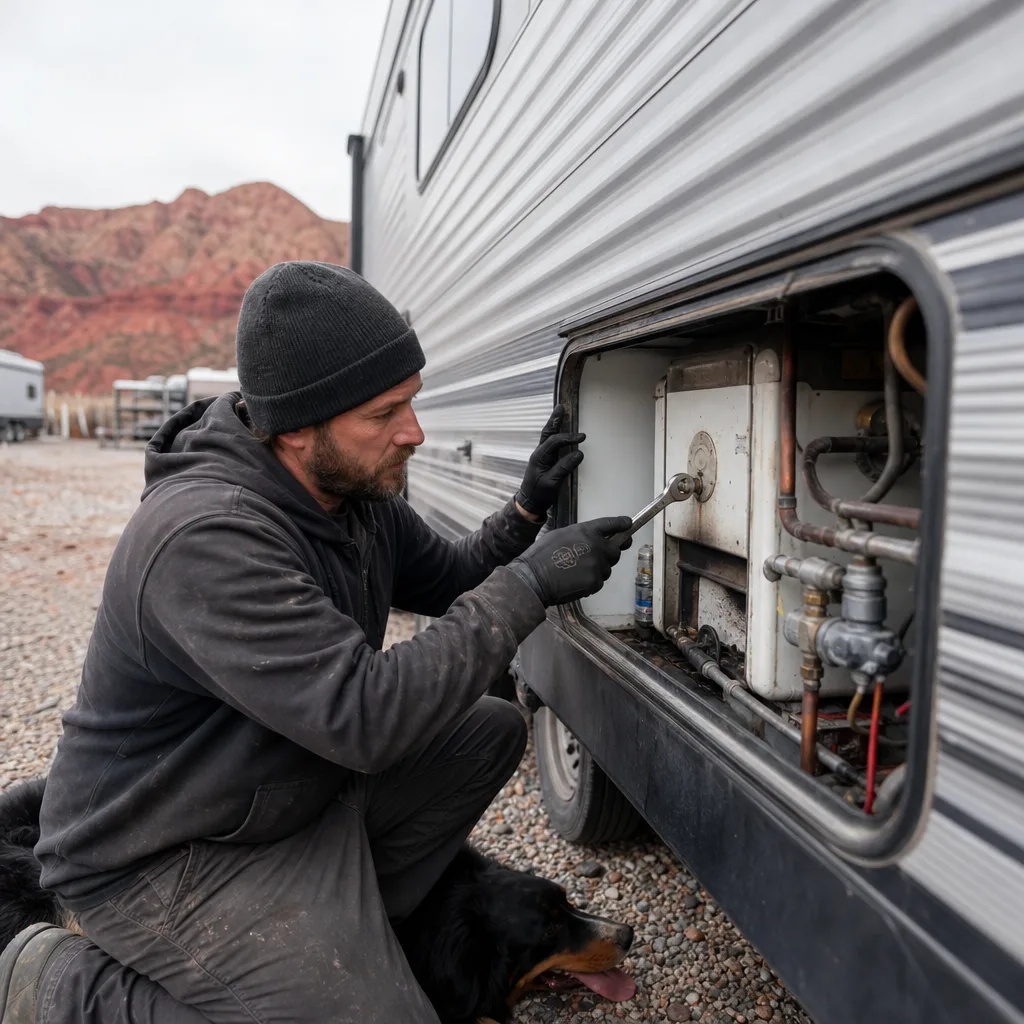
Check These Three Things Before You Call
We'd rather you not pay for a visit that a flip of a switch would've fixed. A lot of "broken" water heaters are just a heater that isn't getting what it needs. Here's what to look at first.
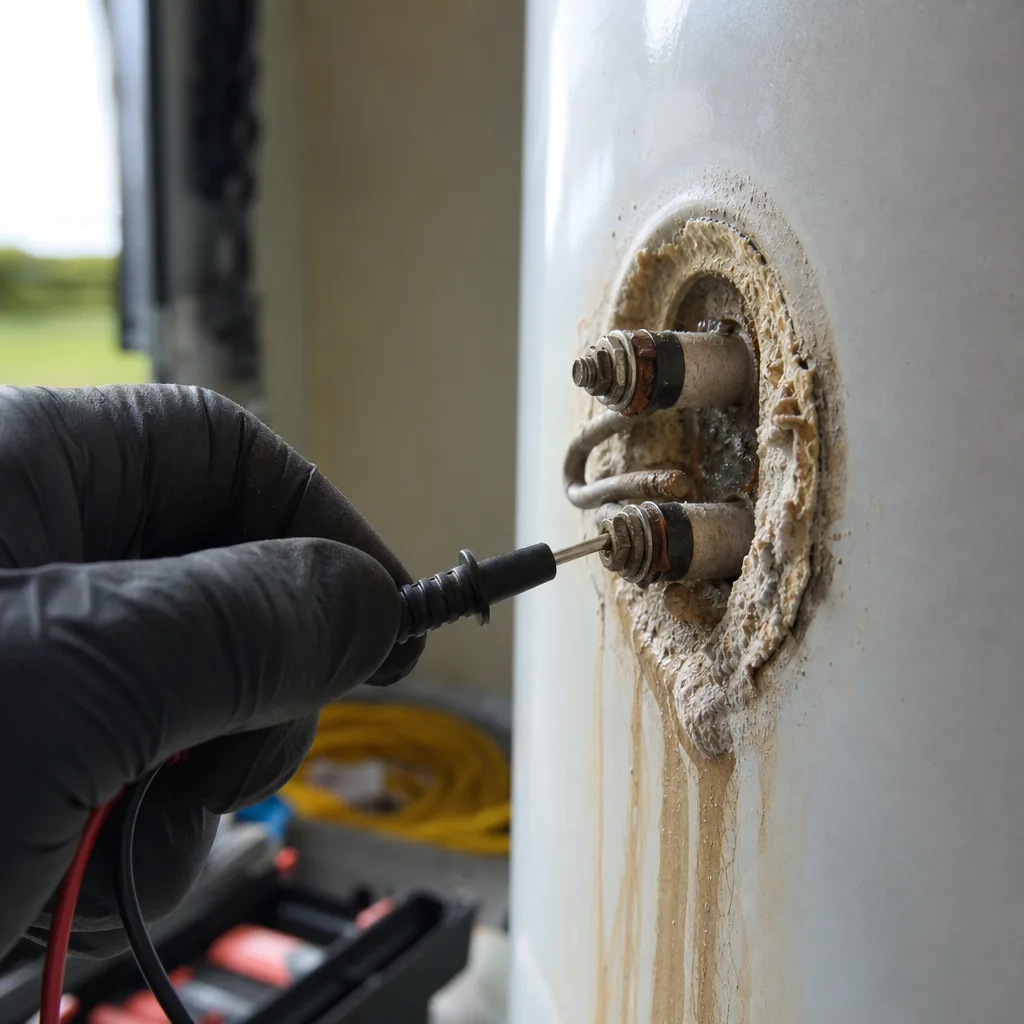
1. Is propane getting there?
Start at the tank, not the heater. Make sure the tank isn't empty and the tank valve is open all the way. If you just swapped tanks, a little air in the line can make the heater try and fail a few times before it lights. Here's an easy test: light a burner on your stove. If the stove won't light either, your water heater isn't the problem. Your propane supply is.
2. Are the switches and breaker on?
Most RV water heaters have a switch inside the coach, sometimes one for gas and a separate one for electric. They love to hide in a panel by the door or tucked near the kitchen. Make sure the right one is on. If you're running on electric, check the breaker in your RV's panel and make sure you're plugged into shore power. A heater set to electric mode while you're dry camping will sit there all day doing exactly nothing. That's not a defect. It's just a heater waiting for power that isn't coming.
3. Is the bypass valve still in bypass?
This one gets a lot of people after winter. When a rig is winterized, the bypass valves get turned so water skips the water heater tank. If nobody turned them back in the spring, cold water runs straight to your faucets and the tank sits empty. The valves are usually behind an access panel near the back of the water heater, often inside a cabinet or under a bed. Look for a label or a diagram from your manufacturer. If the handles point to bypass, set them back to normal flow and let the tank fill before you turn the heater on.
That last part matters. Turning on the electric element with an empty tank can burn it out fast, which turns a free fix into a real repair. Fill the tank first, then flip it on.
If one of these was the culprit, congratulations. You just fixed your own water heater, and you can go enjoy your shower. No call needed.
If you've checked all three and the water's still cold, that points to the parts inside the heater, like the ignition, the gas valve, the element, or a safety switch that keeps tripping. That's real diagnostic work, and it's where a trained tech earns their keep. The same goes for the things that sent you looking in the first place: water dripping from the outside panel, a heater that clicks and never lights, or one that lights and then quits. Those aren't checklist problems.
Know When a Propane Smell Means Stop and Call Now
Everything in the checklist above is fair game for you to handle. A propane smell isn't. If you catch that rotten egg odor near the water heater, inside the coach, or around the outside panel, the troubleshooting is over. You're not fixing a heater anymore. You're keeping people safe.
Propane has no smell of its own. That stink is added on purpose so you'll notice a leak before it turns into something worse. When you smell it, it's doing its job. Take it seriously, even if it's faint and even if it comes and goes.
Here's what to do, in this order:
- Put out any flame and don't make sparks. That means no lighters, no cigarettes, and no lighting the stove to see if it works.
- Don't flip switches. Leave lights, the water heater switch, fans, and the generator alone. Don't plug or unplug anything.
- Get everyone out, pets included, and move away from the rig.
- If you can reach it safely, turn off the propane at the tank valve. If the smell is strong near the tank, skip this step and just leave.
- Call for help once you're away from the RV.
One more thing about propane: it's heavier than air. It sinks and pools low, along the floor, in cabinets, and under the rig. That's why your LP detector sits down near the floor and not up by the ceiling. If that detector is chirping and you can't smell anything, believe the detector. It's got a better nose than you do, and it doesn't get used to the smell after ten minutes the way people do.
Some signs mean stop even without a smell. If you hear a hiss near the gas line or the water heater, see scorch marks or soot on the outside panel, or watch the burner throw a big yellow, lazy flame instead of a steady blue one, leave it off. Those point to gas or combustion problems, and they don't belong on anybody's weekend to-do list.
We get it. Nobody wants to cut a trip short over a smell that might be nothing. Maybe you just changed tanks and a little gas got out at the fitting. That happens. But you can't tell a harmless whiff from a real leak by sniffing harder, and guessing wrong here costs a lot more than a service call. Air the rig out, keep the gas off, and let someone with the right gear find the source.
Once everyone's safe, our team can come to you for Emergency Mobile RV Repair. If the smell is gone but you want peace of mind before you fire anything back up, our RV Propane System Inspection and Leak Test checks the whole gas system, not just the water heater.
Call nowCommon Causes of No Hot Water or Leaks
So you've done the easy checks and the water's still cold, or there's a puddle where there shouldn't be one. Now we're inside the heater. The good news is that RV water heaters are pretty simple machines. There are only so many parts that can quit, and each one leaves its own clues.
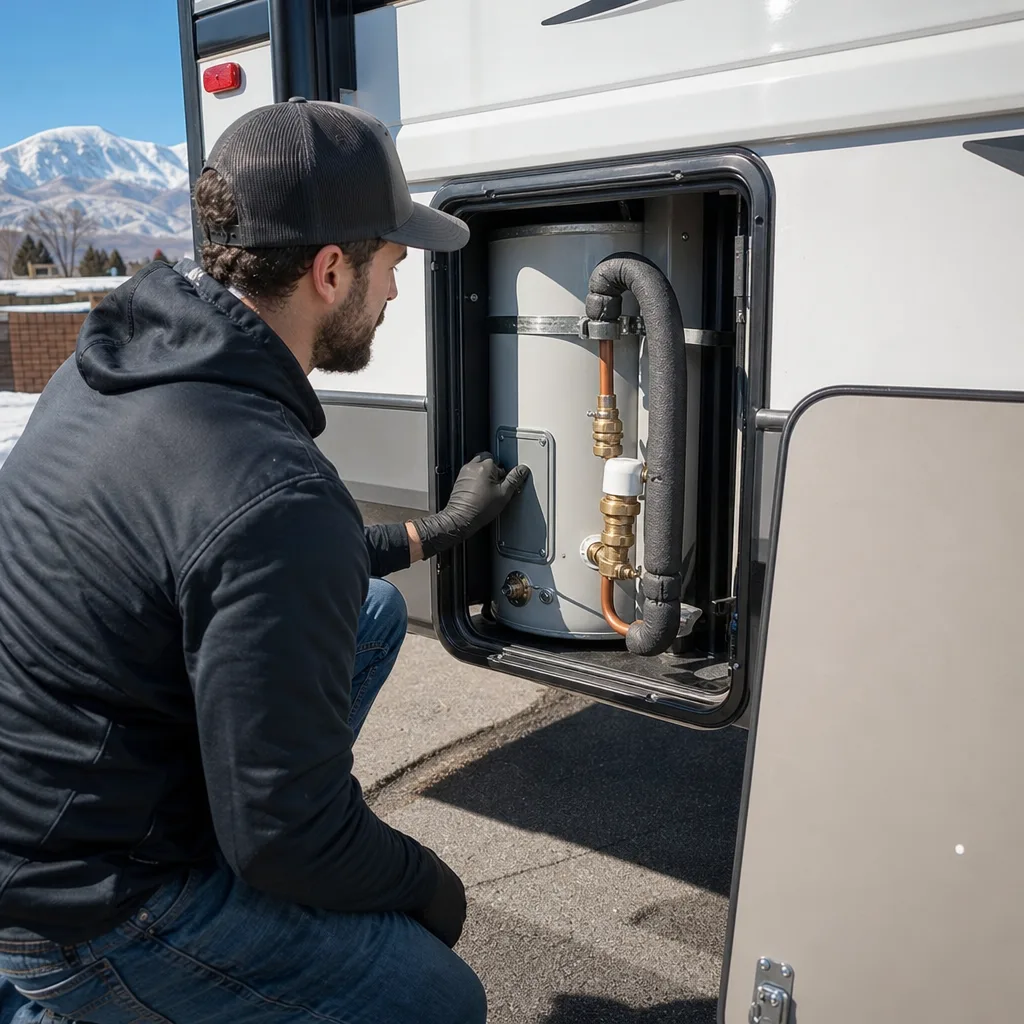
Here's what usually sits behind a no hot water problem:
- Ignition trouble. On gas mode, the heater clicks and tries to spark a flame. A dirty or cracked igniter, a loose wire, or a tired control board can make it click and click and never light. If it tries a few times and then gives up, it's not being lazy. It's built to lock out after failed tries.
- A gas valve that won't open. The heater can spark just fine, but if the valve doesn't let gas through, there's nothing to light.
- A tripped safety cutoff. Most heaters have a switch that shuts things down if the water gets too hot. When it trips once, it's doing its job. When it keeps tripping, something else is wrong, like a bad thermostat.
- Blocked burner or airflow. Bugs, especially mud daubers and spiders, love to build nests in the burner tube. That leads to a weak flame, a heater that lights and quits, or that lazy yellow flame we warned you about above.
- A burned out electric element. If gas mode works but electric mode doesn't, the element is a top suspect. Running it with an empty tank is the classic way to kill one.
That last split is a handy clue. If one mode works and the other doesn't, the tank itself is usually fine, and the problem lives in just the gas side or just the electric side. That narrows things down fast and often keeps the repair smaller.
Leaks are a different story, and where the water shows up tells you a lot.
- Dripping from the relief valve. This little valve lets out pressure when the water heats up and expands. A few drips while the heater runs can be normal. A steady stream, or a valve that drips all the time, isn't.
- Leaks at the drain plug or fittings. A worn plug, a cross threaded plug, or a loose connection on the water lines can weep slowly for weeks before anyone notices the soft floor.
- A leaking tank. Some tanks are steel and rely on a part called an anode rod to slow down rust. When that rod gets eaten away and nobody replaces it, the tank starts to go next. Once the tank itself is leaking, it's usually replacement time, not repair time.
Then there's freeze damage. Water expands when it freezes, and it doesn't care how much you paid for your rig. If a coach sat through a Cedar City winter with water still in the tank or lines, that ice can split fittings, crack the tank, or wreck the relief valve. It often doesn't show up until spring, when you fill up for the first trip and find water coming out of places that used to be dry. A proper winterization ahead of time is a lot cheaper than finding that out the hard way.
Most of these problems are fixable with a part or two. The trick is testing to find the right one instead of guessing and buying three parts you didn't need.
Why Cedar City Winters Raise the Risk of Tank and Line Damage
Most people think the danger is the dead of winter, when snow is on the ground and nobody's camping. That's not usually the night that gets you. Around Cedar City, the sneaky part is the shoulder seasons. You get a sunny fall afternoon that feels like perfect camping weather, then the temperature drops hard after dark. Your rig doesn't care that it was nice at lunch.
Here's how it plays out. You get back from a great October trip, park the trailer in the side yard or at a storage lot, and plan to winterize it next weekend. Next weekend turns into next month. Somewhere in there, a cold night sneaks in, and the water still sitting in the tank and lines freezes. Nothing looks wrong. It stays that way until spring, when you fill up and find a drip that wasn't there before, just like we covered above.
A few things make the water heater one of the first spots to freeze:
- It sits behind a panel on the outside wall, so cold air reaches it fast.
- The tank holds several gallons of water that won't go anywhere unless someone drains it.
- The water lines feeding it often run through the underbelly or along outside walls, where there's little or no heat.
- A rig in storage is usually unplugged and closed up, so nothing inside is making heat.
That last one catches people who dry camp late in the season, too. If you're running off batteries and keeping the furnace low to save power, the inside of the coach can feel fine while the lines in the belly are getting a lot colder than you are.
The fix is simple. Do it early, before you think you need to. Here's what protects the water heater:
- Drain the tank all the way, not just the lines. Antifreeze in the pipes does nothing for a tank full of water.
- Set the bypass valves so antifreeze or air doesn't fill the tank back up. That's the same valve that trips people up in spring.
- Check the anode rod while the tank is empty, if your heater has one. A worn rod is a lot easier to deal with now than a rusted tank later.
- Leave the heater off once it's drained. A heater switched on with an empty tank is a quick way to ruin a good element.
If you still plan to camp through the cold months, watch the overnight lows, not the daytime highs. One cold night is all it takes. Keep the coach heated and keep an eye on the lines that run outside the warm space.
Some folks like doing this themselves, and that's great. If you'd rather not crawl around with a drain plug and a flashlight in the cold, our RV Winterization service handles it before the first hard freeze. When it warms up, our RV De-Winterization / Spring Start-Up gets the bypass valves set back, the tank filled, and everything checked before your first trip. It's a lot cheaper to winterize on time than to pay for a new tank in April.
Call nowOn-Site Repair at Your Home, Storage Lot, or Campground
Hooking up and towing a trailer across town because the shower's cold is a lot of work for a part that might fit in your pocket. Benny's RV offers mobile RV technician services, so we come to the rig. It can be a travel trailer in your driveway, a fifth wheel at a storage lot, or a motorhome parked at a campground.
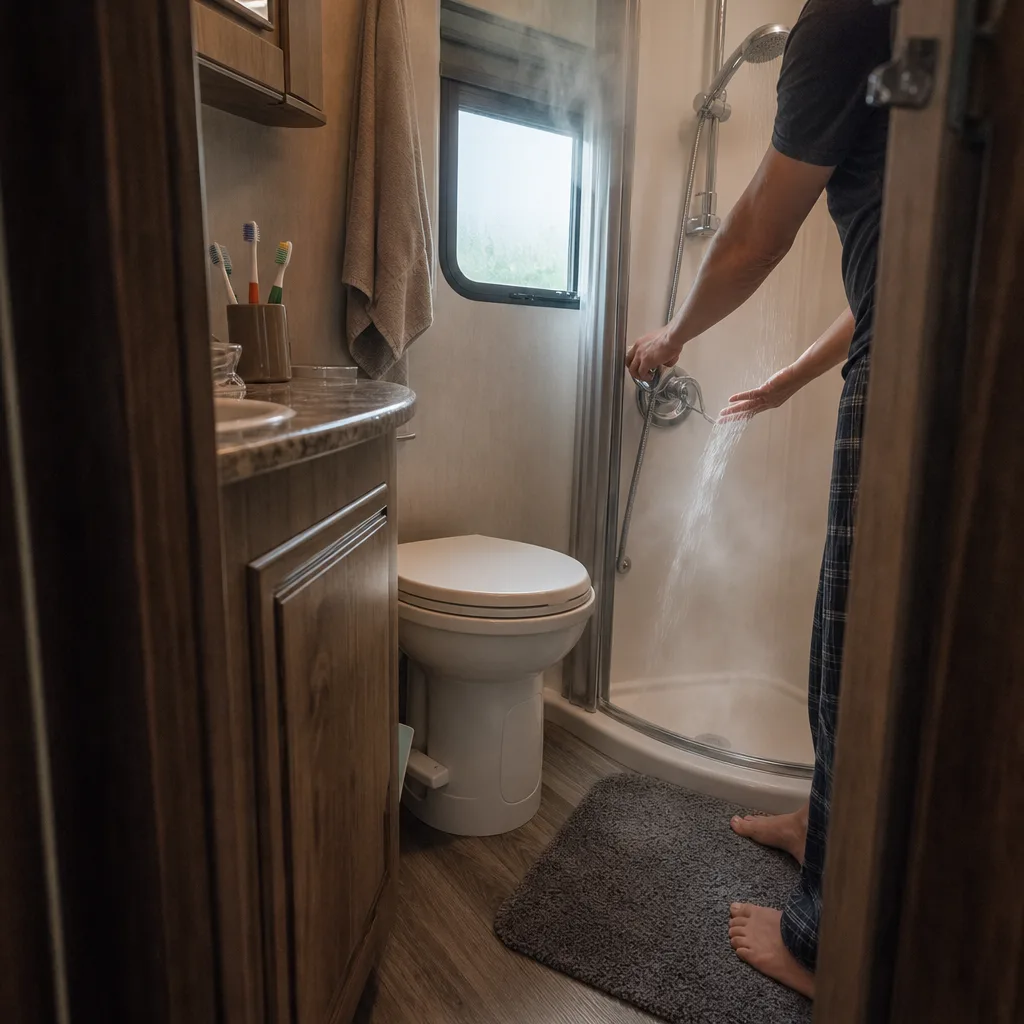
There's a real repair reason for this, too. A water heater only acts up in the setup it lives in. When we test it right where it sits, on your propane, your shore power or batteries, and your plumbing, we see the actual problem. A heater that behaves perfectly in a shop bay and quits again the minute it's back at your site doesn't help anybody.
You'll know who's showing up. I'm the lead technician, an RVTI Certified Technician with more than 15 years in the RV industry. I'm also the person you'll talk to about what's going on with your rig. My wife runs the office, so she's the one who sets your appointment and sends the invoice.
A little prep makes the visit faster, and faster usually means cheaper. Here's what helps:
- Clear the outside water heater panel. Move bikes, coolers, and the grill away from that side of the rig.
- Make the bypass valves easy to reach. If they're under the bed or in a packed cabinet, empty that space ahead of time.
- Have propane in the tank. If the electric side is the problem, have shore power ready. If your storage lot has no power, mention that when you book.
- Take a photo of the heater's label with the make and model. It's often on the inside of the outside panel door.
- Write down what you noticed. Does it click but never light? Light and then quit? Does gas mode work but electric doesn't? Where does the water show up?
- Tell us if the rig sat through a winter with water still in it.
- If the rig is in a gated storage lot, let us know how to get in.
Mobile repair costs in this trade usually come down to three things: the trip out, the time it takes to find the problem, and the parts. The quick checks earlier on this page and good notes about the symptoms cut down that middle piece. Before you hire anyone, ask how they charge for diagnosis compared with the repair itself. Then the final bill won't surprise you.
One more thing to know up front: we don't currently offer manufacturer warranty work. If your rig is new and still under the manufacturer's coverage, check with your dealer or the manufacturer first. You don't want to pay for something they would have covered. If you're out of warranty, or you'd just like it fixed without the runaround, that's where we come in.
Call nowFrequently Asked Questions
Can I run my RV water heater on gas and electric at the same time?
Many RV water heaters can run both modes together, but check your owner's manual to be sure. Running both can heat water faster, but it also means two systems that can fail independently. If your heater works on gas but not electric, or the other way around, that split points to a problem on just one side instead of the whole unit.
How long does it take for an RV water heater to heat up?
Most RV water heaters take 20 to 30 minutes to heat a full tank from cold. If yours is taking much longer, or never gets hot, something inside is likely struggling, like a weak burner flame or a failing element. That's a sign worth a diagnostic check rather than just waiting it out.
Is it normal for my RV water heater's relief valve to drip?
A few drips while the heater is running and the water is expanding can be normal. A steady stream or constant dripping is not, and usually means the valve itself needs attention. Keep an eye on how often it drips and whether it stops once the tank is fully heated.
Can I use my RV water heater while driving down the road?
It's best to turn off the gas water heater before driving, since a lit flame moving down the highway is a fire risk. Electric mode is off anyway once you're unplugged from shore power. Switch it back on once you're parked and settled at your site.