
RV Wheel Bearing Repack · Cedar City, Utah
RV Wheel Bearing Repack in Cedar City, Utah: Know When It's Urgent
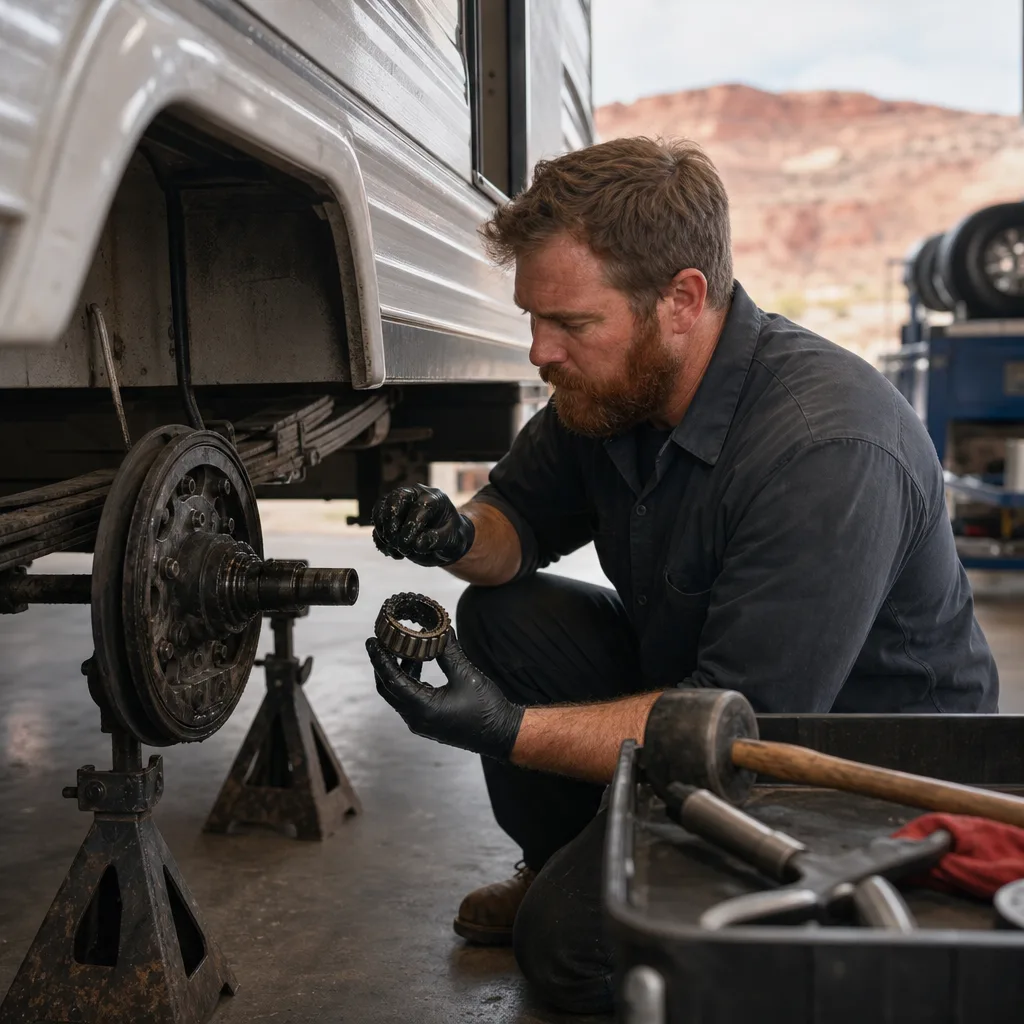
Signs Your RV Needs a Wheel Bearing Repack Now
Here's the thing about wheel bearings. They don't send a text. They send little hints, and most folks don't notice them until the hint turns into smoke. These are the ones worth paying attention to.
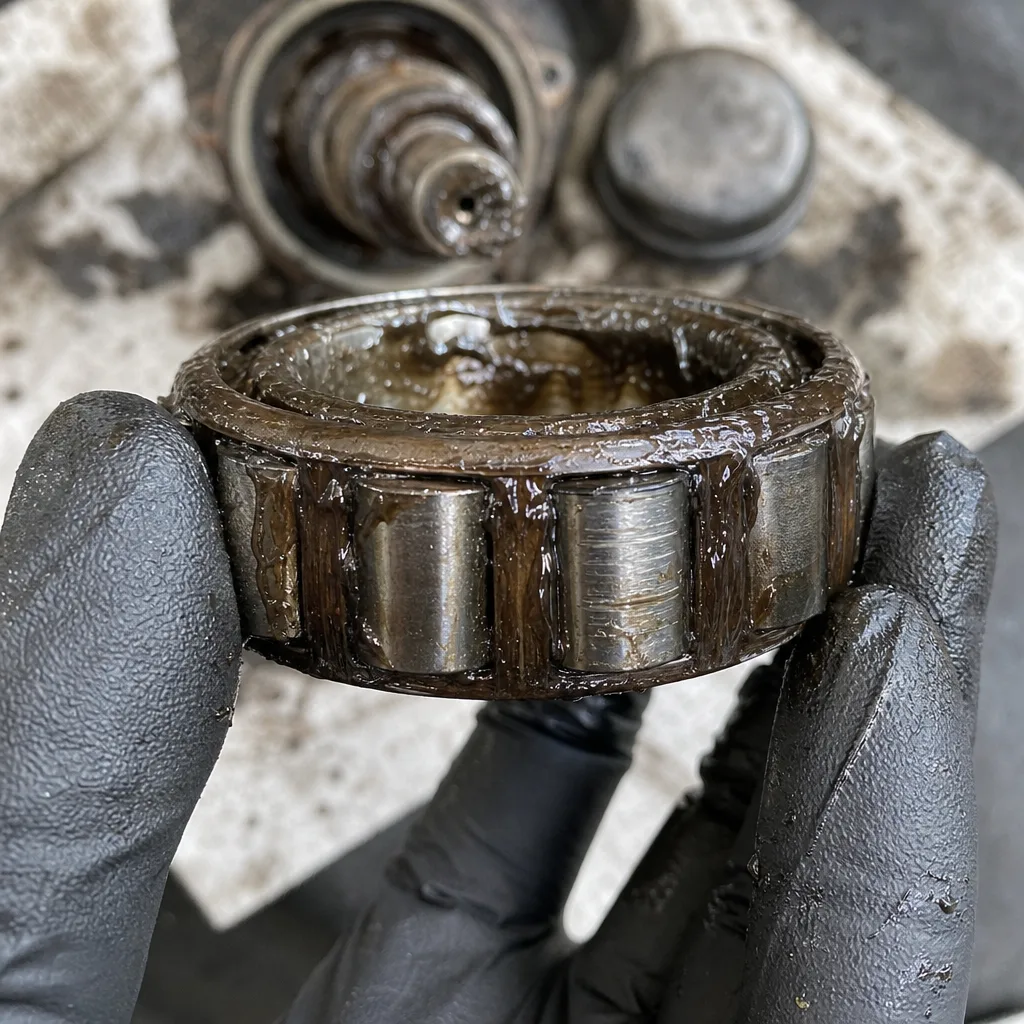
- One hub runs hotter than the rest. After a drive, all your hubs will be warm. If one is clearly hotter than the others, the grease in it may be breaking down or the bearing may be adjusted wrong. Heat is friction, and friction is what eats bearings.
- A growl, grind, or hum that follows your speed. Road noise stays about the same. Bearing noise climbs as you speed up and fades as you slow down.
- Wobble or play in the wheel. With the wheel off the ground, grab it at the top and bottom and rock it. A good bearing feels snug. A clunk or a shift means something inside has worn or loosened.
- Grease where grease doesn't belong. Black streaks on the inside of the wheel or tire, or a greasy film on the backing plate, usually point to a failed seal.
- Odd tire wear on one wheel. A tire wearing unevenly by itself can come from a loose or failing bearing letting the wheel sit wrong.
- Your brakes start acting different. On most trailers, the brakes live in the same hub. If grease reaches the brake shoes, you'll feel weak or grabby braking on that wheel.
Picture this. You pull into a fuel stop, do a walk-around, and notice the inside of one tire looks like somebody wiped a greasy rag on it. Nothing feels wrong from the driver's seat yet. That's exactly the moment to deal with it, because "nothing feels wrong yet" is how most bearing stories start.
Some signs don't make a sound at all. If your RV sat for a long stretch, like parked all winter, the grease can settle and the bearings can pick up moisture without moving an inch. If you've backed a trailer into water at a boat ramp, the same goes. And if you can't remember the last time anyone repacked them, or you bought the rig used and have no records, assume it's due. Old grease doesn't announce itself.
None of these signs mean you're about to lose a wheel tomorrow. They mean the bearings are telling you it's time. It's a lot easier to listen now than to have the conversation on the shoulder of the highway with a hub too hot to touch. Catch it at the hint stage and it's routine maintenance. Wait for the smoke and it's a bigger repair, usually on the worst possible day of your trip.
When a Repack Can Wait or Isn't the Real Problem
Not every growl or hot hub means you need a repack. Sometimes the bearings are fine and something else is talking. Sometimes the repack just isn't due yet. And sometimes you can handle it in your own driveway. Here's how to tell.
It can wait if it was done recently and you have proof. If your records show a repack within the interval in your axle maker's manual, the rig hasn't sat for a long stretch or gone swimming at a boat ramp, and none of the warning signs are showing up, you're fine. Repacking good bearings early won't hurt them, but it won't make them any happier either. Save your money and check again before the next long trip.
Your axle may not use regular grease-packed bearings. Some trailers come with sealed bearing units or oil-bath hubs. You can spot an oil-bath hub by its clear cap, which lets you see the oil level. Those hubs get checked and topped off, not repacked the old-school way. Look at your manual or the hub cap before you book anything.
Grease-fitting spindles buy you time, not a free pass. If your axles have a grease fitting on the end of the spindle, pumping in fresh grease is a handy way to keep things topped off between full services. It doesn't let anyone see the bearings, the races, or the seals, though. Think of it like adding oil to an engine you never change the oil in. It helps, right up until it doesn't.
You can do it yourself if you know the job. A repack isn't magic. If you've got jack stands, a good grease, new seals, and you know how to set bearing preload so it's snug but not tight, it's a solid weekend project. The catch is that adjustment step. Too loose and the wheel wobbles. Too tight and the hub cooks itself. If you aren't sure, that's the part to get help with.
Plenty of things act like a bad bearing but aren't:
- Loose lug nuts can cause wobble and clunking that feel a lot like bearing play. Check torque first. It takes five minutes and costs nothing.
- A dragging brake makes a hub run hot even when the bearing is perfect. Electric brakes can stick or grab on their own, apart from any grease problem.
- Tire trouble, like a shifted belt, a bubble, or low pressure, can hum and shake right along with your speed.
- Worn suspension parts, such as shackle bushings or equalizers, can squeak and clunk as the trailer moves.
- A bent axle can chew up one tire even when the bearings on that side are healthy.
If one of those is the real cause, a repack won't fix it. You'll just have fresh grease on a trailer that still has the same problem. That's why our team checks the whole wheel end, not just the grease. Tire issues fall under RV Tire Inspection and Replacement, and a Pre-Trip RV Inspection looks at the tires, brakes, and running gear together before you head out.
One more honest note. If a bearing is already pitted, blued from heat, or the race is scored, a repack is too late. Fresh grease on a damaged bearing is like putting a new coat of paint on a rotten fence board. That bearing and race need to be replaced, and the seal goes with them. A real repack should include a look at all of that, so you know which job you need.
Why Every Wheel End Gets Checked, Not Just the Noisy One
When one wheel starts acting up, it's natural to want to fix that one and call it good. We get it. Nobody wants to pay for work on wheels that seem fine. But on an RV, the noisy wheel is usually just the first one to speak up, not the only one with something to say.
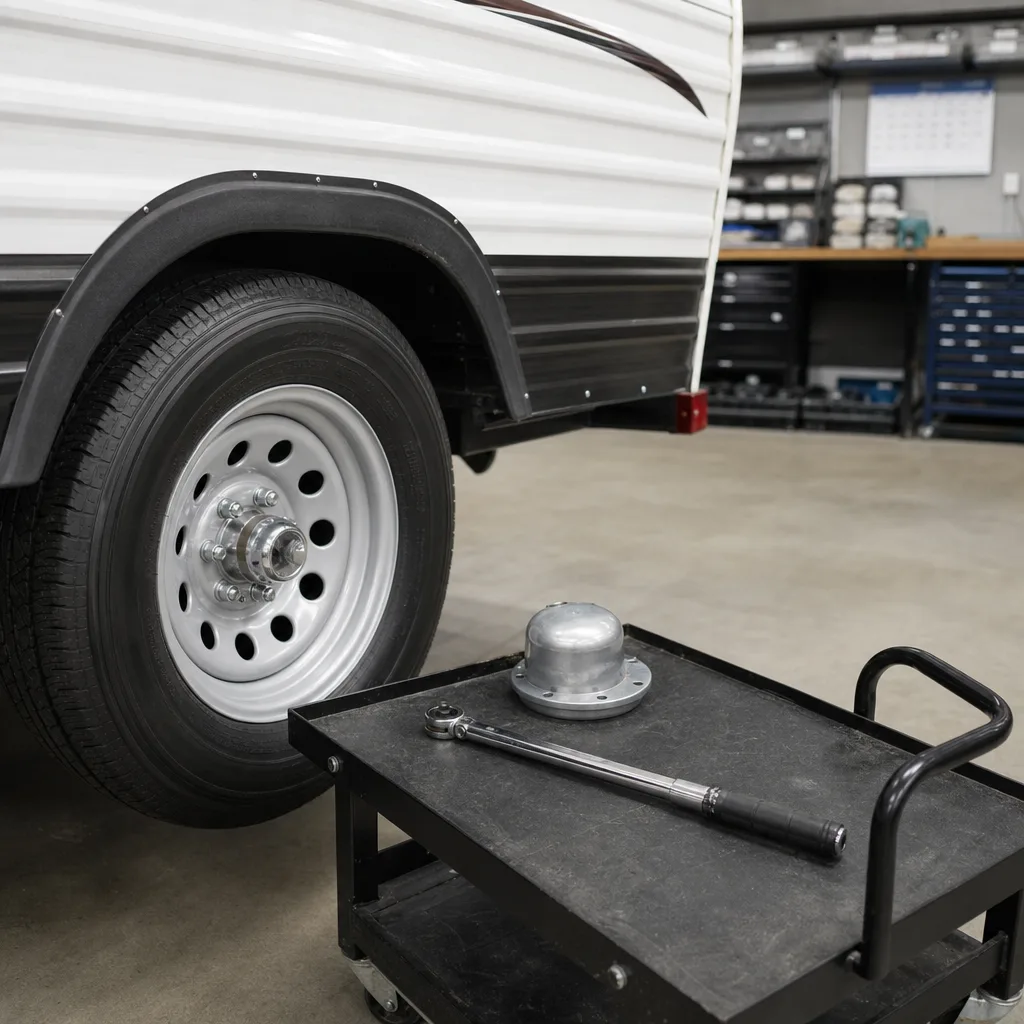
Think about what your bearings have in common. They're the same age. They've rolled the same miles. They were packed with the same grease on the same day, if they were ever packed at all. They sat through the same winters and the same long stretches parked. If the grease in one hub has broken down, the grease in the others went through the exact same life. They just haven't complained yet.
Here's how that plays out. Say the rear passenger hub on your trailer runs hot after a drive, so it gets new grease and a new seal. Two hundred miles later, the front driver side starts to growl. That bearing was already worn the first time around. Nobody looked, so nobody knew. Now you're paying for a second trip, and maybe doing it on the side of the road instead of in your driveway.
Tandem axles add another wrinkle. The wheels on each side share the load. When one bearing starts to drag or the wheel sits a little crooked, its partner picks up extra work to make up for it. A bad bearing on one axle can speed up wear on the one next to it, even when that one looked healthy last season.
Checking every wheel end also catches the quiet problems that never make noise:
- A seal that's dried out and cracked but hasn't leaked yet
- Water that got into a hub and left rust on the bearing or race
- Grease that's turned thin, gritty, or milky
- Early pitting on a race that's still smooth enough to stay silent
- Brake parts in the same hub that are worn down or coated in grease
None of those show up from a walk-around. You only see them with the hub off and the old grease wiped away. That's the real value of a repack. The grease is the easy part. The look inside is the part that keeps you rolling.
There's a practical upside too. When every wheel gets done at once, they're all on the same clock. One date in your records covers the whole rig. You don't have to remember that the left side was done two summers ago and the right side was done after that one trip. Ask anyone who's tried to keep a mixed service history straight in their head. It doesn't last.
It's a little like a pair of boots. If one sole is worn through, you don't resole that boot alone and expect the other one to keep up. Same walk, same miles, same wear.
As an RVTI Certified Technician with more than 15 years in the RV industry, I'll give you straight advice: do them all, look at them all, and leave knowing what you've got under there. If every wheel checks out clean, great. That's good news you paid for. If one of the quiet ones was about to become a loud one, you'll be glad you found out in Cedar City and not halfway to your campsite.
What Happens During a Wheel Bearing Repack
A real repack isn't a squirt of grease and a pat on the hub. It's a teardown, a cleaning, a close look, and a careful rebuild of every wheel end. Here's what that looks like, so you know what you're paying for and can spot a shortcut if someone tries one.
First, the rig gets lifted and set on jack stands. A jack holds a load for a minute. Stands hold it while someone has their arms inside a wheel well, and that matters to the person doing the work. Then the wheel comes off and the hub gets taken apart: dust cap, cotter pin or retainer, spindle nut, washer, and the outer bearing. The hub slides off the spindle, and the inner bearing and grease seal come out of the back.
Next comes the messy part. All of the old grease has to go. The bearings, races, hub, and spindle get cleaned until you can see bare metal. You can't judge a bearing through a coat of old, dark grease any more than you can read a newspaper someone spilled coffee on.
With everything clean, the inspection starts. This is the step that makes the whole job worth doing:
- Bearing rollers and cages, checked for pitting, flat spots, rust, or heat color
- Races inside the hub, checked for scoring or rough spots
- The spindle, checked for wear where the bearings and seal ride
- Brake shoes, magnets, and springs, since they're sitting right there with the hub off
- The old grease itself, which shows water, grit, or metal if any got in
If something fails the look, that part gets replaced instead of greased and put back. That's the line between a repack and a bearing replacement covered earlier.
Then the bearings get packed. The grease has to be worked all the way through the rollers, not just smeared on the outside. A bearing that looks greasy on the outside but is dry in the middle is a bearing that's going to run hot. Use a grease made for wheel bearings, and don't mix types. Some greases don't get along, and the blend can break down faster than either one would alone.
A new grease seal goes in on the back side. Seals are cheap and old ones rarely seat right a second time. Reusing one to save a few bucks is how water and dirt get back into a fresh repack.
Then it all goes back together, and the spindle nut gets set to the right adjustment. That's the snug-but-not-tight step from earlier, and it's the part you can't rush. A new cotter pin or retainer locks the nut in place, the dust cap goes back on, and the hub gets spun by hand to feel for smooth, quiet rotation with no play.
Last, the wheel goes back on and the lug nuts get torqued to spec in a star pattern. Then the same routine happens at the next wheel, and the one after that, until every wheel end on the rig has been through it.
When it's done, you should know more than "it got greased." You should know what every bearing, race, seal, and brake looked like, and whether anything needs watching. Because we're a mobile RV technician service here in Cedar City, the work comes to wherever the rig is parked, whether that's your driveway or your storage lot.
Mountain Grades and Pre-Trip Checks Before Heading to the Parks
Living in Cedar City means some of the best scenery in the country is a short drive away. Most of the roads to get there go up, and then they come back down. Highway 14 climbs east out of town toward Cedar Breaks and the high country. The trips to Zion and Bryce have their own long grades too. Your rig loves the views. Your wheel bearings have opinions.
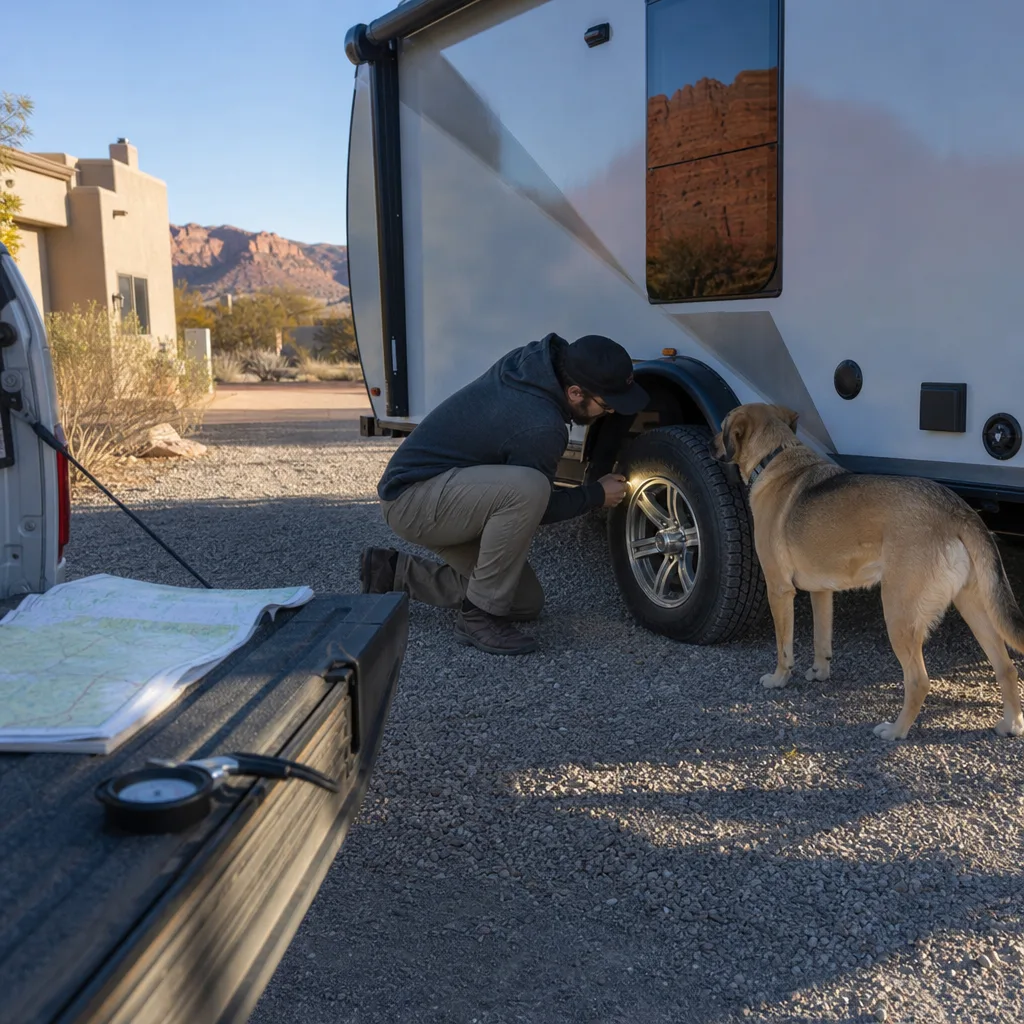
Climbing puts load on the hubs, but the trip down is what really heats them up. On most trailers the brakes sit inside the same hub as the bearings. Every time you lean on the brakes down a long grade, that heat soaks right into the grease. Fresh grease handles it. Old, thin, or wet grease doesn't, and that's when a bearing that seemed fine around town finally gives up.
That's the whole reason this page keeps saying to check every wheel end, not just the loud one. A bearing can stay quiet for months on flat errands around Cedar City. Then it gets its first real test halfway down a mountain, with your family in the truck and no shoulder wide enough to change a tire. The hill doesn't create the problem. It just finds the one that was already there.
Here's how it often goes. Someone tows the trailer around town all spring and everything feels normal. Then they head up the canyon for a long weekend. On the way down, there's a hot smell at a pullout and one hub is way warmer than the others. Nothing changed that day except the road. The grease had been tired for a while.
Before a park trip, run through this in your driveway or at the storage lot:
- Find your last repack date. Compare it to your axle maker's interval, and count any long stretches the rig sat parked.
- Check the lug nuts. Loose lugs and steep roads are a bad pair.
- Set tire pressure cold, before the sun hits the tires. Mornings here can start chilly even when the afternoon turns hot.
- Test your brake controller on a quiet street before you need it on a hill.
- Do the hub walk-around from earlier on this page at your first stop and again at the top of a big grade. Compare all the hubs to each other, not just one.
If your records are blank or the date is old, get the repack done before the trip, not after. If you'd like a second set of eyes on more than the bearings, our Pre-Trip RV Inspection checks the tires, brakes, and running gear together, so you leave town knowing what's under you.
I've spent more than 15 years in the RV industry, and I'm an RVTI Certified Technician. The trips people remember fondly are the ones where nothing happened on the way there. Boring wheels are the goal.
Call nowFrequently Asked Questions
How often should I get my RV wheel bearings repacked?
Check your axle maker's manual for the exact interval, since this varies by axle brand and weight rating. As a general rule, if you can't remember the last repack or bought your RV used with no service records, it's time to get it checked. Long storage periods, dunking your trailer at a boat ramp, or a season of mountain towing can all shorten that interval.
Can I tow my RV to get the wheel bearings repacked, or is it safe to drive it there?
If you're seeing warning signs like a hot hub, growling noise, or wheel wobble, it's safer not to drive it at all. A bearing that's already failing can seize or let a wheel come loose under load. Since this is a mobile RV technician service in Cedar City, the repack comes to your driveway or storage lot, so you don't have to risk a drive with a bad bearing.
How long does a full RV wheel bearing repack take?
The time depends on how many wheels your rig has and what the inspection finds once the hubs are open. A straightforward repack with no worn parts moves faster than one where a bearing, race, or seal needs replacing. Because every wheel end gets torn down, cleaned, and inspected rather than just greased, plan for the visit to take a full teardown-and-rebuild cycle on each hub, not a quick service stop.