
RV Winterization · Cedar City, Utah
RV Winterization in Cedar City, Utah: Know When You Really Need It
Cedar City's Elevation Means an Earlier Freeze Window
Here's the trap. It's a sunny October afternoon in Cedar City, you're in a t-shirt, and winterizing the trailer feels like a problem for future you. Then the sun drops behind the hills, the dry air lets the day's heat escape fast, and by 3 a.m. it's cold enough to freeze water sitting in a line. You wake up, it warms right back up, and you never knew anything happened. Your water pump knows.
That big gap between daytime highs and overnight lows is normal at our elevation. Thin, dry air doesn't hold heat the way it does in lower, more humid places. So the calendar and the thermometer at lunch both lie to you a little. The number that matters is the overnight low, and around here it turns on you earlier than most folks expect.
Water grows when it freezes, and it doesn't care what it's sitting in. It doesn't take a deep freeze to do damage. A few hard nights can be enough to crack the parts of your RV that hold small pockets of water:
- The water pump, which holds water in its housing even after the tank's empty
- Low-point drain areas and PEX fittings tucked in the underbelly, where cold air sits
- The water heater tank and its drain area
- Outdoor showers and exterior kitchen hookups, which hang right out in the wind
- Faucet valves, toilet valves, and ice maker or washer lines if your rig has them
None of those spots are heated when the RV's parked. A rig sitting in a storage lot is basically a metal box doing a slow impression of a freezer. It doesn't matter that it's "just been sitting there." Sitting there is the problem.
Then there's the fall camping crowd. A lot of us around here love a late-season trip up toward Brian Head, Duck Creek, or Cedar Breaks. Those spots sit even higher than town, and they get colder sooner. If you plan one more weekend up the mountain, you're taking your plumbing into colder air than what's waiting at home. Plenty of folks winterize only after that last trip. That means the trip itself is the riskiest night of the year for their lines.
So here's our practical advice. Don't wait for the forecast to scream "hard freeze" before you call. When you notice frost on your windshield in the morning, or the nights start feeling sharp even though the days are nice, that's your sign. If you're still camping in the fall, either keep the furnace running and the tanks managed on cold nights, or get the rig winterized and use bottled water for that last trip. The first cold snap is when everybody else remembers their RV too.
Because we're a mobile service and we offer repair at home or at your storage lot, you don't have to tow the rig anywhere to get it done. That makes it a lot easier to get ahead of the cold instead of racing it.
What Happens If Water Is Left in Your RV's Lines
Here's the frustrating part about freeze damage. It doesn't announce itself. Nothing bangs or pops in December. The rig sits in the lot all winter looking exactly like it did in October. You find out in spring, usually on the first warm Saturday when you're excited to get out.
It goes like this. You fill the fresh tank, flip on the water pump, and it starts running. And keeps running. A healthy pump builds pressure and shuts off. A pump that won't quit is telling you water is escaping somewhere. Then you hear a little hiss, or you walk around the side and there's a puddle forming under the rig on a dry, sunny day. That's not your RV crying because it missed you.
A cracked fitting can stay totally dry while the system's empty. It only leaks once there's pressure behind it. So the damage happened months ago, but you meet it on the day you wanted to go camping.
Where the water goes after that is the real problem. A lot of an RV's plumbing runs through the underbelly and behind cabinets and walls, where you can't see it. A slow leak in there can soak insulation, sit against the subfloor, and go unnoticed for a while. Signs to watch for:
- A pump that cycles on and off when no faucet is open
- Water dripping from the underbelly or around a wheel well
- A soft or spongy spot in the floor near the kitchen, bathroom, or water heater
- Stains, swelling, or a musty smell inside a cabinet
- Low or sputtering pressure at one faucet but not the others
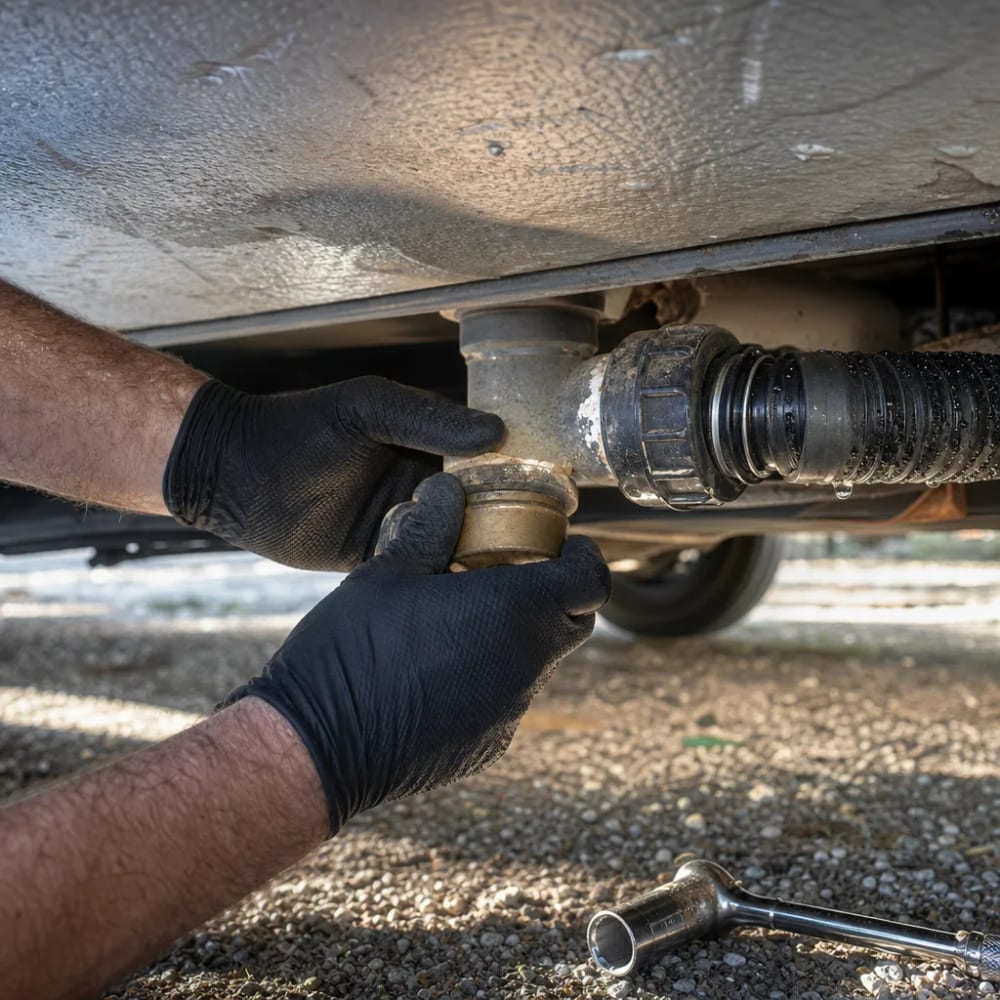
The holding tank side can bite you too. If gray or black water is left sitting in the tanks or above the dump valves, that liquid can freeze in the valve area and crack it. Now you've got a problem you really don't want to discover with your hands.
Most folks figure a burst line is a cheap fix, and sometimes the part really is cheap. A fitting might not cost much at all. What drives the cost of freeze repair is finding the leak and getting to it. That can mean dropping part of the underbelly, pulling access panels, or opening up a cabinet to chase a line. If the leak ran long enough to wet the floor or insulation, now you're fixing water damage on top of plumbing. Labor and time, not parts, is what turns a small crack into a big bill.
And there's the lost time. Spring is when everyone de-winterizes and finds their surprises at the same time, so a freeze repair can eat into the first trips of the season.
Compare that to winterizing, which is a planned, predictable job done before anything breaks. That's the whole argument for getting it done early in Cedar City: the work is the same either way, but one version comes with a puddle. If you do find damage this spring, our RV Plumbing Repair and RV Water Pump Repair and Replacement services cover it, and our RV De-Winterization / Spring Start-Up is a good time to catch a leak before it spreads.
Signs You Can Skip Full Winterization
Not every rig in Cedar City needs a full winterization every fall. We'd rather tell you that now than have you pay for something you don't need. Here are the situations where you can skip it, put it off, or do it yourself.
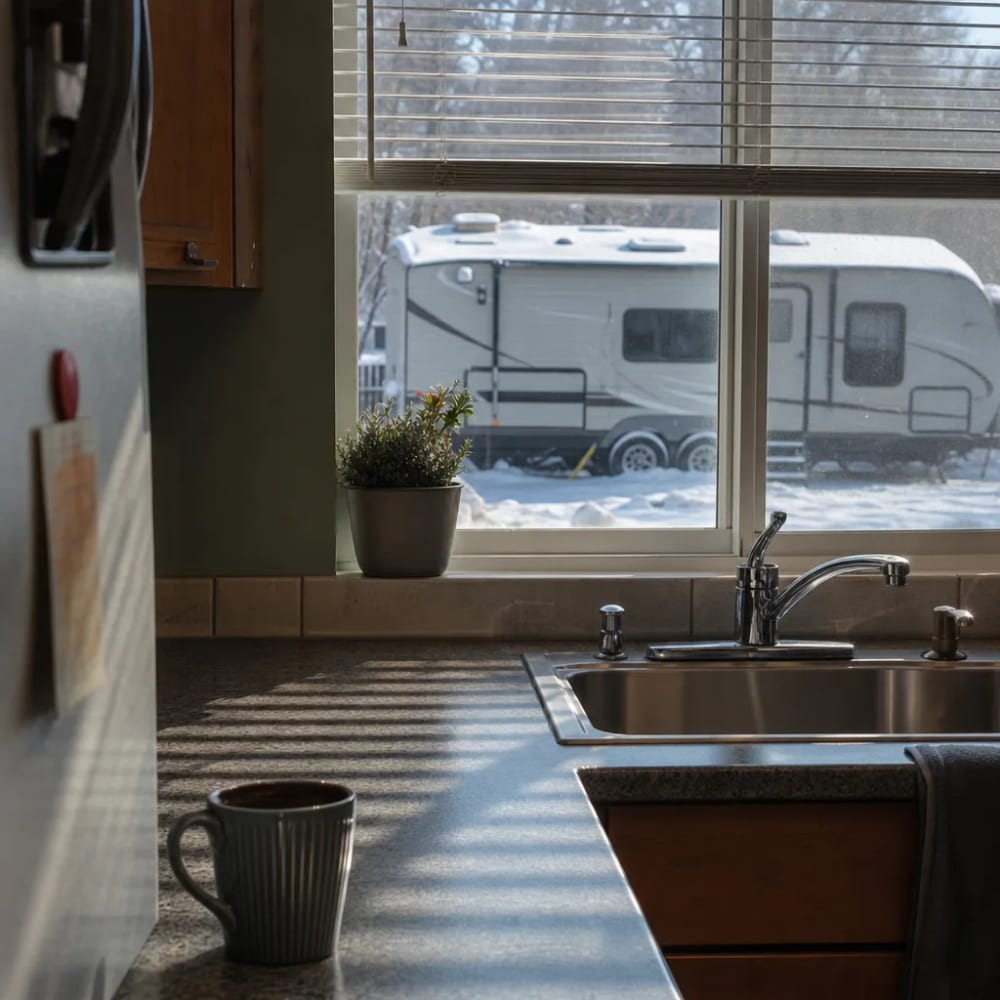
You're living in it or using it all winter. If the RV is your home, or you're camping in it through the cold months, you can't really winterize it anyway. You need running water. The plan here is different. You keep the furnace running, keep enough propane on hand that it never quits, and manage your tanks so nothing sits and freezes. Some rigs are built for it, with heated and enclosed underbellies. Others need more help to make it through a cold night. It can work, but only if the heat never stops. A furnace that runs out of propane at 2 a.m. doesn't care that you meant to fill up tomorrow.
It's stored somewhere heated. If the RV spends the winter inside a building that really stays above freezing all season, the water in the lines has nothing to freeze up against. We mean heated, not just covered. A carport, a pole barn, or an unheated garage keeps snow off the roof, but the air inside gets just as cold as the air outside. And if your heated storage depends on power, ask yourself what happens if that power goes out during a cold snap.
You're heading somewhere warm, and soon. If you're pulling out in a few days to spend the winter at a lower, warmer spot, you can keep the water system in use. Just watch the nights before you leave, and know that the drive out may be colder than where you end up.
There's no water in the system to begin with. If your rig was winterized last fall and nobody has put water in it since, it's still protected. A small pop-up or camper that only has a portable jug and a hand pump doesn't need much either. Drain it, leave the valves open, and you're about done.
You're comfortable doing it yourself. Plenty of owners winterize their own rigs, and it's a reasonable DIY job if you know your plumbing. Draining the tanks, bypassing the water heater, and running antifreeze or blowing out the lines isn't magic. It just has to be thorough. The usual misses are the outdoor shower, the ice maker or washer line, and the water heater bypass that never got turned.
Here's the honest test. If you can walk through your rig and name every spot that holds water, and you know how to clear each one, you probably don't need us for this. If you just bought the rig, can't find the bypass valve, or aren't sure what that extra hose under the sink goes to, that's a good sign to get some help this first year and watch how it's done.
Mobile Winterization at Your Home or Storage Lot
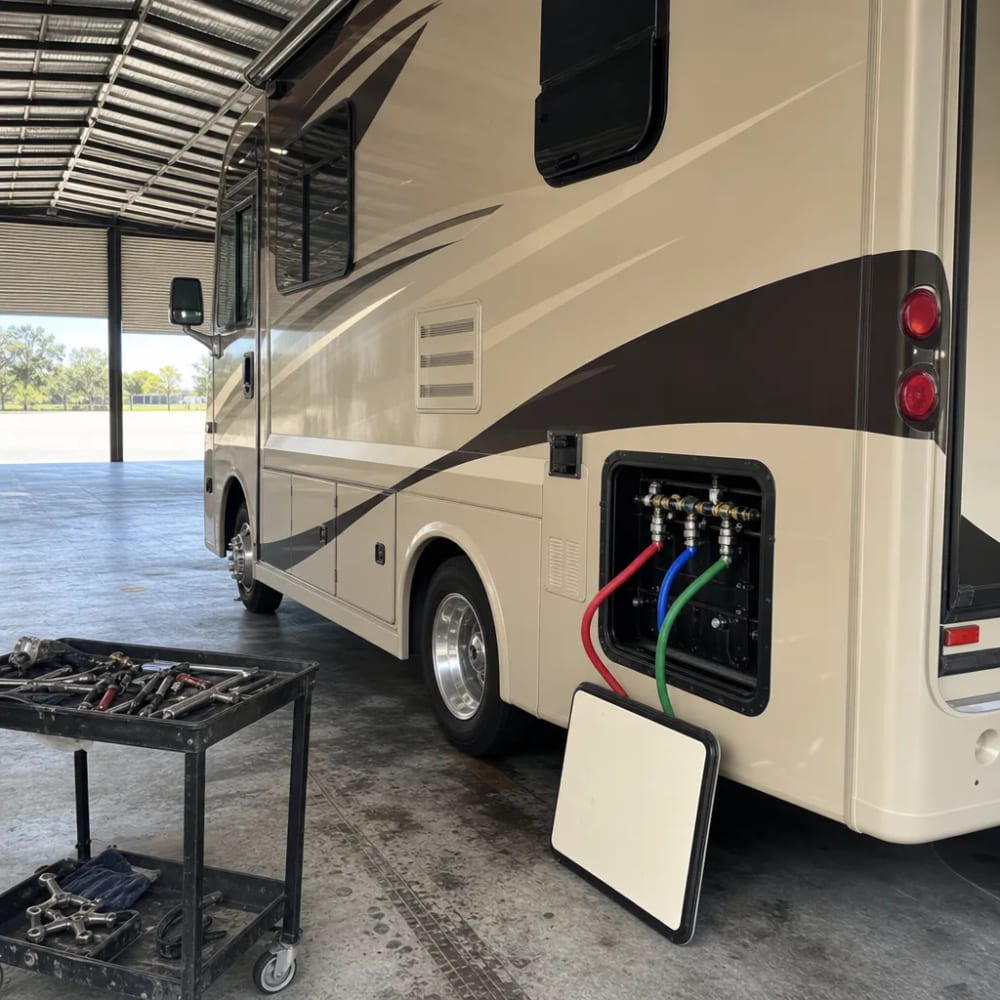
The biggest reason people put off winterizing isn't the job. It's the hassle around it: hitching up, finding a free Saturday, and towing a rig across town just to have it towed back. We skip all of that. We're a mobile RV service, so we come to the rig, whether it's parked beside your house or tucked into a storage lot. That's a big part of why getting it done early in Cedar City is easy instead of a chore you keep pushing to next weekend.
You'll be working with the person who does the work. Benny is our lead technician and your main point of contact. He's an RVTI Certified Technician with more than 15 years in the RV industry. Our office sets up appointments and keeps the calendar straight, so getting on the schedule is a phone call, not a project.
A few things on your end make the visit go smoother. None of them are hard.
- Tell us where the rig is. If it's in a storage lot, let us know the lot name, your space number, and how gate access works. Some lots have code gates or set hours, and it's better to know that before we pull up.
- Make sure we can get in. Leave us a key or plan to meet us there, and let us know if the rig sits tight against a fence or another trailer.
- Dump the holding tanks if you can. Gray and black tanks sitting full over the dump valves are part of what we warned about above, and empty tanks are a happier start for everybody.
- Clean out the fridge. Nobody wants to open it in April and meet last October's leftovers.
- Mention the extras. Tell us about any outdoor shower, outside kitchen, ice maker, washer, or second bathroom. Those are the spots that get missed, and we'd rather hear about them up front.
On cost, we're not going to throw a number at you on a web page. Here's how pricing for this kind of work generally shakes out across the trade. A small travel trailer with one bathroom is a simpler job than a big fifth wheel with two baths, a washer hookup, and an outdoor kitchen. Every extra water feature is one more line to clear. The method matters too, whether the lines get blown out with air, filled with RV antifreeze, or both, since antifreeze is a material cost. With mobile service, distance can play a part. Whoever you call, it's fair to ask what's included, how many gallons of antifreeze they expect to use, and whether things like the outdoor shower and ice maker line are part of the job or extra.
While we're at the rig, it's a good time to mention anything else that's been bugging you, like a furnace that's slow to light or a propane smell you've been ignoring. We also handle RV Propane System Inspection and Leak Test, Seasonal RV Inspection, and RV De-Winterization / Spring Start-Up when the weather turns. One heads up: we don't currently do manufacturer warranty work, so if a repair should be covered by your RV's warranty, that one goes to a dealer.
The cold nights in Cedar City don't wait for a convenient weekend, and you don't have to either. Get on the calendar before the first frost, and your plumbing sleeps through the winter instead of cracking through it.
Call us to schedule your RV winterization at your home or storage lot before the overnight lows turn on you.
Call nowWhat a Thorough Winterization Should Cover
Getting winterized early only pays off if the job is complete. A half-done winterization is worse than none in one way. You think you're safe, so you stop paying attention to the overnight lows. One forgotten line can crack the same as if you'd done nothing at all.
Here's what a thorough job should cover, whether you hire it out or do it in your own driveway.
- Every tank drained. That means the fresh tank, the gray and black tanks, and the water heater. The low-point drains get opened so gravity pulls out what it can.
- The water heater bypassed. If the bypass valve isn't turned, the antifreeze goes into the water heater tank first. You end up filling a big tank with pink stuff you paid for, and the lines you meant to protect get less.
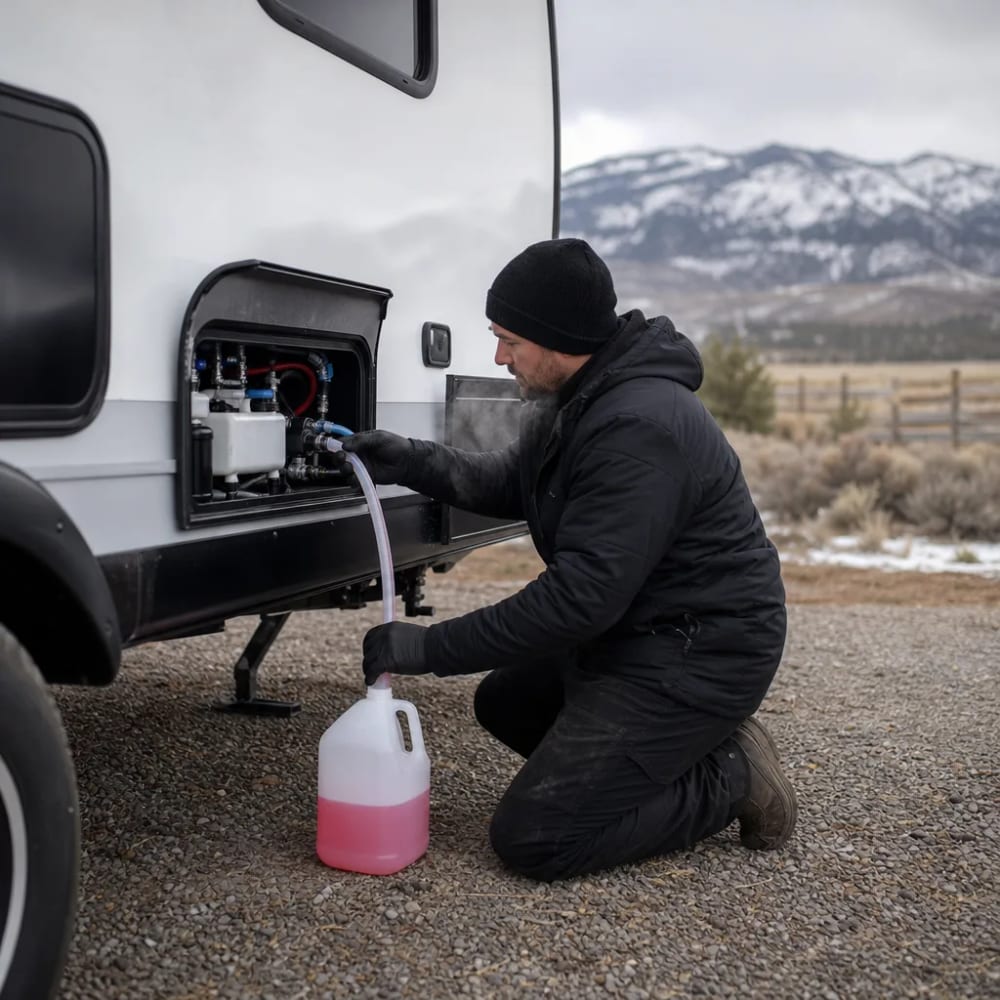
- RV antifreeze, not the car kind. RV antifreeze is the pink, non-toxic stuff made for drinking water systems. Automotive antifreeze has no business in your plumbing.
- Antifreeze run through the pump. The pump holds water in its housing, so the antifreeze has to pass through it, usually by pulling it straight from a jug instead of the fresh tank.
- Every outlet, both sides. Each faucet gets opened on hot and on cold until pink comes out. The toilet gets flushed until it runs pink. The outdoor shower and any outside kitchen get the same treatment.
- A splash down every drain. A cup or so of antifreeze in each sink, shower, and tub drain protects the P-traps, which hold water by design.
- The extras handled. Ice maker lines, washer hookups, and second bathrooms each need their own attention. Any inline water filter cartridge should come out, since a filter is basically a sponge waiting to freeze.
Some people blow the lines out with compressed air instead of using antifreeze. Air works well for clearing long runs, but it can leave little pockets of water in low spots, valves, and the pump. That's why a lot of folks do both: blow it out, then follow with antifreeze for the spots air can't reach. In a place where the nights get as sharp as they do around Cedar City, belt and suspenders isn't a bad plan.
A good winterization should also leave you knowing where things stand. Ask for a quick rundown of what was drained, what got antifreeze, and which way the bypass valve was left. A note taped by the kitchen faucet that says the rig is winterized saves somebody from hitting the pump in February and wondering why the water tastes funny.
That rundown matters again in spring. Whoever handles your start-up needs to know which valves to turn back and that the water heater needs to be filled before it's lit. Run a heater dry and you'll buy a new heating element pretty quick. A clean winterization makes the spring side easy, and an easy spring is the whole point of doing it right in the fall.
Frequently Asked Questions
How long does a mobile RV winterization visit usually take?
Most rigs take under an hour once we're on site, though a bigger fifth wheel with extra water features like a washer or second bathroom can run longer. Every outlet, drain, and the water heater bypass need checking, so a rig with more plumbing simply has more spots to clear.
Can I still use my RV's water system after it's winterized?
No, once the lines are full of RV antifreeze and the tanks are drained, the system isn't meant for use. If you need water for one more trip up toward Brian Head or Duck Creek, it's better to hold off winterizing and use bottled water instead once you're back.
What should I do with my holding tanks before you arrive?
Dump your gray and black tanks before your appointment if you're able to. Full tanks sitting over the dump valves can freeze and crack right at the valve, so starting empty gives us a cleaner, faster job.
Do I need to be home for the winterization appointment?
Not necessarily, as long as we can get into the rig. You can leave us a key or meet us at your house or storage lot, just let us know ahead of time if the trailer sits tight against a fence or another unit.