
Seasonal RV Inspection · Cedar City, Utah
Seasonal RV Inspection in Cedar City, Utah: Know What's Really Being Checked
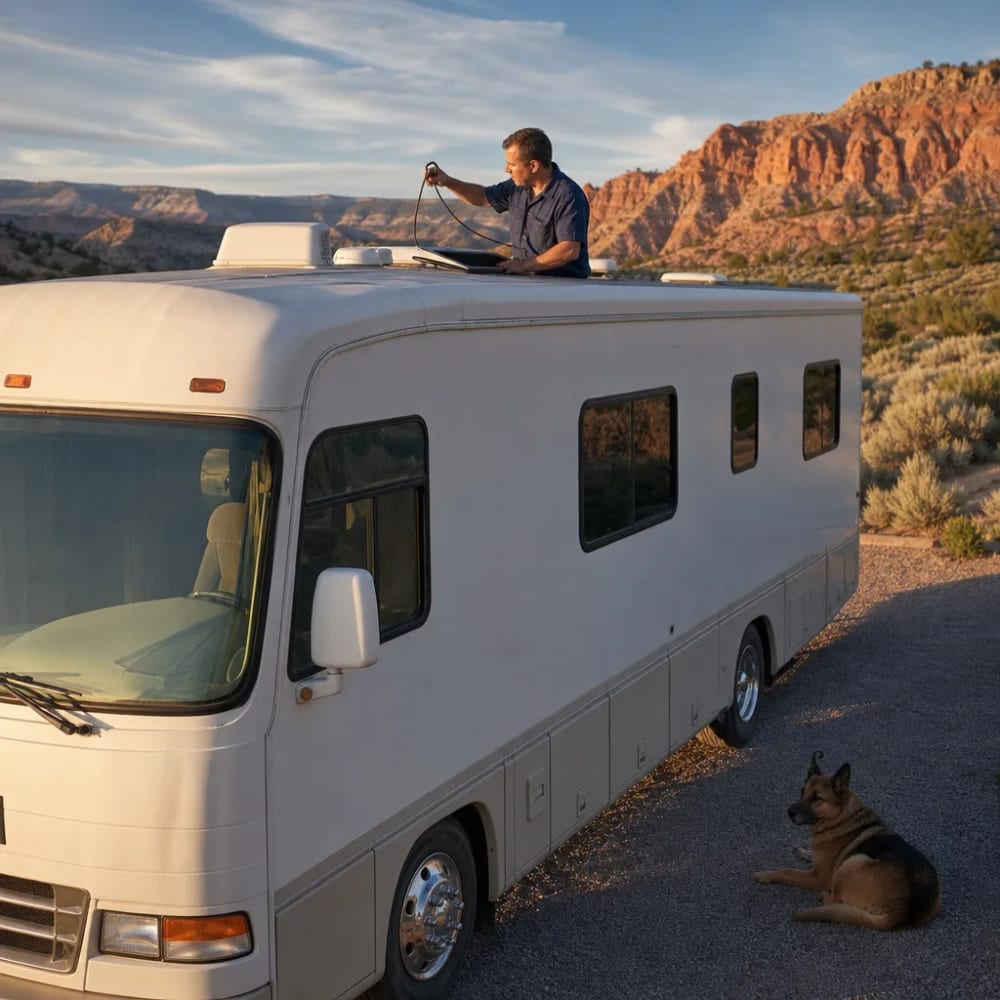
What a Seasonal RV Inspection Covers
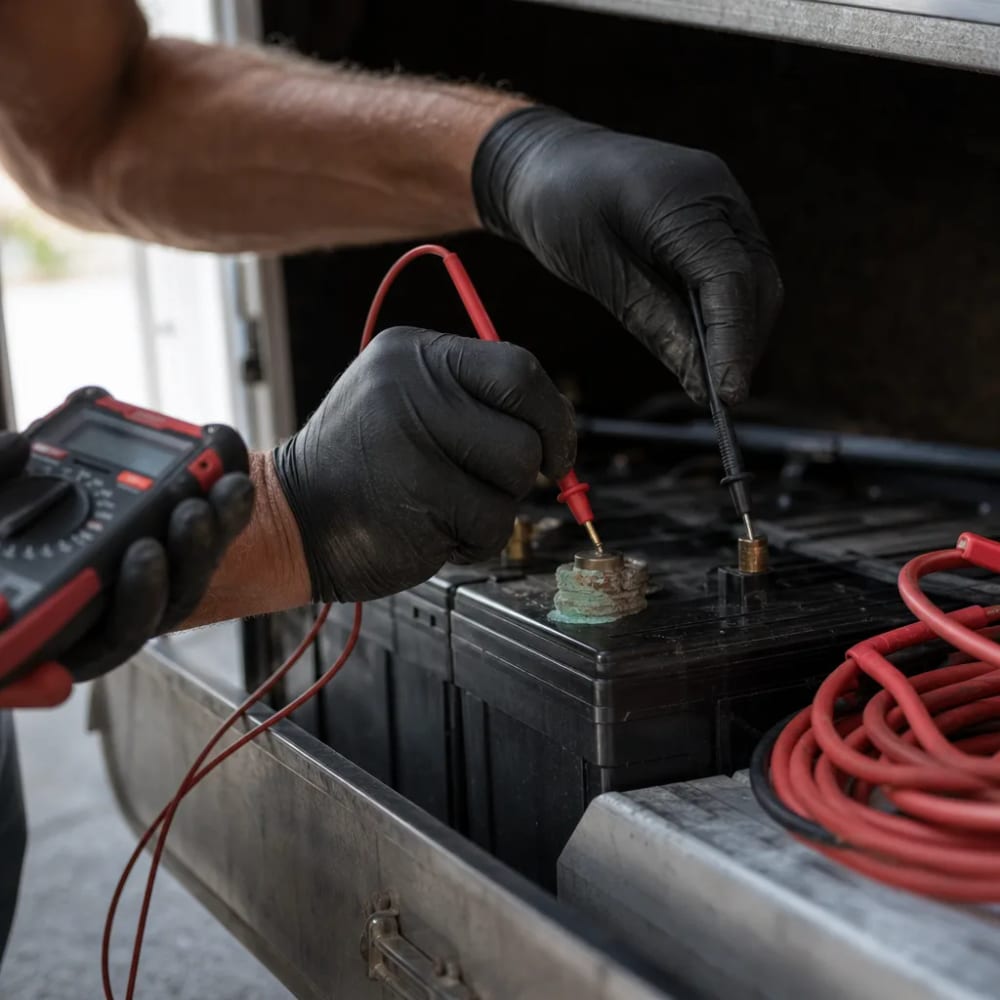
Think of it like a physical for your RV. Nothing has to be wrong for it to be worth doing. RVs mostly break while they're parked, not while they're rolling. Seals dry out, critters move in, batteries die slowly, and none of it shows up until you're at the campsite wondering why the fridge is warm.
Here's what a solid seasonal inspection should look at:
- Roof and seals. Every seam, vent, skylight, and edge where water could sneak in. A cracked seal is cheap to fix. A soft, rotted roof deck is not. If the sealant is shot, that's a job for RV Roof Resealing.
- Propane system. Lines, fittings, the regulator, and the LP detector. Propane leaks are the one thing on this list you don't want to guess about. A full RV Propane System Inspection and Leak Test is its own service if anything looks off.
- Electrical. Battery health and connections, the converter, the shore power cord and plug, and the breaker panel. A burnt or loose plug is a warning sign, not a cosmetic issue.
- Water system. The pump, water heater, faucets, lines, and tanks. You're looking for drips, weak pressure, and anything that cracked during a freeze.
- Appliances. Furnace, AC, fridge, water heater, and stove all get fired up to make sure they work. It's a lot better to learn the furnace is dead in your driveway than on a cold night in the mountains.
- Safety devices. Smoke, carbon monoxide, and LP detectors, plus the fire extinguisher. Detectors expire, and a dead one feels exactly like a working one right up until it matters.
- Running gear. Tires, wheel bearings, brakes, the hitch, and trailer wiring. Tires age out from sun and time even when the tread looks great, so the date code on the sidewall matters as much as the tread depth.
One quick story, because everybody's got a version of it. An owner pulls the rig out in spring, flips on the water pump, and hears it run and run and run. Somewhere behind a cabinet, a fitting split over the winter and has been quietly dumping water into the floor. The fitting was a few bucks. The damage behind it wasn't. That's the whole reason seasonal inspections exist.
And yes, look for signs of mice. They don't pay rent, but they sure like chewing wiring and building nests in furnace ducts. A good inspection checks for droppings, chewed wires, and stuffed vents, because rodent damage likes to hide until something stops working.
Timing ties into the bigger picture too. In the fall, an inspection pairs naturally with RV Winterization so nothing freezes. In spring, it fits right alongside RV De-Winterization / Spring Start-Up so you're not finding problems on your first trip of the year.
What you should walk away with is a clear picture: what's fine, what needs watching, and what needs fixing now. As an RVTI Certified Technician with more than 15 years in the RV industry, I'd rather tell you something can wait than sell you a repair you don't need yet. An inspection only helps you if you can trust the list.
Seasonal RV Inspection vs. Winterization and Spring Start-Up
This is where folks get mixed up, and it's an honest mix-up. All three happen around the same time of year, and all three involve somebody poking around your RV. But they answer different questions.
Winterization answers one question: will my water system survive the freeze? It's about getting water out of the lines, the pump, and the water heater so nothing cracks when it gets cold. In Cedar City, hard freezes are a normal part of winter, so for most rigs that sit outside this isn't optional. RV Winterization has its own page if you want the full rundown.
Spring start-up answers the opposite question: is my water system ready to use again? It's about getting the antifreeze out, getting fresh water flowing, and making sure the plumbing holds pressure. RV De-Winterization / Spring Start-Up covers that in detail.
A seasonal inspection answers the bigger question: is the whole RV ready? Not just the plumbing. The roof, the propane, the brakes, the batteries, the detectors, all of it. You can do a perfect winterization on a trailer with a cracked roof seal, and in spring you'll have dry pipes and a wet ceiling. The water lines were never the problem.
So here's the plain way to think about it. Winterization and start-up are tasks. An inspection is a checkup. One protects a single system. The other tells you what shape everything else is in.
- Parking it outside for the winter? You need winterization. Adding an inspection in fall means anything you find can get fixed over the off-season instead of during the spring rush.
- Taking it out of storage in spring? You need a start-up. Adding an inspection means your first trip isn't also your test drive.
- Living in it full-time through winter? You probably don't need winterization at all, since you're keeping it heated and using the water. An inspection still makes sense, because daily use wears things out faster, not slower.
- Keeping it in a heated building? Winterization may not be needed. The roof, tires, batteries, and critters don't care how warm the garage is, so the inspection still earns its keep.
- Just bought it? That's a different job. A Pre-Purchase RV Inspection happens before you hand over the money, not after.
Can you skip the inspection and just winterize? Sure. Plenty of people do, and if your rig is newer, you used it lightly, and you've been keeping an eye on the roof yourself, that's a fair call. Where it bites people is the second or third year of skipping. Small stuff stacks up quietly, and nobody's looking at it because everyone figured the winterization covered it.
The easy move is to pair them. If somebody's already at your RV to winterize or de-winterize it, that's the natural time to look at everything else too. One visit, one clear list, and you head into the off-season or the camping season knowing exactly where you stand. Think of winterizing as putting your RV to bed and the inspection as checking it didn't leave the stove on.
When to Schedule a Fall Inspection Before Cedar City's Freeze
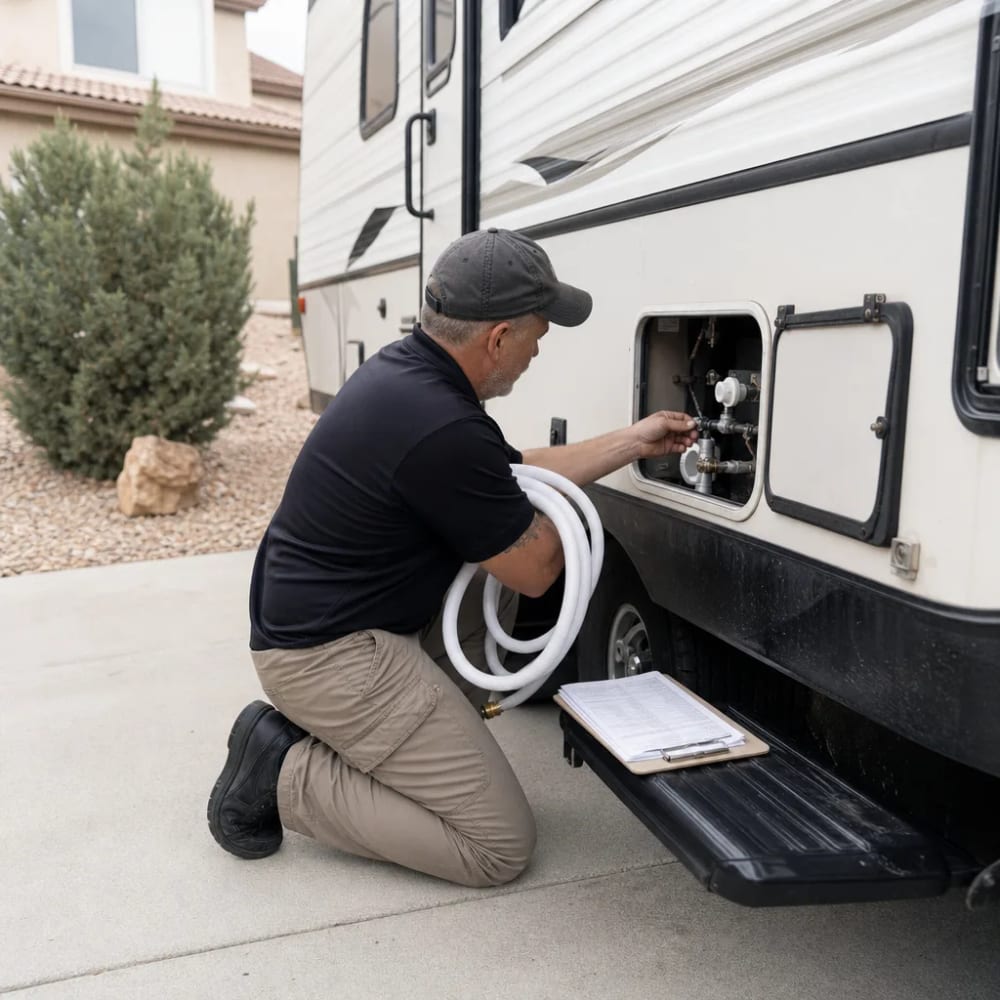
The best time for a fall inspection is right after your last trip of the season and before the first hard freeze. That window matters more than the exact date. Do it too early and you're still camping, putting fresh wear on everything we just checked. Do it too late and you're racing the weather.
Here's the trap a lot of folks fall into. They plan one more trip, then one more after that, because fall around Cedar City is gorgeous and nobody wants it to end. Then a cold night shows up before they've done anything, and now they're wondering if the water lines made it. Cedar City gets real winters, and the first freeze doesn't send a reminder.
So instead of watching the forecast, watch your own plans. These are good signs it's time to call:
- You've taken your last trip of the year, or you're pretty sure you have.
- You're about to winterize. The inspection fits right in front of that, so we look at everything while the water system is still running and we can test it.
- You're about to move the rig to a storage lot. It's a lot easier to look things over before it's wedged between two other trailers.
- Something felt off on your last trip. A slow drain, a furnace that took forever to light, a smell you couldn't place. Write it down now while you remember it.
Why fall instead of waiting until spring? Time. If we find a bad roof seal or a tired water pump in October, you've got all winter to get it fixed without missing a single trip. Find the same thing in April and you're stuck choosing between your first camping weekend and the repair, right when everybody else is pulling their rigs out too. Parts can take a while to come in, and fall gives you room for that.
There's a sneakier reason too. Some problems get worse just from sitting. A small leak at a roof seam lets in a little water each storm. Mice are looking for a warm place to spend the winter, and a parked RV looks like a five-star hotel to them. A weak battery left alone for months can go from tired to dead. Catching these before the rig sits means they don't get the whole winter to grow.
What if you camp late into the season or use your RV off and on through winter? That's fine. Get the inspection done after your last big trip, keep an eye on overnight lows, and don't let freezing weather catch your water lines full. If you're living in it full-time, the timing is less about the freeze and more about catching wear before the cold makes everything work harder.
One small tip that saves a lot of guessing: keep a running list on your phone during the season. Every little thing that bugged you goes on it. When we sit down to go over your rig, that list tells us exactly where to look first.
Done camping for the year, or close to it? Give us a call and we'll get your fall inspection on the calendar before the cold does it for you.
Call nowWhy Spring Inspections Cluster Before Travel Season
Spring inspections bunch up for one simple reason. Everybody wakes their RV up at the same time. The first warm stretch hits, people start picking campsites, and suddenly half the town is pulling rigs out of storage and wondering if everything still works. Your RV spent months doing nothing, and that's often harder on it than a summer of camping.
Here's how it usually goes for an owner who waits. The first big trip is a holiday weekend, maybe Memorial Day, and it's been on the calendar since February. Two days before leaving, they pull the RV out, plug it in, and the battery won't hold a charge. Or the fridge won't cool. Or there's a water stain on the ceiling that wasn't there in October. Now they're trying to find help, order a part, and pack the kids all in the same 48 hours. That's not a vacation. That's a fire drill with snacks.
Sitting causes its own problems, and some of them only show up after the rig has been parked a while:
- Batteries drain slowly over the winter, even when nothing seems to be on. A battery that was fine in fall can come back too weak to trust.
- Tires can lose air and pick up flat spots from sitting in one place for months.
- Roof sealant and window seals take a beating from winter sun, snow, and big temperature swings, and a new crack can open over the off-season.
- Appliances that haven't run in months sometimes just don't want to start. A furnace or water heater that was perfect last fall still needs to prove itself in spring.
None of that means something's wrong with your rig. It means the only way to know is to look before you're counting on it.
The timing rule we'd give a friend is simple. Get your spring inspection done a few weeks before your first trip, not a few days. That gives you room if something turns up. Some RV parts take a while to arrive, and you don't want your camping weekend waiting on a shipping truck. It also keeps you ahead of everyone else who had the same idea the same week.
Also, a warm week in March doesn't mean winter is done with Cedar City. If your rig is winterized, don't rush to fill the water lines just because the afternoon felt like summer. Doing the inspection alongside your spring start-up lets us check everything once, when the weather is ready for it.
If you had a fall inspection and got the repairs handled over the winter, your spring check is usually the easy one. We're confirming nothing new popped up while the rig sat. If you skipped fall, spring is where you catch up. Either way, the goal is the same. Your first trip of the year should be about the campsite, not about finding out what broke.
Got a first trip on the calendar? Call us now and we'll get your spring inspection booked while there's still time to fix anything we find.
Call nowSigns You Need a Repair, Not a Seasonal Inspection
An inspection is for finding problems you don't know about yet. If you already know something's wrong, you don't need a checkup. You need a repair. Booking an inspection to deal with a broken furnace is like going in for a yearly physical with a broken arm. Everybody in the room can see the problem, so let's just fix it.
Skip the inspection and go straight to a repair if any of these sound familiar:
- You smell propane. Don't wait for a scheduled visit, and don't keep using the rig while you wonder about it. That's a repair call now, not a line item on a seasonal list.
- Water is coming in or going where it shouldn't. A wet ceiling, a soft spot in the floor, a puddle under the sink, or a pump that won't stop cycling means you've got an active leak, and every day it runs costs you more.
- Something you depend on is dead. The furnace won't light, the fridge won't cool, or the AC just blows warm air. We already know where to look, so there's no need to check the whole rig first.
- You've got electrical trouble. Breakers keep tripping, the battery won't hold a charge, outlets work one day and quit the next, or the shore power plug looks scorched. RV Electrical Troubleshooting is built for exactly this.
- Something broke on the road. A blown tire, a hitch that doesn't feel right, or a slide that won't come in is a repair, not a seasonal job.
Here's the honest reason we steer you this way. An inspection spreads its time across the whole RV. A repair puts all of it on the thing that's broken. If you book an inspection when you've got one clear problem, you're paying for a lot of looking around before anybody gets to the part you called about.
Stuck somewhere with a rig that won't cooperate? That's what Emergency Mobile RV Repair and On-Site Campground RV Repair are for. If it's sitting in your driveway or a storage lot, RV Repair at Home or Storage Lot is the better fit.
There's one more case where we're not your answer. If your RV is new enough to still be covered by the manufacturer and the problem is something they should fix, take it to an authorized dealer. We don't currently offer manufacturer warranty work, and you shouldn't pay out of pocket for a fix someone else already owes you.
What if you've got one problem and you're also overdue for a seasonal look? That's common, and it's fine. Tell us about the broken thing first. Getting your rig safe and working comes before the checklist. Once that's handled, the inspection still makes sense, and you'll know the rest of the RV isn't hiding a second surprise.
And if you're not sure whether it's a real problem or just a quirk, describe what you're seeing, hearing, or smelling when you call. We'll tell you straight whether it needs a repair, an inspection, or nothing at all.
Something already acting up, or ready to get your seasonal inspection on the books? Call us and tell us what's going on, and we'll point you to the right fix.
Call nowFrequently Asked Questions
How long does a seasonal RV inspection take?
It depends on your rig's size and how many systems need a close look, since we check the roof, propane, electrical, water, appliances, safety devices, and running gear. A straightforward rig with no surprises goes faster than one with a leaky fitting or a chewed wire to track down. Keeping a running list of anything odd you noticed during the season helps us move through the checklist efficiently.
What does a typical RV inspection cost?
Cost depends on your RV's size, age, and how many systems need checking, since a seasonal inspection covers everything from the roof to the running gear underneath. Rigs with add-on checks, like a full propane leak test or a roof reseal, cost more than a basic look-over. Ask what's included when you call so you know exactly what's being checked for your rig.